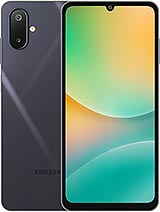
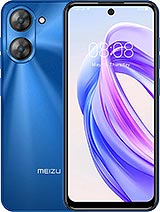
Meizu mblu 21 review
This phone suits someone on a tight budget who primarily watches video, reads, or browses on a large screen and can live with sluggish performance and basic cameras as the price of admission. Anyone who multitasks heavily, edits photos, or demands crisp display text should look elsewhere, even in the same price range.
This review is based on Meizu’s published specifications and public benchmark data for the Meizu mblu 21, and the rating is spec-based. GoSolo does not physically test devices; where we estimate real-world behaviour such as battery life or charge time, we say so. How we rate phones.
Overview
The Meizu mblu 21 is a budget phone with a large 6.79-inch screen and entry-level Unisoc T606 chip that handles basic tasks but struggles with demanding apps. It delivers screen size and battery capacity for its price, but weak performance and cameras make it a no-frills device for users who prioritize screen real estate over speed and photo quality.
Design & build
Meizu hasn't shared full dimensions or weight, which is unhelpful, but the 6.79-inch footprint signals this is a large phone—the kind that needs two hands and a pocket with room to spare. Dual nano-SIM, side-mounted fingerprint, USB-C: nothing surprising, all standard for a 2024 budget device. The trade-off is obvious: you get size and capacity, not compactness or premium materials. For someone who reads or watches video regularly, the bulk is a feature, not a flaw.
Display
The 6.79-inch IPS LCD with 90Hz refresh is the phone's defining strength. Scrolling and swiping feel fluid compared to budget 60Hz rivals, and the large diagonal means less pinching to read text or watch clips. The catch is resolution: 720p stretched across 6.79 inches yields about 264 pixels per inch, which is soft by modern standards. Text, icons, and fine details don't have the sharpness of phones with 1080p panels, and anyone accustomed to sharper displays will notice the difference. It's not broken, just noticeably less crisp than higher-resolution competitors. For casual browsing and video, it's fine; for heavy reading or photo editing, it's a real drawback.
Performance
The Unisoc T606 is an entry-level chip from 2023. Paired with 4GB RAM and 64GB storage (unspecified whether expandable), it handles messaging, social media, light browsing, and older games without drama. Multitasking will feel sluggish—switching between apps, background refresh, and heavy loads introduce noticeable wait times. Anything demanding, like modern games or video editing, will see frame drops and stuttering. This is not a phone for power users or anyone who juggles heavy tasks. It's honest budget silicon: enough for daily basics, not enough for anything ambitious. By late 2024 standards, even entry-level rivals in this price bracket often pair better chipsets with more RAM, making this combination feel a step behind.
Software
Android 14 out of the box is current and correct. Meizu's Flyme customization isn't mentioned, so it's likely either absent or minimal here. Security patches and major updates will depend on Meizu's support track record, which has been spotty outside China; expect at least one or two OS updates, but plan on this phone aging less gracefully than Samsung or other mainstream brands. For a budget buy, current Android is enough; just don't expect long-term software love.
Camera
The 13MP main camera with autofocus and LED flash captures acceptable daylight photos with decent detail, and HDR mode helps balance tricky lighting. The moment light drops—indoors, dusk, night—noise dominates the frame and shots look flat and grainy. The 8MP selfie is basic, fine for video calls but not impressive for portrait shots. At this price, the camera won't blow you away, and it won't ruin your day either. It's a functional tool for documentation, not a creative instrument. Rivals at similar prices often pack wider apertures or larger sensors, making this a genuine weak point.
Battery & charging
The 4900 mAh battery is generous for a budget phone and realistically delivers a full day on light use or about 12 to 15 hours of mixed moderate activity before needing a charge. Charging speed is unspecified, which suggests no fast charging; expect several hours from empty to full using a standard power adapter. In an era where 65W+ charging is becoming common even at mid-range prices, the lack of any stated fast-charge spec is a notable omission. Battery endurance is solid, but slow top-up times will frustrate anyone accustomed to quicker refills.
Value & verdict context
The Meizu mblu 21 is built for a specific buyer: someone with a tight budget who values screen size for reading and video over performance and camera quality. At launch in late 2024, it competes with a crowded field of sub-$200 devices, many of which offer better chips, sharper displays, or faster charging. The 90Hz refresh and large IPS panel are genuine strengths, and the battery life is reassuring. The softness of the 720p display, the sluggish performance, and the basic camera are honest compromises you need to weigh against the price. If your priority is real estate and all-day stamina, and you don't mind waiting for apps to respond, this phone has appeal. If you'd rather have sharper text or faster performance, look at rival offerings in the same ballpark—there are better balanced alternatives.
Verdict
This phone suits someone on a tight budget who primarily watches video, reads, or browses on a large screen and can live with sluggish performance and basic cameras as the price of admission. Anyone who multitasks heavily, edits photos, or demands crisp display text should look elsewhere, even in the same price range.
- 6.79-inch screen is genuinely large for reading, video, and everyday browsing without feeling cramped
- 4900 mAh battery lasts a full day on light to moderate use without wireless bells and whistles to drain it
- 90Hz refresh rate on the display makes scrolling noticeably smoother than 60Hz, a real usability gain for the price tier
- Android 14 is current and brings basic security and feature parity with modern Android devices
- Unisoc T606 with 4GB RAM is slow for multitasking and will stutter on anything beyond casual apps and older games
- 264 ppi on a 6.79-inch screen means text and icons lack crispness; noticeable softness if you read a lot or prefer sharp UI
- 13MP camera produces noisy, flat photos in low light and lacks the clarity rivals offer even at this price
Meizu mblu 21 Key Specifications
The essentials at a glance. See the full spec sheet.
| Released | 2024, November 27 |
|---|---|
| Display | 6.79 inches, 109.5 cm2, IPS LCD, 90Hz |
| Resolution | 720 x 1640 pixels (~264 ppi density) |
| Chipset | Unisoc T606 (12 nm) |
| RAM & storage | 64GB 4GB RAM |
| Main camera | 13 MP, AF auxiliary lens |
| Selfie camera | 8 MP |
| Battery | 4900 mAh |
| Software | Android 14 |
| Network | GSM / HSPA / LTE |
| NFC | No |
| USB | USB Type-C |
Meizu mblu 21 FAQ
Common questions, answered from the spec sheet.
Does the mblu 21 support 5G?
No. The mblu 21 tops out at GSM / HSPA / LTE, without 5G.
What chipset does the mblu 21 use?
The mblu 21 runs on the Unisoc T606 (12 nm).
What display does the mblu 21 have?
A 6.79 inches, 109.5 cm2 IPS LCD, 90Hz, 720 x 1640 pixels (~264 ppi density).
How big is the mblu 21 battery?
The mblu 21 has a 4900 mAh battery.
Does the mblu 21 have NFC?
No, the mblu 21 does not list NFC support.
Does the mblu 21 support a microSD card?
Yes, the mblu 21 supports expandable storage (Unspecified).
Does the mblu 21 have a headphone jack?
No, the mblu 21 does not have a 3.5mm headphone jack.
Alternatives to consider
If the mblu 21 isn’t quite right, these are the closest calls.
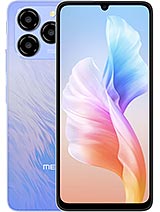
21 Note
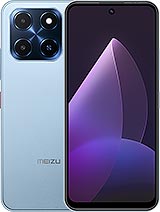
Mblu 22
Mblu 22 Pro
Note 21 Pro
Y50 5G