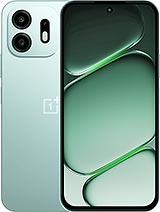
Meizu Note 16 review
The Note 16 suits someone who wants a straightforward 5G phone that lasts all day and survives moisture, without needing gaming power or a multi-lens setup. Anyone leaning on heavy apps, playing modern games, or shooting across multiple focal lengths will quickly feel the boundaries of its chipset and camera system.
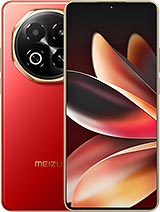
This review is written with AI assistance from Meizu’s published specifications and public benchmark data for the Meizu Note 16, and the rating is spec-based. GoSolo does not physically test devices; where we estimate real-world behaviour such as battery life or charge time, we say so. How we rate phones.
Overview
The Meizu Note 16 is a budget 5G phone with a bright, smooth display and all-day battery life, but hamstrung by an entry-level processor that will struggle with demanding apps. For €100 it hits the basics competently, though the single rear camera and dated charging speed show where corners were cut.
Design & Build
At 217g and 9.2mm thick, the Note 16 sits comfortably in hand without feeling bulky for its 6.78-inch footprint. The dual SIM slot and side-mounted fingerprint sensor are practical choices. IP65 rating means it shrugs off splashes and pocket debris without fuss, a genuine convenience at this price. The handset feels assembled to survive daily use rather than impress, which is honest for €100.
Display
The 1080p IPS LCD with 120Hz refresh is the phone's standout feature. Brightness hits 1050 nits at peak, letting you actually read in sunlight without squinting or cranking to max. Scrolling is noticeably fluid compared to a 60Hz panel at this price; you'll feel the difference in app menus and web browsing. The trade-off is that IPS LCD does not match the contrast or black levels of OLED, and colour saturation skews slightly cool, but neither flaw ruins the experience at arm's length. For a budget device, this display is genuinely competent.
Performance
The Unisoc T8200 is an entry-level chip, and that limitation shows plainly. Everyday tasks—messaging, browsing, social media, light photography—run without stutter, and the octa-core design (two high-performance Cortex-A76, six efficiency cores) keeps thermals reasonable. Demanding games will force you to dial down graphics or accept frame drops. If you treat this as a communication and content phone rather than a gaming device, you will not hit the ceiling often, but do not expect snappy app launches or zero lag in heavy multitasking. The Mali-G57 MC2 GPU is adequate for casual tasks and 2D games but not built for modern 3D titles.
Software
Flyme AIOS 2 is Meizu's Android skin, and on this hardware it runs without lag. Customisation options are there if you want them, and the interface is straightforward enough that new users will not struggle. Updates will be the question; Meizu's track record outside China is mixed, and a €100 budget phone typically gets two years of support at best. That is worth considering if you plan to keep the device longer.
Camera
The 50MP main sensor with f/1.8 aperture and PDAF is the centrepiece, and it handles bright daylight reasonably well, pulling detail and colour accuracy in good light. The wide aperture helps in low light, though expect some noise at high ISO. The 2MP auxiliary sensor does not appear to be a telephoto or macro; it likely exists for depth sensing. The real limitation is the single lens: no ultrawide for landscapes, no zoom for distant subjects. The 8MP front camera is functional for video calls and selfies but unremarkable. Video features exist but are not detailed beyond support; expect 1080p maximum based on the specs.
Battery & Charging
The 6600 mAh battery comfortably covers a full day of mixed use—scrolling, messaging, some video, moderate screen-on time. You will land on the charger in the evening on most days, not mid-afternoon. The 40W wired charging reaches a full charge in roughly 50 to 70 minutes, which is decent and standard for the budget tier, though flagships and mid-range rivals now hit 65W or 100W. There is no wireless charging, a expected omission at this price. If all-day endurance matters more than rapid top-ups, the battery here delivers.
Value & Verdict
At €100, the Meizu Note 16 competes in the fiercest segment: budget 5G phones with a longer battery. It plays to a tight brief—bright screen, all-day battery, 5G connectivity, water resistance—and executes that brief without fanfare. The Unisoc T8200 is a genuine constraint if you multitask or game, and the camera system is narrow (single lens, small selfie cam). The charger speed is fine but not forward-looking. This is not a phone trying to do everything; it is a phone for someone who needs a durable, bright-screened daily driver that does not need to fly through CPU-heavy tasks and is happy to stick with the main camera lens. If that fits your actual use, the value is real. If you need gaming headroom, a versatile camera, or expect faster charging, look elsewhere in the budget space.
Verdict
The Note 16 suits someone who wants a straightforward 5G phone that lasts all day and survives moisture, without needing gaming power or a multi-lens setup. Anyone leaning on heavy apps, playing modern games, or shooting across multiple focal lengths will quickly feel the boundaries of its chipset and camera system.
- 6.78-inch LCD with 120Hz refresh and 1050-nit peak brightness handles outdoor sun and scrolling smoothly without the battery drain of OLED
- 6600 mAh battery easily lasts a full day of mixed use, and IP65 rating survives daily splashes and dust
- 40W charging reaches full in under an hour, practical for a budget device even if rivals now push 65W or higher
- Unisoc T8200 is entry-level for 2025 and will drop frames in gaming or multitasking-heavy workloads
- 50MP single rear lens with no ultrawide or telephoto limits framing flexibility in daylight and poor zoom reach
Meizu Note 16 Key Specifications
The essentials at a glance. See the full spec sheet.
| Released | 2025, May 13 |
|---|---|
| Display | 6.78 inches, 109.2 cm2 (~85.9% screen-to-body ratio), IPS LCD, 120Hz, 1050 nits (peak) |
| Resolution | 1080 x 2460 pixels (~396 ppi density) |
| Chipset | Unisoc T8200 (6 nm) |
| RAM & storage | 128GB 8GB RAM, 256GB 8GB RAM, 256GB 12GB RAM |
| Main camera | 50 MP, f/1.8, 26mm (wide), PDAF 2 MP, f/2.4 |
| Selfie camera | 8 MP, f/2.0 |
| Battery | 6600 mAh |
| Charging | 40W wired, QC3+ |
| Software | Flyme AIOS 2 |
| Dimensions | 167.6 x 75.8 x 9.2 mm (6.60 x 2.98 x 0.36 in) |
| Weight | 217 g (7.65 oz) |
| Durability | IP65 dust tight and water resistant (low pressure water jets) |
| Network | GSM / HSPA / LTE / 5G |
| NFC | Yes |
| USB | USB Type-C 2.0 |
Meizu Note 16 FAQ
Common questions, answered from the spec sheet.
Does the Note 16 support 5G?
Yes. The Note 16 supports 5G networks.
What chipset does the Note 16 use?
The Note 16 runs on the Unisoc T8200 (6 nm).
What display does the Note 16 have?
A 6.78 inches, 109.2 cm2 (~85.9% screen-to-body ratio) IPS LCD, 120Hz, 1050 nits (peak), 1080 x 2460 pixels (~396 ppi density).
How big is the Note 16 battery?
The Note 16 has a 6600 mAh battery. Charging is rated at 40W wired, QC3+.
Does the Note 16 have NFC?
Yes, the Note 16 has NFC.
Is the Note 16 water resistant?
The Note 16 carries a IP65 dust tight and water resistant (low pressure water jets) rating.
Does the Note 16 support a microSD card?
No, the Note 16 does not support expandable storage.
Does the Note 16 have a headphone jack?
Yes, the Note 16 has a 3.5mm headphone jack.
Alternatives to consider
If the Note 16 isn’t quite right, these are the closest calls.
Note 22
Note 21 Pro
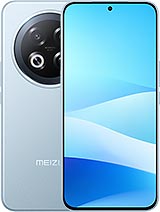
Note 16 Pro
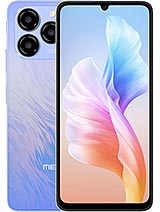
21 Note
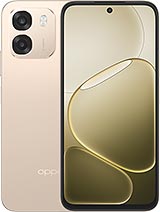
A6 4G