Meizu Note 16 Pro review
The Meizu Note 16 Pro suits anyone who values a bright, durable, everyday phone with practical charging and doesn't need gaming performance or zoom. Skip it if you're a mobile gamer who wants to run the latest games on high settings or if you rely on 5x+ zoom—a slightly pricier rival with a faster chip or telephoto lens will serve you better.

This review is written with AI assistance from Meizu’s published specifications and public benchmark data for the Meizu Note 16 Pro, and the rating is spec-based. GoSolo does not physically test devices; where we estimate real-world behaviour such as battery life or charge time, we say so. How we rate phones.
Overview
The Meizu Note 16 Pro is a solid mid-range 5G phone with a bright 144Hz OLED screen, fast 80W charging, and reliable everyday performance from the Snapdragon 7s Gen 3. At roughly €190 it punches above its weight on display and durability, but the camera falls short of rivals in this price bracket and the performance ceiling limits demanding gaming.
Design & build
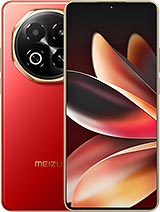
At 197.5g and 8.4mm thick, the Note 16 Pro feels light and compact in hand—a rare comfort in a phone with a 6.78-inch display. The flat frame and matte finish are practical rather than showy, and the weight distribution works well for one-handed use. IP68 water and dust resistance plus a 1.8m drop rating give real peace of mind; you can use this phone in the rain or by a pool without fear. Build materials aren't flagged in the spec sheet, but the thinness and lightness suggest aluminum and plastic rather than flagship glass—that's a smart trade-off at this price.
Display
The 6.78-inch OLED screen is the device's standout feature. At 144Hz, scrolling through feeds and menus feels noticeably smoother than a 90Hz panel, and the 1600 nits peak brightness means you can actually see the screen in bright sunlight without tilting it. The 440 ppi density is sharp enough; colors and contrast are typical OLED quality, deep and vibrant. This is a genuinely useful upgrade over what most mid-range competitors ship, and at this price it's a real win.
Performance
The Snapdragon 7s Gen 3 is a capable upper-midrange chip that handles messaging, social media, streaming, and everyday multitasking without lag. For mobile gaming, expect to run mid-tier titles like PUBG Mobile and Genshin Impact at medium-to-high settings with stable frame rates, but you won't hit ultra-high presets or maintain 120fps in demanding games. By mid-2025 standards at this price, it's competent but not cutting-edge; rivals are beginning to ship faster chips at the same cost. The 8–16GB RAM options are generous and future-proof daily use for years.
Camera
The 50MP f/1.8 main sensor is the workhorse. Its large aperture and resolution deliver decent low-light shots and detailed daytime photos, competitive with what other €180–200 phones offer. The 8MP ultrawide (15mm) captures wider scenes and group photos without the distortion some cheaper ultrawide lenses introduce. The 2MP telephoto, however, is a spec-sheet filler—it lacks the resolution and optical quality to produce usable zoomed shots, so ignore it exists. For this price, the setup is adequate but not exceptional; you're paying for the bright screen and fast charging more than the camera.
Battery & charging
The 6200 mAh battery runs for about 1.5–2 days with light use (messaging, browsing, calls) and a single day with heavy use (video, gaming). That's normal for mid-range phones today. The real strength is the 80W wired charging—roughly 30–45 minutes from empty to full is genuinely quick, so a pre-work top-up can get you through most of a day without a midday pit stop. There's no wireless charging, which is standard for this tier, and the lack of a bundled charger is common too but worth noting if you need a quick replacement.
Software
Flyme AIOS 2 runs on top of Android and handles system tasks smoothly enough. The interface is responsive and the basics are intuitive, though Chinese ROMs can be heavier and more ad-prone than stock Android. For global users, regional restrictions or cloud service quirks may matter less than for China-focused phones, but that depends on your region and app ecosystem. Performance-wise it doesn't lag the hardware, which is the baseline you need.
Value & verdict
At around €190, the Meizu Note 16 Pro delivers genuine strengths in display brightness, charging speed, and durability, plus a capable processor and decent primary camera. It's a phone that prioritizes practical daily life—a smooth screen, quick top-ups, and survival against drops—over performance ceilings or zoom prowess. For someone who wants a reliable 5G phone with a real screen and fast charging, and who doesn't need to push gaming or demand zoom, it's good value. If you game hard or want the fastest chip for your money, rivals with higher-end Snapdragon processors offer more headroom at a similar price.
Verdict
The Meizu Note 16 Pro suits anyone who values a bright, durable, everyday phone with practical charging and doesn't need gaming performance or zoom. Skip it if you're a mobile gamer who wants to run the latest games on high settings or if you rely on 5x+ zoom—a slightly pricier rival with a faster chip or telephoto lens will serve you better.
- 144Hz OLED with 1600 nits peak brightness—scrolling is smooth and the screen stays readable in direct sunlight
- 80W charging fills the 6200 mAh battery in about 30–45 minutes, practical for a quick top-up
- IP68 rated and drop-tested to 1.8m, meaning it actually survives daily abuse without a case
- Slim 8.4mm body and under 200g keep it comfortable to hold and pocket for hours
- The 2MP telephoto sensor is essentially decorative—real zoom is out of reach and you're better off just cropping
- Snapdragon 7s Gen 3 handles day-to-day use fine but struggles with demanding games at high settings; rivals at this price now offer faster chips
Meizu Note 16 Pro Key Specifications
The essentials at a glance. See the full spec sheet.
| Released | 2025, May 13 |
|---|---|
| Display | 6.78 inches, 111.0 cm2 (~88.9% screen-to-body ratio), OLED, 1B colors, 144Hz, 700 nits (typ), 1600 nits (peak), 4500 nits (peak) |
| Resolution | 1224 x 2720 pixels, 20:9 ratio (~440 ppi density) |
| Chipset | Qualcomm SM7635 Snapdragon 7s Gen 3 (4 nm) |
| RAM & storage | 256GB 8GB RAM, 256GB 12GB RAM, 512GB 12GB RAM, 512GB 16GB RAM |
| Main camera | 50 MP, f/1.8, 26mm (wide), PDAF 8 MP, f/2.2, 15mm (ultrawide) 2 MP, f/2.4 |
| Selfie camera | 8 MP, f/2.1 |
| Battery | 6200 mAh |
| Charging | 80W wired, QC4+, PD3.0, PPS |
| Software | Flyme AIOS 2 |
| Dimensions | 163.8 x 76.2 x 8.4 mm (6.45 x 3.00 x 0.33 in) |
| Weight | 197.5 g (6.98 oz) |
| Durability | IP66/IP68 dust tight and water resistant (high pressure water jets; immersible up to 1.5m for 30 min) Drop resistant up to 1.8m |
| Network | GSM / HSPA / LTE / 5G |
| NFC | Yes |
| USB | USB Type-C 2.0 |
Meizu Note 16 Pro FAQ
Common questions, answered from the spec sheet.
Does the Note 16 Pro support 5G?
Yes. The Note 16 Pro supports 5G networks.
What chipset does the Note 16 Pro use?
The Note 16 Pro runs on the Qualcomm SM7635 Snapdragon 7s Gen 3 (4 nm).
What display does the Note 16 Pro have?
A 6.78 inches, 111.0 cm2 (~88.9% screen-to-body ratio) OLED, 1B colors, 144Hz, 700 nits (typ), 1600 nits (peak), 4500 nits (peak), 1224 x 2720 pixels, 20:9 ratio (~440 ppi density).
How big is the Note 16 Pro battery?
The Note 16 Pro has a 6200 mAh battery. Charging is rated at 80W wired, QC4+, PD3.0, PPS.
Does the Note 16 Pro have NFC?
Yes, the Note 16 Pro has NFC.
Is the Note 16 Pro water resistant?
The Note 16 Pro carries a IP66/IP68 dust tight and water resistant (high pressure water jets; immersible up to 1.5m for 30 min) Drop resistant up to 1.8m rating.
Does the Note 16 Pro support a microSD card?
No, the Note 16 Pro does not support expandable storage.
Does the Note 16 Pro have a headphone jack?
No, the Note 16 Pro does not have a 3.5mm headphone jack.
Alternatives to consider
If the Note 16 Pro isn’t quite right, these are the closest calls.

Note 22 Pro
Note 16

Lucky 08

22
Galaxy A56