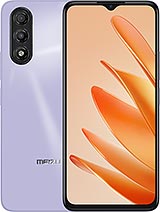
Meizu Note 21 Pro review
This phone rewards patience and stationary use: buy it if you live or work where you can charge daily, do not game heavily, and value screen space and battery life over raw speed or cutting-edge features. Anyone who charges on the move, games regularly, or expects visible performance gains should look at newer chips or faster chargers in the same price band.
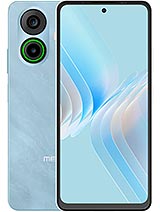
This review is based on Meizu’s published specifications and public benchmark data for the Meizu Note 21 Pro, and the rating is spec-based. GoSolo does not physically test devices; where we estimate real-world behaviour such as battery life or charge time, we say so. How we rate phones.
Overview
The Meizu Note 21 Pro is a large, battery-friendly phone built around a 6.78-inch 120Hz display and 5000mAh cell—it prioritises screen space and endurance over raw performance or camera prowess. For buyers who need a screen to work on and want to charge only once a day, it delivers; for anyone else, the mid-range Helio G99 chipset and modest camera will feel dated even by 2024 standards.
Design & build
The body dimensions and weight are unspecified in the sheet, so little can be judged about grip or portability. What is clear is that 6.78 inches is a genuinely large phone—taller than most flagship phablets and closer to a small tablet. That size is deliberate: Meizu is targeting users who want real screen real estate, not those who prioritise one-handed use. The addition of a microSD slot and the 3.5mm jack suggests a design philosophy of practical additions over thinness, which aligns with a phone aimed at people who value utility over flash.
Display
A 6.78-inch IPS LCD with 120Hz refresh and 550-nit peak brightness is a reasonable pairing for a 2024 budget-to-midrange phone. The 1080×2400 resolution yields about 388 ppi, which is sharp enough for text and video at normal viewing distance on a screen this size—no graininess, though not pixel-dense by flagship standards. The 120Hz refresh makes scrolling through social media and email feel fluid, a noticeable step up from 60Hz models still common in this price tier. The 550-nit peak is adequate for indoor use and typical overcast outdoor reading, but direct sunlight will wash out the display noticeably compared to phones with 800-nit or brighter panels. For a phone marketed partly on screen size and longevity, the display does its job without pretence.
Performance
The Mediatek Helio G99 with Mali-G57 graphics is a proven upper-midrange chip—capable for everyday tasks, messaging, streaming video, and casual gaming, but not a speedster. Eight gigabytes of RAM ensures smooth multitasking in normal use. Where the Helio G99 shows its age is in sustained load: intensive games and heavy apps will thermal-throttle under prolonged use, meaning frame rates will dip and battery will drain faster than on newer flagship processors. Daily browsing, social media, and light work apps run without hiccup. The point is that this phone is honest about its tier—it is not pretending to be a gaming machine, and buyers should not expect one. For everyday users, it is fit; for mobile gamers or anyone running memory-hungry apps all day, the budget processor becomes a real ceiling.
Software
Flyme OS runs on top of the hardware. The spec sheet offers no detail on version, update cadence, or manufacturer promise of long-term support, so little concrete can be said. What matters is that Flyme has a reputation for customisation and feature density, which appeals to power users but can feel bloated to others. Without hands-on time or detailed software support information, this remains a wildcard—worth checking forums and reviews specific to your region to understand update frequency and whether Meizu's support model suits your patience.
Camera
The main camera pairs a 64MP sensor with autofocus and a 2MP auxiliary (likely macro or depth). The selfie is 13MP. In daylight, the 64MP sensor produces detailed photos and competent video, leveraging good natural light. Low-light photography is where the sensor size limits detail and noise control—larger sensors or dedicated night modes (neither present here) handle shadow scenes far better. The camera is a straightforward mid-range imaging setup: functional in daylight, workable in decent light indoors, and limited after sunset. No ultrawide, no telephoto—just the main and selfie. For social media sharing and everyday snapshots, it is adequate; for photography enthusiasts or anyone who shoots in dim restaurants or outdoors after dark regularly, the limitations become apparent quickly.
Battery & charging
A 5000mAh battery is substantial and translates to roughly 14 to 18 hours of mixed daily use (messaging, social media, light video, some gaming) before needing charge. Heavy gaming compresses that to an afternoon. The 30W wired charging is middle-ground for its year—faster than older 10W trickle chargers but slower than rivals now hitting 60W and beyond. A full charge takes about 60 to 80 minutes, so top-ups in the final 10 minutes before leaving home are not realistic. The tradeoff is clear: you gain a full day of endurance, which matters for users away from outlets, but sacrifice quick-top-up convenience. For office workers or home-based users, a single daily charge is fine; for people on the road, the charging speed becomes a hassle.
Value & verdict
The Meizu Note 21 Pro is built for a specific buyer: someone who wants a large, legible screen, all-day battery life, and practical features like the 3.5mm jack and expandable storage, and who is happy to trade cutting-edge performance and camera polish for those priorities. The Helio G99 is not slow, just honest about its limits. LTE-only connectivity keeps you off 5G networks, which is a tangible difference in areas where 5G is available and built out, but a non-issue in regions without it. The phone launched in late 2024, so it is current but not bleeding-edge. Price positioning below $200 USD equivalent would make it compelling for durability and battery; nearer to or above $250 begins to feel stretched against phones with newer chips, faster charging, or better cameras in the same range. In south Asian or African markets where 5G infrastructure is sparse and users value screen and battery over synthetic performance metrics, this device suits practical needs. For tech enthusiasts or those with good access to 5G networks and the budget for it, competitors with newer silicon and faster charging deserve serious consideration.
Verdict
This phone rewards patience and stationary use: buy it if you live or work where you can charge daily, do not game heavily, and value screen space and battery life over raw speed or cutting-edge features. Anyone who charges on the move, games regularly, or expects visible performance gains should look at newer chips or faster chargers in the same price band.
- 6.78-inch 120Hz IPS display offers genuine screen real estate and smooth scrolling without costing an arm, rare at this price point
- 5000mAh battery comfortably reaches a full day of mixed use, a clear strength against smaller-celled midrange rivals
- Side-mounted fingerprint reader, microSD expansion, 3.5mm headphone jack, and dual SIM speak to practical design over trend-chasing
- Helio G99 is capable for everyday and light creative work without thermal drama in normal conditions
- 30W charging takes 60–80 minutes for a full cycle, noticeably slower than 60W+ chargers now standard in mid-range competitors
- Helio G99 throttles under sustained gaming and heavy multitasking, narrowing the phone's appeal for power users
- LTE-only means download and upload speeds lag 5G-equipped phones where 5G is available, a gap that widens yearly
Meizu Note 21 Pro Key Specifications
The essentials at a glance. See the full spec sheet.
| Released | 2024, September 13 |
|---|---|
| Display | 6.78 inches, 111.0 cm2, IPS LCD, 120Hz, 550 nits |
| Resolution | 1080 x 2400 pixels, 20:9 ratio (~388 ppi density) |
| Chipset | Mediatek Helio G99 (6 nm) |
| RAM & storage | 256GB 8GB RAM |
| Main camera | 64 MP, AF 2 MP |
| Selfie camera | 13 MP |
| Battery | 5000 mAh |
| Charging | 30W wired |
| Software | Flyme OS |
| Network | GSM / HSPA / LTE |
| NFC | Yes |
| USB | USB Type-C |
Meizu Note 21 Pro FAQ
Common questions, answered from the spec sheet.
Does the Note 21 Pro support 5G?
No. The Note 21 Pro tops out at GSM / HSPA / LTE, without 5G.
What chipset does the Note 21 Pro use?
The Note 21 Pro runs on the Mediatek Helio G99 (6 nm).
What display does the Note 21 Pro have?
A 6.78 inches, 111.0 cm2 IPS LCD, 120Hz, 550 nits, 1080 x 2400 pixels, 20:9 ratio (~388 ppi density).
How big is the Note 21 Pro battery?
The Note 21 Pro has a 5000 mAh battery. Charging is rated at 30W wired.
Does the Note 21 Pro have NFC?
Yes, the Note 21 Pro has NFC.
Does the Note 21 Pro support a microSD card?
Yes, the Note 21 Pro supports expandable storage (microSDXC).
Does the Note 21 Pro have a headphone jack?
Yes, the Note 21 Pro has a 3.5mm headphone jack.
Alternatives to consider
If the Note 21 Pro isn’t quite right, these are the closest calls.
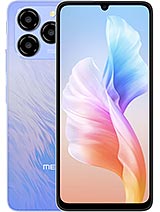
21 Note
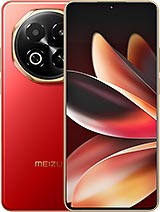
Note 16
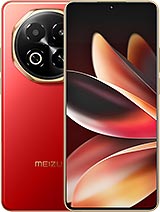
Note 22
Blue 20

Galaxy A07 4G