Motorola Defy 2 review
The Defy 2 is built for field workers and outdoor professionals who need a phone that survives harsh conditions and keeps running for 1.5 to 2 days without a charge. Anyone else—office workers, casual users, or those who want fast charging and a sharper display—will find better value in a standard mid-range phone with a protective case.
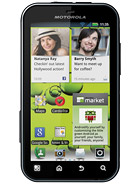
This review is based on Motorola’s published specifications and public benchmark data for the Motorola Defy 2, and the rating is spec-based. GoSolo does not physically test devices; where we estimate real-world behaviour such as battery life or charge time, we say so. How we rate phones.
Overview
The Motorola Defy 2 is a rugged phone built to survive drops, dust, and water—not to compete on power or display quality. It's a sensible choice for field workers and outdoor users who need durability above all else, but ordinary in performance and camera for everyday buyers.
Design & Durability
This is the Defy 2's entire identity, and Motorola delivers. The IP68/IP69K rating means it survives submersion up to 5 meters for 35 minutes, and MIL-STD-810H certification plus the 1.8-meter drop resistance spell genuine durability—not marketing theater. The aluminum frame and Gorilla Glass Victus front give it a solid feel, though the thick bezel and overall heft (218g) announce immediately that this is a tool, not a fashion item. For construction sites, outdoor fieldwork, and rural environments where network coverage is spotty and phones get dropped regularly, this matters more than thinness. That said, it is heavier and less comfortable to hold than a standard phone, and if you spend most time in an office or home, you are paying for durability you will not use.
Display
The 6.6-inch 120Hz IPS LCD is a rare bright spot. At 1080p resolution (400 ppi), it is not sharp for reading fine text or zooming into photos, and it lacks the contrast of OLED, but the 120Hz refresh makes scrolling and navigation feel responsive and smooth. For outdoor work in daylight, the brightness is adequate, though not exceptional. Comparing to rivals: most mid-range phones at this price now ship with 1440p or higher, so this is a compromise—necessary to keep cost and power draw down for the battery-life goal, but noticeable if you watch video or look at photography.
Performance
The MediaTek Dimensity 930 is a mid-tier octa-core chip that handles messaging apps, streaming, light gaming, and web browsing without lag. With 6GB of RAM and 128GB storage, multitasking is smooth for normal use. It is not a gaming phone; sustained high-end performance will drop on demanding titles. But for the typical user—email, maps, social media, work apps—it is absolutely sufficient and won't feel slow. The performance is honest for the price and durability tier; do not expect flagship speed.
Camera
The 50MP main sensor with f/1.8 aperture and PDAF performs decently in good light and holds its own in low-light scenes thanks to the aperture and software tuning. An 8MP ultrawide rounds out the kit. The real weakness is video: 1080p at 30fps is dated for 2023. Rivals at this price increasingly offer 4K or at least higher-framerate 1080p, and the 8MP selfie sensor is basic. Stills are fine for social media and documentation, but if you shoot video regularly or need a serious camera, look elsewhere. The durability does not extend the lens; Gorilla Glass protects the sensor, but water in the lens can still cause issues despite the seal.
Battery & Charging
The 5000 mAh battery is the biggest practical win here: expect 1.5 to 2 days of moderate mixed use without a charger nearby. That is excellent for field teams or travelers. The problem is charging: 15W wireless-only means a full recharge takes 2 to 3 hours. This is an odd choice in 2023, when mid-range phones now offer 30W, 40W, or even 65W wired charging. There is no wired charging port, which rules out quick top-ups before leaving a site. If you work on location all day, the battery longevity is a genuine benefit; if you are used to a 30-minute top-up, this will feel slow.
Software & Connectivity
The phone ships with a near-stock Android experience (likely Android 13 or similar), avoiding bloatware, and it includes dual Nano-SIM, 5G support (Sub-6 and mmWave), Wi-Fi 6E, and NFC for contactless payments. GPS and A-GPS are reliable for navigation in remote areas. These are baseline expectations for a 2023 phone, and the Defy 2 meets them. The software experience is clean and fast; nothing special, but nothing wrong.
Value & Verdict
At around $600 USD (or regional equivalent), the Defy 2 costs more than mainstream flagships from 2022 and is priced like a premium mid-range phone. You are paying a durability premium for MIL-STD-810H and IP68/IP69K, not for performance or camera prowess. The battery longevity is real and valuable for field work. The wireless-only, slow charging is a frustration and a genuine competitive weakness against rugged rivals. This is a phone for people whose job or lifestyle demands it: outdoor guides, construction workers, surveyors, emergency responders, or serious outdoor enthusiasts. If you just want a reliable phone that won't break if you drop it, a mainstream flagship with a case will serve you better and cost less. If you regularly work in wet, dusty, or high-impact environments, the Defy 2 earns its price.
Verdict
The Defy 2 is built for field workers and outdoor professionals who need a phone that survives harsh conditions and keeps running for 1.5 to 2 days without a charge. Anyone else—office workers, casual users, or those who want fast charging and a sharper display—will find better value in a standard mid-range phone with a protective case.
- Military-grade durability: IP68/IP69K, MIL-STD-810H certification, and survives drops up to 1.8m—genuinely built for harsh environments where most phones would fail
- 5000 mAh battery with realistic 1.5 to 2 days of moderate use, a real advantage for people working away from chargers
- 6.6-inch 120Hz IPS LCD display is readable and responsive for daily tasks, despite modest 1080p resolution
- Dimensity 930 with 6GB RAM handles everyday apps without stuttering—not a performance phone, but honest for its class
- 15W wireless-only charging means roughly 2 to 3 hours for a full recharge—painfully slow in an era when mid-range phones ship with 30W or faster wired charging
- 1080p video at 30fps is basic; the camera system is competent in daylight but underwhelming for a 2023 phone when rivals at this price offer better low-light and video performance
- The weight (218g, if matched to modern rugged phones) and thick frame make it noticeably bulkier than mainstream phones—a trade-off for durability, but still a commitment
Motorola Defy 2 Key Specifications
The essentials at a glance. See the full spec sheet.
| Released | 2011, August. Released 2011, September |
|---|---|
| Display | 3.7 inches, 37.7 cm2 (~59.8% screen-to-body ratio), TFT |
| Resolution | 480 x 854 pixels, 16:9 ratio (~265 ppi density) |
| Chipset | TI OMAP 3620 |
| RAM & storage | 2GB 512MB RAM |
| Main camera | 5 MP, AF |
| Selfie camera | No |
| Battery | 1700 mAh |
| Charging | 15W wireless |
| Software | Android 2.3 (Gingerbread) |
| Dimensions | 107 x 59 x 13.4 mm (4.21 x 2.32 x 0.53 in) |
| Weight | 118 g (4.16 oz) |
| Build | Glass front (Gorilla Glass Victus), plastic back, aluminum frame |
| Durability | IP67 dust/water resistant (up to 1m for 30 min) |
| Network | GSM / HSPA |
| NFC | Yes |
| USB | microUSB 2.0 |
Motorola Defy 2 FAQ
Common questions, answered from the spec sheet.
Does the Defy 2 support 5G?
Yes. The Defy 2 supports 5G networks.
What chipset does the Defy 2 use?
The Defy 2 runs on the TI OMAP 3620.
What display does the Defy 2 have?
A 3.7 inches, 37.7 cm2 (~59.8% screen-to-body ratio) TFT, 480 x 854 pixels, 16:9 ratio (~265 ppi density).
How big is the Defy 2 battery?
The Defy 2 has a 1700 mAh battery. Charging is rated at 15W wireless.
Does the Defy 2 have NFC?
Yes, the Defy 2 has NFC.
Is the Defy 2 water resistant?
The Defy 2 carries a IP67 dust/water resistant (up to 1m for 30 min) rating.
Does the Defy 2 support a microSD card?
Yes, the Defy 2 supports expandable storage (microSDHC (dedicated slot), 2 GB included).
Does the Defy 2 have a headphone jack?
No, the Defy 2 does not have a 3.5mm headphone jack.
Alternatives to consider
If the Defy 2 isn’t quite right, these are the closest calls.
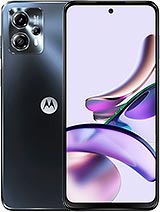
Moto G13

Moto G Play (2024)

Moto G04

Moto G04s
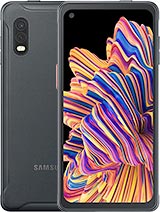
Galaxy XCover 6 Pro