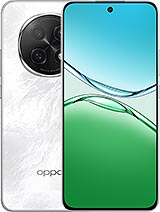
Motorola Edge 2024 review
The Edge 2024 suits someone who wants a bright, responsive screen and lives outdoors or works in bright offices, and who charges at home every night. Skip it if you game seriously on mobile or need camera prowess beyond day-to-day snaps.
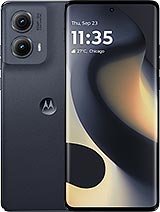
This review is based on Motorola’s published specifications and public benchmark data for the Motorola Edge 2024, and the rating is spec-based. GoSolo does not physically test devices; where we estimate real-world behaviour such as battery life or charge time, we say so. How we rate phones.
Overview
The Edge 2024 pairs a 6.6-inch 1300-nit OLED screen and 68W charging with a mid-tier Snapdragon 7s Gen 2, making it a solid all-rounder for $170 if you don't need raw power. The bright display and fast charging hit well above the price point; the trade-off is a processor that stumbles on heavy games and a camera that takes competent shots but rarely impresses.
Design and build
At 174g and 8.1mm thick, the Edge 2024 feels light and slim without the fragility of ultra-thin phones. The aluminum frame and silicone polymer back (marketed as eco leather) give a balanced feel between durability and weight—not as premium as glass sandwich flagships, but more tactile than most mid-range plastics. The phone earns IP68 rating and survives dunking, which matters for the price. However, Corning Gorilla Glass 3 is dated; it scratches more easily than the Gorilla Glass Victus or Armor found on rivals at this price today. For a $170 phone in 2024, the build is respectable but not a standout.
Display
This 6.6-inch P-OLED is the Edge's strongest card. At 1300 nits peak brightness and 144Hz refresh, it remains readable in direct sunlight and scrolls smoothly through everything from Instagram to spreadsheets. The 1080p resolution is entry-level by 2024 standards, but at 402 ppi on a 6.6-inch panel, text stays sharp and scaling feels natural. You won't confuse it with a flagship's display, but for everyday use and the price, the brightness and smoothness deliver real value. Most $170 phones settle for 60Hz LCDs; this one doesn't.
Performance
The Snapdragon 7s Gen 2 is capable enough for day-to-day work: messaging, social media, browsing, and light productivity run without stalls. With 8GB RAM and UFS 2.2 storage, multitasking is smooth enough that you won't notice lag switching between apps. Where it falters is sustained gaming—anything demanding will thermal-throttle within 15 to 20 minutes, and frame rates will drop noticeably. For the price and year, this chipset is right where it should be: not a flagship killer, but solid for someone who uses their phone for everything except AAA games. Heavy gamers should look elsewhere.
Software
Android 14 ships without bloatware or aggressive skinning, which is increasingly rare at this price. Motorola's overlay is light enough that the OS feels responsive and close to stock. Updates, though, are uncertain; Motorola's track record on mid-range devices is patchy. You can expect about two major OS upgrades and maybe three years of patches, but budget phones rarely do better on that front. For buyers in emerging markets who value a clean, usable Android experience over guaranteed long-term support, this is fine.
Camera
The 50MP main sensor with f/1.8 aperture and OIS handles daylight and low-light scenes competently. It captures detail and color balance leans natural rather than oversaturated. The 13MP 120-degree ultrawide is functional but soft at the edges, a common weakness at this price. The 32MP selfie is serviceable for video calls and social media. Video tops out at 4K 30fps, which is slow by 2024 standards—most rivals at $170 offer 60fps. None of the cameras will wow you; they do the job without drama, which is what most buyers at this price expect. If computational photography or night-mode magic matters to you, this isn't the phone.
Battery and charging
The 5000 mAh battery delivers about a full day of moderate use—work, messaging, social media, and video calls. Heavy users will need a top-up by evening, which is typical for mid-range phones in 2024. The 68W wired charging reaches full in roughly 40 to 50 minutes, which is impressive for the price and saves time compared to rival offerings at $150 to $200. The 15W wireless charging is more novelty than feature; it's slow and meant for overnight or desk charging, not practical daily use. Wired charging is the real draw here.
Value and verdict context
At $169.99, the Edge 2024 cuts a smart line: you get a bright OLED screen, fast wired charging, and reliable mid-tier performance for what rivals often charge for 60Hz LCDs and 30W charging. The compromises are real—last-gen glass protection, a processor that chokes on heavy games, a camera that never excels—but none of them sting at this price. This phone works best for someone who spends time outdoors, values screen quality, and charges at home regularly. It's a refreshingly unspeaker-ish phone: honest, functional, no hype.
Verdict
The Edge 2024 suits someone who wants a bright, responsive screen and lives outdoors or works in bright offices, and who charges at home every night. Skip it if you game seriously on mobile or need camera prowess beyond day-to-day snaps.
- 1300-nit OLED display with 144Hz refresh is rare at this price and noticeably brighter than 60Hz LCD competition.
- 68W wired charging fills the battery in under an hour, saving time versus the 30W standard at this price.
- Light, slim design (174g, 8.1mm) with IP68 durability and no unnecessary weight or bulk.
- Gorilla Glass 3 scratches more easily than Gorilla Glass Victus or Armor on rival phones at the same price today.
- Snapdragon 7s Gen 2 throttles on sustained AAA gaming; frame rates drop noticeably after 15–20 minutes of heavy load.
- Camera is competent but uninspiring; 4K video maxes at 30fps when rivals offer 60fps at this price point.
Motorola Edge 2024 Key Specifications
The essentials at a glance. See the full spec sheet.
| Released | 2024, June 04 |
|---|---|
| Display | 6.6 inches, 103.6 cm2 (~90.2% screen-to-body ratio), P-OLED, 1B colors, 144Hz, 1300 nits (peak) |
| Resolution | 1080 x 2400 pixels, 20:9 ratio (~402 ppi density) |
| Chipset | Qualcomm SM7435-AB Snapdragon 7s Gen 2 (4 nm) |
| RAM & storage | 256GB 8GB RAM |
| Main camera | 50 MP, f/1.8, (wide), 1/1.5", 1.0µm, multi-directional PDAF, OIS 13 MP, f/2.2, 120˚ (ultrawide), 1.12µm, AF |
| Selfie camera | 32 MP, f/2.4, (wide), 0.7µm, AF |
| Battery | 5000 mAh |
| Charging | TurboPower up to 68 W, Wireless: Charger power 15 W |
| Software | Android 14 |
| Dimensions | 159.6 x 72 x 8.1 mm (6.28 x 2.83 x 0.32 in) |
| Weight | 174 g (6.14 oz) |
| Build | Glass front, aluminum frame, silicone polymer back (eco leather) |
| Durability | IP68 dust tight and water resistant (immersible up to 1.5m for 30 min) |
| Network | GSM / HSPA / LTE / 5G |
| NFC | Yes |
| USB | USB Type-C 3.1, DisplayPort 1.4 |
Motorola Edge 2024 FAQ
Common questions, answered from the spec sheet.
Does the Edge 2024 support 5G?
Yes. The Edge 2024 supports 5G networks.
What chipset does the Edge 2024 use?
The Edge 2024 runs on the Qualcomm SM7435-AB Snapdragon 7s Gen 2 (4 nm).
What display does the Edge 2024 have?
A 6.6 inches, 103.6 cm2 (~90.2% screen-to-body ratio) P-OLED, 1B colors, 144Hz, 1300 nits (peak), 1080 x 2400 pixels, 20:9 ratio (~402 ppi density).
How big is the Edge 2024 battery?
The Edge 2024 has a 5000 mAh battery. Charging is rated at TurboPower up to 68 W, Wireless: Charger power 15 W.
Does the Edge 2024 have NFC?
Yes, the Edge 2024 has NFC.
Is the Edge 2024 water resistant?
The Edge 2024 carries a IP68 dust tight and water resistant (immersible up to 1.5m for 30 min) rating.
Does the Edge 2024 support a microSD card?
No, the Edge 2024 does not support expandable storage.
Alternatives to consider
If the Edge 2024 isn’t quite right, these are the closest calls.
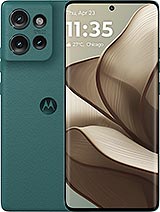
Edge 50
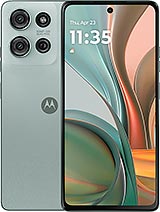
Moto G75 5G
ThinkPhone 25
Edge 2025
Galaxy M56 5G