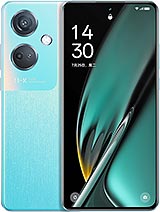
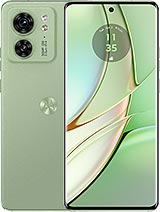
Motorola Edge 40 review
The Edge 40 suits someone who values screen quality, thinness, and simplicity over gaming muscle or advanced camera reach. If you need a workhorse mid-ranger with strong performance and zoom, or crave gaming at high settings, look elsewhere.
This review is based on Motorola’s published specifications and public benchmark data for the Motorola Edge 40, and the rating is spec-based. GoSolo does not physically test devices; where we estimate real-world behaviour such as battery life or charge time, we say so. How we rate phones.
Overview
The Edge 40 delivers the display and thinness Motorola promises—bright, smooth P-OLED at 144Hz in a svelte 7.6mm body—but the Dimensity 8020 and 4400 mAh battery show its true mid-range nature. It is a clean, capable everyday phone, not a workhorse for power users or demanding work.
Design & build
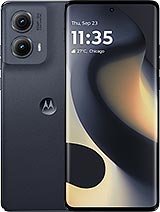
At 7.6mm and 167g, the Edge 40 is thin and light enough that it feels like a proper pocket phone, rare in the $180–220 range where most rivals are chunky and heavier. The glass front and aluminum frame give it real solidity, though the plastic back (or eco leather option) is a cosmetic compromise for the price. IP68 waterproofing to 1.5 meters is reassuring and genuinely useful if you live somewhere rainy or use your phone poolside. The design doesn't pretend to be more than it is, and that restraint works in its favor.
Display
The 6.55-inch P-OLED at 144Hz is the standout spec, and it delivers. 1200 nits peak brightness means you can actually read this outdoors in strong sun—not a given at this price. The 1080p resolution at 402 ppi is acceptable; it is not sharp enough to notice pixels at arm's length, though side-by-side with a 1440p screen it looks softer. HDR10+ support works where content exists. The 144Hz refresh feels buttery in scrolling and swiping, though the battery cost of running it constantly is real. For someone who values a viewport more than raw sharpness, this screen alone is worth considering.
Performance
The Dimensity 8020 is the mild compromise here. It runs everyday tasks—messaging, social media, light browsing—without stutter, and handles moderate gaming (Genshin Impact on medium, Call of Duty Mobile on high settings) at playable frame rates. Where it falters is demanding AAA ports at max settings; you will drop frames and throttle. The Mali-G77 GPU is respectable but not competitive with Snapdragon or MediaTek's own flagship chips. For someone who browses, works in productivity apps, and plays casual games, it is enough. For anyone serious about gaming or multitasking under load, the lack of thermal headroom shows.
Software
Android 13 with two promised major version upgrades is a standard, safe offer for a mid-ranger launched in 2023. Motorola's Android skin is light and bloat-free—no aggressive preloads of rubbish apps—which is a small blessing in a category bloated with carrier bloatware and bloated OEM skins. The experience feels clean and close to stock, so updates should arrive faster and without drama. By 2026 standards this phone will likely see Android 15; after that it drops off.
Camera
The 50MP main sensor with f/1.4 and optical image stabilization is the real camera story. It captures sharp, well-exposed photos in daylight and dim interiors without excessive noise, and the stabilization keeps video and handheld shots steady. The wide aperture helps low-light performance, though Motorola's processing is conservative and won't match aggressive night modes from rivals. The 13MP ultrawide at 120 degrees is cramped for 2023; most competitors in this space went 114–118 degrees and produced wider framings. Zoom is entirely digital crop, so forget distant subjects. The 32MP selfie is decent for video calls and social media selfies; it softens detail but flatters without looking artificial.
Battery & charging
The 4400 mAh battery yields about 20 to 24 hours of mixed use—messaging, browsing, some video—which is acceptable for one full day but no more. If you run 144Hz constantly, game, or use GPS navigation, you will drain it by evening. Moderate use gets you through comfortably. The 68W wired charging is fast enough; about 60 to 70 percent in 30 minutes is realistic, reaching full in roughly 50 to 60 minutes. The 15W wireless charging is a nice-to-have but painfully slow for daily top-ups; it is best reserved for overnight or desk charging. The battery is not user-replaceable, so a aging unit in year two or three means a service visit.
Value & verdict-context
At $189–226 (depending on region and storage), the Edge 40 occupies a narrow band: it is too expensive for true budget phones and too underpowered for flagship hunters. Its strength is niche but real: if you want a thin, light, brightly-screened everyday phone with good battery life under normal use and a clean software experience, it delivers. The 144Hz P-OLED and minimal bloat justify the price over no-name alternatives. But if gaming, zoom photography, or processing power matters to you, the Dimensity 8020 and modest zoom range are genuine limitations. The phone is honest about what it is, and that clarity is refreshing.
Verdict
The Edge 40 suits someone who values screen quality, thinness, and simplicity over gaming muscle or advanced camera reach. If you need a workhorse mid-ranger with strong performance and zoom, or crave gaming at high settings, look elsewhere.
- Bright, 144Hz P-OLED display (1200 nits peak) is a genuine strength for a sub-$200 phone, making outdoor use and scrolling feel fluid
- 7.6mm thickness with IP68 durability and 68W charging in a pocket-friendly form factor
- Clean Android 13 with promised two major updates, light skin, minimal bloat
- 50MP main camera with f/1.4 aperture and OIS delivers solid daylight shots and steady video without gimmicks
- Dimensity 8020 and Mali-G77 handle everyday apps and lighter games, but struggle with demanding titles; not future-proof for heavier work
- 4400 mAh battery drains noticeably faster if you use 144Hz all day or game; heavy users may need a midday top-up
- 13MP ultrawide is narrow for a 2023 mid-ranger and crops detail in group photos; no telephoto means zoom is digital only
Motorola Edge 40 Key Specifications
The essentials at a glance. See the full spec sheet.
| Released | 2023, May 04 |
|---|---|
| Display | 6.55 inches, 103.6 cm2 (~90.8% screen-to-body ratio), P-OLED, 144Hz, HDR10+, 1200 nits (peak) |
| Resolution | 1080 x 2400 pixels, 20:9 ratio (~402 ppi density) |
| Chipset | Mediatek Dimensity 8020 (6 nm) |
| RAM & storage | 128GB 8GB RAM, 256GB 8GB RAM |
| Main camera | 50 MP, f/1.4, (wide), 1/1.55", 1.0µm, multi-directional PDAF, OIS 13 MP, f/2.2, 120˚ (ultrawide), 1/3.0", 1.12µm, AF |
| Selfie camera | 32 MP, f/2.4, (wide), 1/3.0", 0.7µm |
| Battery | 4400 mAh |
| Charging | 68W wired15W wireless |
| Software | Android 13, up to 2 major Android upgrades |
| Dimensions | 158.4 x 72 x 7.6 mm (6.24 x 2.83 x 0.30 in) |
| Weight | 167 g or 171 g (5.89 oz) |
| Build | Glass front, aluminum frame, plastic back or eco leather back |
| Durability | IP68 dust tight and water resistant (immersible up to 1.5m for 30 min) |
| Network | GSM / HSPA / LTE / 5G |
| NFC | Yes |
| USB | USB Type-C 2.0, OTG |
Motorola Edge 40 FAQ
Common questions, answered from the spec sheet.
Does the Edge 40 support 5G?
Yes. The Edge 40 supports 5G networks.
What chipset does the Edge 40 use?
The Edge 40 runs on the Mediatek Dimensity 8020 (6 nm).
What display does the Edge 40 have?
A 6.55 inches, 103.6 cm2 (~90.8% screen-to-body ratio) P-OLED, 144Hz, HDR10+, 1200 nits (peak), 1080 x 2400 pixels, 20:9 ratio (~402 ppi density).
How big is the Edge 40 battery?
The Edge 40 has a 4400 mAh battery. Charging is rated at 68W wired15W wireless.
Does the Edge 40 have NFC?
Yes, the Edge 40 has NFC.
Is the Edge 40 water resistant?
The Edge 40 carries a IP68 dust tight and water resistant (immersible up to 1.5m for 30 min) rating.
Does the Edge 40 support a microSD card?
No, the Edge 40 does not support expandable storage.
Does the Edge 40 have a headphone jack?
No, the Edge 40 does not have a 3.5mm headphone jack.
Alternatives to consider
If the Edge 40 isn’t quite right, these are the closest calls.
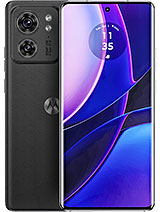
Edge+ 2023
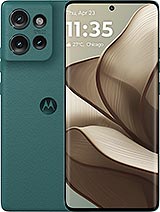
Edge 50
Edge 2024

Edge 40 Pantone

V29