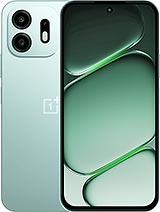
Motorola Moto G Power 2026 review
The Moto G Power 2026 suits budget-conscious users who value a large, bright, waterproof screen and 5G connectivity over raw performance or photography ambition. Anyone expecting fast charging, smooth gaming, or detailed images should cross-shop rivals at this price first—they're probably further along on at least one of those fronts.
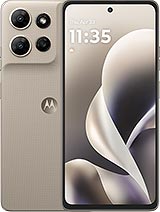
This review is written with AI assistance from Motorola’s published specifications and public benchmark data for the Motorola Moto G Power 2026, and the rating is spec-based. GoSolo does not physically test devices; where we estimate real-world behaviour such as battery life or charge time, we say so. How we rate phones.
Overview
The Moto G Power 2026 is a straightforward budget phone built for all-day messaging and media consumption on a large, bright 6.8-inch screen, with a durable frame and 5G support. At $400, it does the basics well but stumbles when you ask it to do more—modest performance for gaming, modest battery for heavy use, and so-so cameras that won't impress.
Design & Build
The Moto G Power 2026 feels more solid than its $400 price suggests. The glass front and eco-leather back (a thermoplastic that mimics leather texture) avoid the all-plastic trap, while the plastic frame keeps weight down to 208 grams—reasonable for a 6.8-inch phone. Thickness of 8.7mm is unremarkable but not bloated. The real standout is durability: IP68/IP69 certification with MIL-STD-810H compliance means it survives full submersion to 1.5 meters for 30 minutes and high-pressure water jets, a rare guarantee in this price tier that makes it useful for outdoor and trade work. Side-mounted fingerprint and the choice of two colors (Evening Blue and Pure Cashmere) round out a competent if not distinctive package.
Display
The 6.8-inch 120Hz IPS LCD is the phone's strongest asset for the money. Peak brightness of 1000 nits (high brightness mode) keeps it legible outdoors without turning into a mirror, a practical win for budget users who spend time in daylight. The 120Hz refresh rate, common in midrange now, makes scrolling through social media and messaging feel smooth. The trade-off is obvious: 1080 x 2388 pixels at this size yields about 387 ppi, so text and icons sit between sharp and slightly soft compared to denser panels. For scrolling and video, you'll barely notice; for reading small fonts or zooming into photos, the lack of pixel density shows. It's enough for the job but not impressive.
Performance
The MediaTek Dimensity 6300 is a mainstream midrange chip—good enough for messaging apps, social media, and light web browsing, but it hits a wall with anything demanding. Everyday tasks run without lag, and AnTuTu's 424k score places it firmly in the 'gets the job done' camp. The trouble surfaces when you try demanding games or creative apps: 3D titles will stutter at lower settings or drop frames significantly, and processing heavy photos or video will feel sluggish. If your phone is a communication and media device first, this chip is fine. If you game, edit video, or run heavy workloads regularly, you'll feel the compromise. 8GB of RAM is adequate; storage is 128GB with a dedicated microSD slot for expansion, a useful inclusion at this price.
Software
Android 16 arrives fresh out of the box, which is timely for a January 2026 release. Motorola's near-stock overlay keeps bloatware minimal, a breath of air compared to brands that clutter their budget phones. Updates and security patches will depend on Motorola's commitment; they've traditionally been inconsistent on budget lines, so don't expect five years of guaranteed support. The side-mounted fingerprint sensor and standard sensors (accelerometer, gyro, compass, barometer) all work smoothly without drama.
Camera
The 50MP main camera with f/1.8 aperture, PDAF, and OIS is a solid choice for a budget phone and holds up reasonably in good light and lowish light thanks to the wider aperture and stabilization. The 8MP ultrawide at 119 degrees is where corners are cut—weak detail, limited dynamic range, and limited usefulness for anything beyond novelty shots. The 32MP selfie is overspecced but fine for video calls. Video tops out at 1080p, which is frustrating in 2026 when competitors at this price are shipping 4K; you get only 30fps on selfie video as well. The camera system isn't bad for casual snaps and social media, but it lacks the versatility and detail capture rivals are offering.
Battery & Charging
The 5200mAh battery is moderate for a 6.8-inch 120Hz display. Real-world battery life depends heavily on use: light messaging and social media browsing should stretch to a full day (and the spec sheet claims about 13 hours in active use), but video streaming, gaming, or heavy photography will pull it down to 5 to 6 hours of screen-on time. Charging at 30W takes about an hour from empty, which is acceptable but notably slower than midrange rivals now pushing 65W or 100W. Plan for a top-up if you're in a rush; this isn't a quick-charge phone.
Value & Verdict Context
At $400, the Moto G Power 2026 occupies a crowded tier where it competes with Samsung's A-series, Poco, and OnePlus's budget lines. It punches above its weight on durability and screen brightness, areas where many rivals skimp. It falls behind on charging speed and camera reach—areas where the market has raised expectations. The Dimensity 6300 is an honest chip that knows its limits; if you're aware of those limits, you won't be disappointed. The real question is whether the large, bright, tough screen and 5G support justify sitting tight with slower charging and a middling camera suite. For someone who uses their phone for work in rough conditions, for messaging and media, and who doesn't game or shoot seriously, the case is stronger. For anyone wanting modern charging or camera reach, there are sharper alternatives nearby at the same price.
Verdict
The Moto G Power 2026 suits budget-conscious users who value a large, bright, waterproof screen and 5G connectivity over raw performance or photography ambition. Anyone expecting fast charging, smooth gaming, or detailed images should cross-shop rivals at this price first—they're probably further along on at least one of those fronts.
- Large 120Hz IPS LCD with 1000-nit peak brightness, practically readable in direct sunlight and smooth for scrolling even at this resolution.
- IP68/IP69 rating and MIL-STD-810H compliance mean it survives submersion to 1.5 meters and high-pressure water jets, a real advantage for a budget phone.
- 5G and eSIM support out of the box, future-ready for networks and multi-carrier flexibility.
- Gorilla Glass 7i front and eco-leather back give it a feel above its price, and the 208g weight is manageable for a 6.8-inch screen.
- Dimensity 6300 struggles with demanding games and apps; you'll see stuttering in 3D titles and framedrops in anything graphically intensive.
- 30W charging takes about an hour, which is slower than rivals at this price who now offer 65W or faster.
- Camera quality is serviceable but uninspired—the 50MP wide sensor with OIS helps in low light, but the 8MP ultrawide is weak and video maxes out at 1080p, leaving no headroom for detail or zoom.
Motorola Moto G Power 2026 Key Specifications
The essentials at a glance. See the full spec sheet.
| Released | 2025, December 16 |
|---|---|
| Display | 6.8 inches, 110.9 cm2 (~86.3% screen-to-body ratio), IPS LCD, 120Hz, 1000 nits (HBM) |
| Resolution | 1080 x 2388 pixels (~387 ppi density) |
| Chipset | Mediatek Dimensity 6300 (6 nm) |
| RAM & storage | 128GB 8GB RAM |
| Main camera | 50 MP, f/1.8, (wide), 1/2.88", 0.61µm, PDAF, OIS 8 MP, f/2.2, 119˚ 13mm (ultrawide), 1.12µm, AF |
| Selfie camera | 32 MP, f/2.2, (wide) |
| Battery | 5200 mAh |
| Charging | TurboPower up to 30 W |
| Software | Android 16 |
| Dimensions | 166.6 x 77.1 x 8.7 mm (6.56 x 3.04 x 0.34 in) |
| Weight | 208 g (7.34 oz) |
| Build | Glass front (Gorilla Glass 7i), silicone polymer (eco leather) back, plastic frame |
| Durability | IP68/IP69 dust tight and water resistant (high pressure water jets; immersible up to 1.5m for 30 min) MIL-STD-810H compliant* * does not guarantee ruggedness or use in extreme conditions |
| Network | GSM / HSPA / LTE / 5G |
| NFC | Yes |
| USB | USB Type-C 2.0 |
Motorola Moto G Power 2026 FAQ
Common questions, answered from the spec sheet.
Does the Moto G Power 2026 support 5G?
Yes. The Moto G Power 2026 supports 5G networks.
What chipset does the Moto G Power 2026 use?
The Moto G Power 2026 runs on the Mediatek Dimensity 6300 (6 nm).
What display does the Moto G Power 2026 have?
A 6.8 inches, 110.9 cm2 (~86.3% screen-to-body ratio) IPS LCD, 120Hz, 1000 nits (HBM), 1080 x 2388 pixels (~387 ppi density).
How big is the Moto G Power 2026 battery?
The Moto G Power 2026 has a 5200 mAh battery. Charging is rated at TurboPower up to 30 W.
Does the Moto G Power 2026 have NFC?
Yes, the Moto G Power 2026 has NFC.
Is the Moto G Power 2026 water resistant?
The Moto G Power 2026 carries a IP68/IP69 dust tight and water resistant (high pressure water jets; immersible up to 1.5m for 30 min) MIL-STD-810H compliant* * does not guarantee ruggedness or use in extreme conditions rating.
Does the Moto G Power 2026 support a microSD card?
Yes, the Moto G Power 2026 supports expandable storage (microSDXC (dedicated slot)).
Alternatives to consider
If the Moto G Power 2026 isn’t quite right, these are the closest calls.
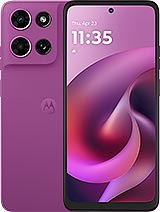
Moto G 2026

Moto G57 Power
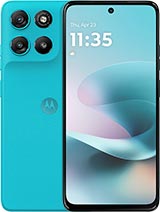
Moto G67 Power 5G
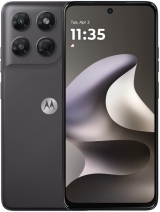
Moto G37 Power
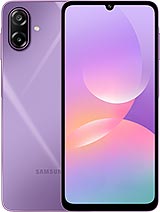
Galaxy M17e