Motorola Moto G17 Power review
Pick this if you live somewhere charging access is spotty or you spend long days away from an outlet and value peace of mind over speed and camera polish. Skip it if you game regularly, edit photos, or expect snappy daily performance—rivals at the same price now offer faster processors and better cameras without sacrificing much battery life.
This review is written with AI assistance from Motorola’s published specifications and public benchmark data for the Motorola Moto G17 Power, and the rating is spec-based. GoSolo does not physically test devices; where we estimate real-world behaviour such as battery life or charge time, we say so. How we rate phones.
Overview
The Moto G17 Power banks on a 6000mAh battery and 30W charging to deliver roughly two days of use, which is its real strength—not blazing performance. It is worth it for buyers in regions with unreliable charging infrastructure or those who simply hate hunting for a plug daily, but the chipset and camera are ordinary for the price and year.
Design & build
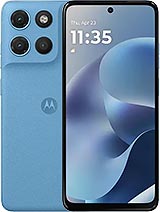
The G17 Power is thin at 8.8mm and uses a glass front with plastic frame and eco-leather back—nothing fussy, but honest. Gorilla Glass 3 resists scratches fine but is not as tough as Glass Victus 2 on pricier rivals. IP64 dust and splash resistance will survive a spilled drink or dusty pocket, not a dip in a pool. The 6.72in chassis feels large enough that one-handed use is a stretch, though the 86.6% screen-to-body ratio means you get a lot of display without bloating the frame. Build is sturdy plastic-and-glass, not premium, but reliable for the segment.
Display
The 1080 x 2400 IPS LCD is sharp at 392 ppi—text stays legible and photos look clean. Peak brightness of 1050 nits in HDR mode handles direct sunlight without washout, a real benefit if you use your phone outdoors often. The 60Hz refresh rate is the catch; apps and web scrolling feel jittery compared to 90Hz or 120Hz options now common at this price from other makers. For casual use it is fine, but if you spend hours browsing or gaming, the choppiness adds up. The 20:9 ratio stretches the view, which some prefer for video and some find awkward.
Performance
The MediaTek Helio G81 Extreme is a mainstream midrange chip: it handles messaging, maps, social media, and streaming without lag. Gaming is possible—older titles and 3D games at medium settings will hit 60fps—but do not expect smooth frame rates in demanding new releases. Real-world everyday use feels responsive enough because Android 15 and 8GB RAM keep things flowing, but this is not a phone for heavy multitasking or intensive work apps. For the price, rivals now ship faster Snapdragon or newer MediaTek chips that feel noticeably quicker; if speed matters to you, look elsewhere.
Camera
The 50MP main camera with f/1.9 aperture and PDAF handles daylight well—colors are punchy and details hold up. In low light it struggles a bit because 0.8µm pixels are small, and there is no night mode to compensate. The 5MP ultrawide is where corners show: the 1/5.0 sensor and f/2.2 lens mean soft, dark shots compared to competitors' 8MP or 13MP wide cameras. Selfies from the 32MP front camera are decent for video calls and social posts, though the f/2.2 lens is dim for indoor lighting. Video maxes out at 1080p@30fps, which is fine for clips but behind faster, sharper 4K recording now common in the segment. Overall, a camera that works for snapshots and memories, not for detail-lovers or creative work.
Battery & charging
This is where the G17 Power shines. The 6000mAh cell delivers roughly 36–48 hours of mixed use—messaging, social media, some video, maps, and calls—a significant lead over typical 5000mAh rivals. In lighter use, you can stretch it to two full days. The 30W TurboPower charger reaches full from empty in about 45–60 minutes, fast enough to top up at lunch and run the rest of the day. This combination is genuinely useful if you move between countries with spotty outlets, travel without a second charger, or simply hate the anxiety of a low battery by evening.
Software
Android 15 comes clean on this device with minimal bloat—Motorola's near-stock approach means no heavy customization slowing you down. Security patches arrive regularly, though Moto's track record for long-term support is hit-or-miss; expect at least two years of updates, maybe three if you are lucky. The interface is straightforward, familiar if you have used any recent Android phone, and does not get in your way.
Value & verdict context
At €190, the G17 Power is cheap, and it does not hide it. You are trading raw speed and camera refinement for battery stamina and reliable all-day reliability. It suits people in areas where charging is not guaranteed, those with two-job days, or simply anyone tired of hitting 15% battery by dinner. A buyer who games, shoots photos seriously, or wants responsive scrolling should spend a little more for a faster chip or better camera. The G17 Power is not a flagship squeeze or a hidden gem—it is a practical, honest budget phone that nails one thing and does everything else adequately.
Verdict
Pick this if you live somewhere charging access is spotty or you spend long days away from an outlet and value peace of mind over speed and camera polish. Skip it if you game regularly, edit photos, or expect snappy daily performance—rivals at the same price now offer faster processors and better cameras without sacrificing much battery life.
- 6000mAh battery genuinely delivers 36–48 hours of mixed use, a rare advantage at €190
- 30W TurboPower charges from empty in under an hour, enough for a full day from a lunch break
- Large 6.72in display with 1050 nits peak brightness handles outdoor sun without the price of an AMOLED
- Dual SIM and microSDXC slot let you expand storage and keep two numbers without sacrificing either
- MediaTek Helio G81 is entry-level even for 2026; rivals at the same price now ship faster chips for snappier everyday use
- 5MP ultrawide is weak—tiny sensor and slow lens means poor low-light performance and limited field of view compared to competitors
- 60Hz display is standard here, but scrolling and gaming feel noticeably less fluid than phones at this price point with 90Hz or above
Motorola Moto G17 Power Key Specifications
The essentials at a glance. See the full spec sheet.
| Released | 2026, January 29 |
|---|---|
| Display | 6.72 inches, 109.0 cm2 (~86.6% screen-to-body ratio), IPS LCD, 800 nits (typ), 1050 nits (HBM) |
| Resolution | 1080 x 2400 pixels, 20:9 ratio (~392 ppi density) |
| Chipset | Mediatek Helio G81 Extreme (12 nm) |
| RAM & storage | 256GB 8GB RAM, 512GB 8GB RAM |
| Main camera | 50 MP, f/1.9, 26mm (wide), 1/2.0", 0.8µm, PDAF 5 MP, f/2.2, 19mm (ultrawide), 1/5.0", 1.12µm |
| Selfie camera | 32 MP, f/2.2, 22mm (wide), 1/3.1", 0.7µm |
| Battery | 6000 mAh |
| Charging | TurboPower up to 30 W |
| Software | Android 15 |
| Dimensions | 165.7 x 76 x 8.8 mm (6.52 x 2.99 x 0.35 in) |
| Build | Glass front (Gorilla Glass 3), plastic frame, silicone polymer back (eco leather) |
| Durability | IP64 dust tight and water resistant (water splashes) |
| Network | GSM / HSPA / LTE |
| NFC | Yes (market/region dependent) |
| USB | USB Type-C 2.0 |
Motorola Moto G17 Power FAQ
Common questions, answered from the spec sheet.
Does the Moto G17 Power support 5G?
No. The Moto G17 Power tops out at GSM / HSPA / LTE, without 5G.
What chipset does the Moto G17 Power use?
The Moto G17 Power runs on the Mediatek Helio G81 Extreme (12 nm).
What display does the Moto G17 Power have?
A 6.72 inches, 109.0 cm2 (~86.6% screen-to-body ratio) IPS LCD, 800 nits (typ), 1050 nits (HBM), 1080 x 2400 pixels, 20:9 ratio (~392 ppi density).
How big is the Moto G17 Power battery?
The Moto G17 Power has a 6000 mAh battery. Charging is rated at TurboPower up to 30 W.
Does the Moto G17 Power have NFC?
Yes, the Moto G17 Power has NFC.
Is the Moto G17 Power water resistant?
The Moto G17 Power carries a IP64 dust tight and water resistant (water splashes) rating.
Does the Moto G17 Power support a microSD card?
Yes, the Moto G17 Power supports expandable storage (microSDXC (dedicated slot)).
Alternatives to consider
If the Moto G17 Power isn’t quite right, these are the closest calls.
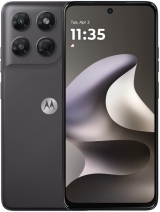
Moto G37 Power
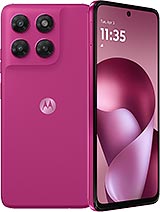
Moto G77 Power
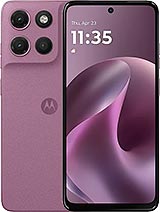
Moto G17
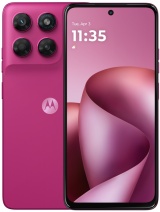
Moto G47
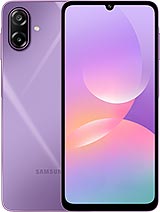
Galaxy M17e