Motorola Moto G67 review
The Moto G67 suits people who want a large, bright screen and reliable battery life without paying flagship prices or dealing with heavy software skins. Skip it if gaming performance, photo quality, or raw processing power matter to your daily life—a stronger midrange chip and sharper cameras are worth the search."
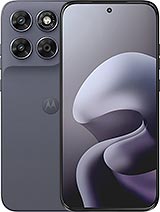
This review is written with AI assistance from Motorola’s published specifications and public benchmark data for the Motorola Moto G67, and the rating is spec-based. GoSolo does not physically test devices; where we estimate real-world behaviour such as battery life or charge time, we say so. How we rate phones.
Overview
The Moto G67 is a straightforward mid-range Android built around a large, bright AMOLED screen and a 5200mAh battery that aims to last a full day—solid choices for the class. A weak midrange chip and modest camera hardware mean it won't impress power users, but everyday tasks and video play fine if you're not chasing high frame-rate games.
Design and Build
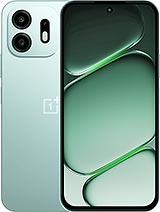
The Moto G67 is pleasantly compact and light for its screen size. At 182g and 7.3mm thick, it feels balanced in one hand, and the mix of Gorilla Glass 7i on front, eco-leather-textured silicone polymer on back, and plastic frame is sensible for the price—nothing flashy, nothing fragile. IP64 dust and splash resistance means it shrugs off pocket lint, dust clouds, and the occasional splash or brief dunk, though it won't survive sustained water exposure or swimming. MIL-STD-810H compliance is Motorola's way of saying it handles bumps and thermal stress, but treat it like any mainstream phone; the promise is durability for real use, not military deployment.
Display
The 6.78-inch AMOLED screen is the Moto G67's standout feature. 120Hz refresh, true blacks, and 5000 nits peak brightness mean scrolling is smooth, colors pop, and sunlight readability is excellent—a genuine upgrade over the LCD panels most midrange phones still use. However, the 1272x2772 resolution works out to roughly 450ppi, which is soft for a screen this size. If you read or draft text regularly, or zoom into photos, you'll notice text edges and fine details aren't as crisp as phones with true 1080p or higher at this diagonal. It's acceptable for video, social media, and general use, but not sharp enough to call premium.
Performance
The MediaTek Dimensity 6300 is entry-level within the midrange. Everyday apps, messaging, email, and web browsing run smoothly at 120Hz. Video playback, music, and light multitasking are no issue. But demanding games like Genshin Impact, Call of Duty Mobile, or console-like titles will force you into reduced graphical settings or lower frame rates—30fps or 40fps instead of 60, and texture detail dialed back. If you're a casual gamer or use your phone mostly for social media and video, it's fine. If you rely on fluid, high-fidelity gaming, this chip leaves you behind. App loading is competent, but don't expect snappy responsiveness under sustained load. The jump to 8GB RAM (if you buy that variant) helps in theory, but the GPU is the real bottleneck.
Software
Android 16 ships with a clean, largely stock interface—Motorola's tradition of minimal bloat means fewer junk apps slowing you down compared to heavily skinned rivals. Updates and security patches typically arrive faster on Motorola devices, and there's little learning curve if you've used Android before. The side-mounted fingerprint sensor works without drama, and the software stack feels responsive for daily navigation. Nothing revolutionary, but also nothing to apologize for.
Camera
The 50MP main camera with f/1.8 aperture and PDAF is a decent starting point, and daylight shots are clean and well-exposed. The 8MP ultrawide, however, is where the hardware shows its age—rivals have moved to 12MP or higher for this tier, and the gap in detail and corner sharpness is noticeable. Night mode and video, aided by gyro-EIS, are competent but not sharp; expect soft detail and color shift in low light. The 32MP selfie is fine for video calls but lacks the clarity and dynamic range of phones with modern front sensors. Taken as a whole, the camera system does the job for everyday snaps and social posts, but if photo quality matters much to you, look elsewhere. 1440p video at 30fps is a rung below what 60fps rivals offer, and the stabilization will wobble under panning.
Battery and Charging
The 5200mAh battery is well-matched to the modest chip and efficient display. Moderate-to-heavy daily use—messaging, social media, video streaming, some photography—should get you through a full day with about 10–20% left for evening. Heavy users or those running games constantly may need a top-up. The 30W TurboPower charges the battery in roughly 50 to 70 minutes from empty, which is fast enough to grab a quick charge before heading out, though it's not the 65W or 100W you'd find on pricier rivals. For a $340 phone, it's adequate. Wireless charging is absent, which is standard for the class but worth noting if you value that convenience.
Value and Verdict
At $209–342 depending on region and storage, the Moto G67 competes against similarly priced rivals from Samsung, Xiaomi, and others. It does very little wrong—the screen and battery are legitimate strengths, build is solid, and software is lean. But it also does very little *better* than competitors. The camera is ordinary, the chip is entry-level, and the display resolution is a compromise for the size. If you spend most of your time watching video, browsing, and messaging, and you value a bright, smooth screen and all-day battery over raw performance or camera detail, it's a sensible choice. If you game, shoot lots of photos, or want the snappiest midrange experience, a phone with a stronger processor or more refined camera will serve you better—and you may find it at the same price or only slightly higher. Motorola's reputation for updates and minimal bloat is its quietest strength here.
Verdict
The Moto G67 suits people who want a large, bright screen and reliable battery life without paying flagship prices or dealing with heavy software skins. Skip it if gaming performance, photo quality, or raw processing power matter to your daily life—a stronger midrange chip and sharper cameras are worth the search."
- 120Hz AMOLED with 5000 nits peak brightness makes the 6.78-inch display genuinely usable in sunlight and feels smooth to scroll, a step above the LCD screens many rivals use at this price
- 5200mAh battery with measured charging gets you a full day of moderate-to-heavy use; 30W is fast enough for a top-up before leaving home
- Lightweight and thin at 182g and 7.3mm, comfortable in hand for extended use, and IP64 dust and splash resistance covers daily mishaps
- microSD expansion up to 2TB means you're not locked into the storage tier you pick
- Dimensity 6300 is entry-level even for midrange—demanding games run at reduced settings or stutter, and multitasking under load can feel sluggish
- 50MP main camera is serviceable in daylight but the 8MP ultrawide and 32MP selfie lack the sharpness or detail rivals at this price have moved toward; low-light and video output are ordinary
- 1272x2772 resolution on a 6.78-inch screen leaves text noticeably softer than sharper competitors, a visible difference if you read a lot or do detail work
Motorola Moto G67 Key Specifications
The essentials at a glance. See the full spec sheet.
| Released | 2026, January 29 |
|---|---|
| Display | 6.78 inches, 112.4 cm2 (~88.5% screen-to-body ratio), AMOLED, 1B colors, 120Hz, HDR, 5000 nits (peak) |
| Resolution | 1272 x 2772 pixels*, 19.5:9 ratio (~450 ppi density) |
| Chipset | Mediatek Dimensity 6300 (6 nm) |
| RAM & storage | 128GB 4GB RAM, 256GB 4GB RAM, 256GB 8GB RAM |
| Main camera | 50 MP, f/1.8 (wide), 1/1.95", 0.8µm, PDAF 8 MP, f/2.2, 118˚ (ultrawide), 1/4.0", 1.12µm |
| Selfie camera | 32 MP, f/2.2, (wide), 0.64µm |
| Battery | 5200 mAh |
| Charging | TurboPower up to 30 W |
| Software | Android 16 |
| Dimensions | 164.2 x 77.4 x 7.3 mm (6.46 x 3.05 x 0.29 in) |
| Weight | 182 g (6.42 oz) |
| Build | Glass front (Gorilla Glass 7i), silicone polymer (eco leather) back, plastic frame |
| Durability | IP64 dust tight and water resistant (water splashes) MIL-STD-810H compliant* * does not guarantee ruggedness or use in extreme conditions |
| Network | GSM / HSPA / LTE / 5G |
| NFC | Yes (market/region dependent) |
| USB | USB Type-C 2.0 |
Motorola Moto G67 FAQ
Common questions, answered from the spec sheet.
Does the Moto G67 support 5G?
Yes. The Moto G67 supports 5G networks.
What chipset does the Moto G67 use?
The Moto G67 runs on the Mediatek Dimensity 6300 (6 nm).
What display does the Moto G67 have?
A 6.78 inches, 112.4 cm2 (~88.5% screen-to-body ratio) AMOLED, 1B colors, 120Hz, HDR, 5000 nits (peak), 1272 x 2772 pixels*, 19.5:9 ratio (~450 ppi density).
How big is the Moto G67 battery?
The Moto G67 has a 5200 mAh battery. Charging is rated at TurboPower up to 30 W.
Does the Moto G67 have NFC?
Yes, the Moto G67 has NFC.
Is the Moto G67 water resistant?
The Moto G67 carries a IP64 dust tight and water resistant (water splashes) MIL-STD-810H compliant* * does not guarantee ruggedness or use in extreme conditions rating.
Does the Moto G67 support a microSD card?
Yes, the Moto G67 supports expandable storage (microSDXC (uses shared SIM slot)).
Alternatives to consider
If the Moto G67 isn’t quite right, these are the closest calls.
Moto G37 Power
Moto G87

Moto G77 Power
Moto G77
N6