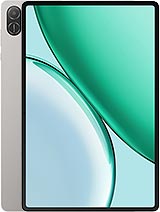
Motorola Moto Pad (2026) review
The Moto Pad suits someone who prioritizes portability and battery life and doesn't need raw power or a good camera. For anyone expecting flagship performance, smooth file handling, or a decent tablet camera in 2026, there are cheaper tablets with stronger internals—the Moto Pad's real appeal is to people who've already decided thin and light matter more than specs, and who trust Motorola's name more than the hardware justifies."
This review is written with AI assistance from Motorola’s published specifications and public benchmark data for the Motorola Moto Pad (2026), and the rating is spec-based. GoSolo does not physically test devices; where we estimate real-world behaviour such as battery life or charge time, we say so. How we rate phones.
Overview
The Moto Pad is a thin, light 11-inch Android tablet aimed at casual users and media consumption, with a modest processor and aging camera hardware that don't justify its €250 ask in a market crowded with better-equipped alternatives. For the price, you're paying for form factor and brand recognition, not substance.
Design & Build
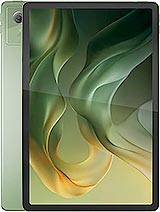
At 480g and 7mm thick, the Moto Pad is impressively slim for an 11-inch device. The all-metal frame and aluminum back feel sturdy enough, though glass front is more prone to smudging and damage than some rivals opt for at this price. Splash resistance is a practical touch for a device you'll carry around. For commuters or anyone tired of hefty tablets, the weight and profile are genuine strengths, and the Pantone Bronze Green finish is restrained compared to the usual gray-and-silver parade. The tradeoff is that the thin chassis offers little cushion in a fall, and there's no rugged story here—it's a device for careful handling.
Display
The 11-inch IPS LCD hits 274 ppi, which is respectable without being sharp; text and images look clean enough for everyday use, but you'll notice the pixel grid next to a more modern 300+ ppi panel. The 90Hz refresh is standard for tablets of this era and budget, making scrolling acceptably smooth without overdoing battery drain. Brightness at 500 nits is adequate indoors and decent in sunlight, though not exceptional. The 16:10 aspect ratio is narrow for a tablet, which means less horizontal space in landscape—a real consideration if you watch a lot of video or work in wide apps. Color accuracy isn't mentioned; assume competent IPS tuning, not professional-grade.
Performance
The Dimensity 6300 is a mainstream chip in 2026, not a weak one, but for tablets it matters: multitasking with 8GB RAM handles everyday work, but heavy apps, games, or split-screen editing will show stutters compared to tablets with mid-range processors. This is the chipset equivalent of entry-level, and at €250 you're in a price band where competitors are already offering faster silicon. Web browsing, streaming, email, and light productivity are no problem. But if you plan to actually use this tablet for anything demanding—photo editing, video export, or gaming—the Dimensity 6300 will remind you of its limits. UFS 2.2 storage speed is dated; expect noticeably slower app launches and file moves than newer tablets with UFS 3.0 or better.
Software
Android 15 is current and secure. Motorola's approach here is mercifully light on bloat, which helps the modest hardware breathe. Updates are a question mark; Motorola has historically been less aggressive than Samsung or Apple on tablets, so don't assume long-term OS support. The software experience itself is straightforward—no surprises, no flourishes, just Android doing its job. Stylus support is present but basic; there's no custom note-taking app, so you're paired with whatever third-party apps you install. It's functional, not a differentiator.
Camera
With an 8MP main and 5MP selfie, this tablet is not built for photography or video calls. The 8MP sensor with autofocus is competent for rare document scans or casual shots in good light, but detail and dynamic range fall short of rivals' 12MP+ setups at this price. The 5MP front is weak for video calls—don't expect clear video conferencing. LED flash on the rear is a nod to practicality, but there's no ultra-wide or macro. Video capability is listed but spec sheet doesn't detail resolution or frame rate; assume 1080p at best, which is standard but uninspiring for a tablet in 2026. If you're shopping this device hoping for good tablet cameras, look elsewhere.
Battery & Charging
A 7040 mAh battery should deliver 10-12 hours of mixed use—easily a full workday for light to moderate users. The spec sheet doesn't list a charging wattage, which is unusual and suggests either no fast charging or a modest rate (likely 18-20W range based on the omission). Rivals at €250 often hit 30W or higher, so this is a potential slowpoint if you're regularly in a hurry. Battery endurance is solid, but the recharge experience may frustrate if you're used to faster tablets. For a device positioned as portable and long-lived, slow charging is an annoying mismatch.
Value & Verdict
At €250, the Moto Pad targets buyers who want a large screen for media and email without breaking the bank. It succeeds in portability and battery life, but stumbles on processor, cameras, and storage speed—areas where competitors at the same price have moved ahead. A year ago, a Dimensity 6300 tablet and 128GB with UFS 2.2 might have been acceptable for the money; in 2026, it feels like a clearance bin device. The stylus support and minimal software bloat are genuine positives for productivity-minded users, and the thin, light form factor is a real win for travel. But there's no escaping the fact that you're paying full price for last-generation specs wrapped in a thin chassis. If weight and thinness are non-negotiable and you're happy with modest performance, the Moto Pad earns a look. Everyone else has better options for the same money.
Verdict
The Moto Pad suits someone who prioritizes portability and battery life and doesn't need raw power or a good camera. For anyone expecting flagship performance, smooth file handling, or a decent tablet camera in 2026, there are cheaper tablets with stronger internals—the Moto Pad's real appeal is to people who've already decided thin and light matter more than specs, and who trust Motorola's name more than the hardware justifies."
- Thin (7mm) and light (480g) for an 11-inch tablet—genuinely portable for travel or desk rotation without the heft of typical competitors
- Stylus support adds productivity without forcing it; useful for note-taking or sketching without bloat for those who don't need it
- 11-inch 16:10 display with reasonable brightness (500 nits) and decent screen-to-body ratio (82.9%) makes for efficient form factor
- 7040 mAh battery should deliver solid endurance for casual use, and 5G plus Wi-Fi 6 cover connectivity bases
- Dimensity 6300 is entry-level for tablets; rivals in this price band offer mid-range chips with meaningfully better multitasking and app performance
- 8MP rear camera and 5MP front are underpowered even by budget tablet standards, weak for video calls or document scanning at this price point
- Only 128GB base storage and UFS 2.2 speed are dated; expect lag in file operations and app installs compared to 2026 budget tablet norms
Motorola Moto Pad (2026) Key Specifications
The essentials at a glance. See the full spec sheet.
| Released | 2026, April 07 |
|---|---|
| Display | 11.0 inches, 350.9 cm2 (~82.9% screen-to-body ratio), IPS LCD, 90Hz, 500 nits |
| Resolution | 1600 x 2560 pixels, 16:10 ratio (~274 ppi density) |
| Chipset | Mediatek Dimensity 6300 (6 nm) |
| RAM & storage | 128GB 8GB RAM |
| Main camera | 8 MP, (wide), AF |
| Selfie camera | 5 MP, (wide) |
| Battery | 7040 mAh |
| Software | Android 15 |
| Dimensions | 254.6 x 166.2 x 7 mm (10.02 x 6.54 x 0.28 in) |
| Weight | 480 g (1.06 lb) |
| Build | Glass front, aluminum frame, aluminum back |
| Durability | Stylus support Splash resistant |
| Network | GSM / HSPA / LTE / 5G |
| NFC | No |
| USB | USB Type-C 2.0 |
Motorola Moto Pad (2026) FAQ
Common questions, answered from the spec sheet.
Does the Moto Pad (2026) support 5G?
Yes. The Moto Pad (2026) supports 5G networks.
What chipset does the Moto Pad (2026) use?
The Moto Pad (2026) runs on the Mediatek Dimensity 6300 (6 nm).
What display does the Moto Pad (2026) have?
A 11.0 inches, 350.9 cm2 (~82.9% screen-to-body ratio) IPS LCD, 90Hz, 500 nits, 1600 x 2560 pixels, 16:10 ratio (~274 ppi density).
How big is the Moto Pad (2026) battery?
The Moto Pad (2026) has a 7040 mAh battery.
Does the Moto Pad (2026) have NFC?
No, the Moto Pad (2026) does not list NFC support.
Is the Moto Pad (2026) water resistant?
The Moto Pad (2026) carries a Stylus support Splash resistant rating.
Does the Moto Pad (2026) support a microSD card?
Yes, the Moto Pad (2026) supports expandable storage (microSDXC).
Alternatives to consider
If the Moto Pad (2026) isn’t quite right, these are the closest calls.
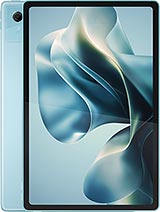
Moto Pad 70
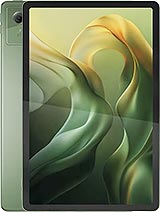
Moto Pad 60 Neo
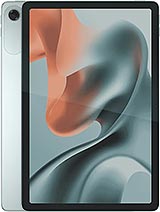
Moto Pad 60 Lite
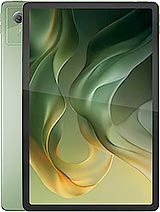
Pad 5
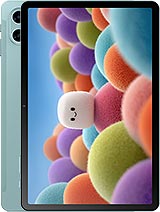
Black Shark Pad SE