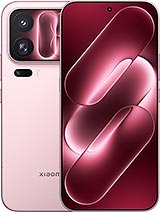
Motorola Razr 70 Ultra review
This phone suits someone who actually uses a foldable as a daily tool, not a novelty: professionals juggling two workflows, people who prefer a narrow closed form, and anyone who spends half their time on the outer display. Skip it if you want the fastest charging, the strongest ultrawide, or the toughest water resistance, or if the foldable form feels like unnecessary complexity for your routine.
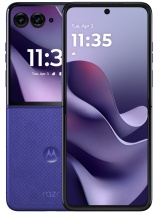
This review is written with AI assistance from Motorola’s published specifications and public benchmark data for the Motorola Razr 70 Ultra, and the rating is spec-based. GoSolo does not physically test devices; where we estimate real-world behaviour such as battery life or charge time, we say so. How we rate phones.
Overview
The Razr 70 Ultra is a foldable that finally swings hard on the everyday experience: a vibrant inner screen, snappy performance, and a practical outer display make it genuinely useful both open and closed. It costs a fortune and the ultrawide camera is weak, but for someone who wants a foldable that doesn't feel like a gadget, this one lands it.
Design & build
The Razr 70 Ultra closes to 88.1mm wide, which is noticeably narrower than rivals like the Samsung Galaxy Z Flip, and that matters when the phone is half-open in a shirt pocket. At 199g and 7.2mm when unfolded, it's light enough that you won't notice it, and the aluminum frame feels solid. The plastic front on the unfolded screen is a step down from glass—it scratches easier and feels cheaper than the Gorilla Glass Ceramic on the folded outer screen—but the tradeoff keeps the crease visibility minimal. The dual-SIM (Nano-SIM + eSIM) setup is practical for international travel or work-life separation. The IP48 rating is frankly disappointing: it means dust protection only up to 1mm and water resistance capped at 1.5 meters for 30 minutes. This is not a phone you'd confidently bring into a pool or heavy rain, which is a real limitation for a device at this price.
Display
The inner foldable screen is where Motorola has spent its engineering effort, and it shows. The 7-inch LTPO AMOLED delivers 462 ppi with Dolby Vision and HDR10+ support, and the 5000-nit peak brightness means it's genuinely readable in sunlight without crushing contrast. The 165Hz refresh rate is overkill for scrolling text, but it matters when you're gaming or swiping through feeds. The crease is still visible—it's a fold, not a flat phone—but it doesn't pull focus unless you're looking for it. The real story is the outer display, which Motorola finally got right. At 4 inches with 1272 x 1080 pixels (417 ppi), the external screen is actually usable for messaging, email, and quick replies. It's not a novelty; most people will spend half their day on this display, and it feels thought-through. Its own 3000-nit peak and 165Hz refresh rate mean it doesn't feel slow or dim compared to the inner screen.
Performance
The Snapdragon 8 Elite is the flagship processor for 2026, and the Razr 70 Ultra deploys it with either 12GB or 16GB of RAM running UFS 4.0 storage. In practice, this means zero lag in daily use: apps launch instantly, multitasking is smooth, and even heavy games hold frame. The 2.2M AnTuTu score is flagship-tier, and you'll feel that in responsiveness. That said, performance is not the story here. A $400 phone with last year's top chip would perform nearly the same for most tasks. The real win is that the Razr doesn't stutter or stall when you're flipping between the inner and outer screens, and the system RAM is generous enough that you don't feel the folding motion as a constraint.
Software
Android 16 comes out of the box with the promise of three major OS upgrades, which aligns with Motorola's typical commitment. The software here is close to stock Android—Motorola layers its own skin lightly—so there's none of Samsung's bloat. The fold-specific UI adjustments work smoothly: apps reflow when you open and close the device, and the outer display gets its own app selection rather than just mirroring the inner screen. That practical thinking extends to gestures and shortcuts. No surprises here, and that's exactly what you want from a foldable OS.
Camera
The 50MP main camera with f/1.8 aperture, 1/1.56" sensor, and OIS is solid, and Pantone color validation means skin tones land with warmth and detail. In daylight, photos hold their own against any flagship. The problem sits with the ultrawide: 50MP, f/2.0, and 0.6µm pixels might sound fine on paper, but those tiny pixels struggle in low light, and the sensor itself is smaller (1/2.93") than competitors. In shadows or indoors, the ultrawide feels muddy and loses detail. The 122° field of view doesn't compensate. If you rarely shoot ultrawide, this won't sting. If you rely on it for travel and real estate, you'll notice. The 50MP selfie camera with f/2.0 and 0.64µm pixels handles video calls and social media competently. Video recording tops out at 8K on the main camera and 4K on the selfie, with Dolby Vision HDR10+ on both, which is more than most will need.
Battery & charging
The 5000mAh battery is large enough to power a foldable with two displays, and Motorola estimates about 16-17 hours of mixed use (the spec sheet lists an active use score of 16:33h). That's respectable but not exceptional for the battery size; the power draw of two LTPO screens adds up. Charging figures are listed as 68W and 30W in the spec data without clarity on which is which, but either way, neither is particularly fast by 2026 standards—rivals are shipping 100W+ at this price point. Wireless charging isn't mentioned, which is a shame on a $1,500 foldable.
Value & verdict
At $1,499 USD (€1,279, £1,199), the Razr 70 Ultra is as expensive as two flat-screen flagship phones. That's not a foldable tax; it's a lifestyle choice. The phone succeeds because both screens feel complete rather than a main display with a gimmick partner. The outer display is genuinely useful, the inner screen is brilliant, and the performance is snappy. But you are paying for the fold itself, not a feature advantage over flat phones. The ultrawide camera is a weak link for the price, and the modest charging speeds sting when rivals move faster. The IP48 rating is also stingy for this category. If you fold often and value the outer display for real work—not just notifications—this phone makes sense. If you're hoping a foldable will make your phone life better, a flat flagship will do the job for $800 less.
Verdict
This phone suits someone who actually uses a foldable as a daily tool, not a novelty: professionals juggling two workflows, people who prefer a narrow closed form, and anyone who spends half their time on the outer display. Skip it if you want the fastest charging, the strongest ultrawide, or the toughest water resistance, or if the foldable form feels like unnecessary complexity for your routine.
- Inner 7-inch LTPO AMOLED screen with 5000 nits peak brightness and 165Hz is crisp, responsive, and readable outdoors without being oversaturated
- 4-inch outer display with 1272 x 1080 resolution and Gorilla Glass Ceramic makes the phone genuinely usable closed—not a half-thought afterthought
- Snapdragon 8 Elite and up to 16GB RAM keep this fast day-to-day; no frame drops on the everyday stuff
- At 199g and 7.2mm unfolded, it does not feel like carrying a brick
- 50MP ultrawide with f/2.0 aperture and tiny 0.6µm pixels struggles in low light and lacks the reach of rivals; the 122° field of view doesn't make up for the weak sensor
- IP48 rating stops short of full water resistance; limited to 1.5m for 30 minutes, not rated for ocean or pool use
- At $1,499 USD (€1,279), it costs as much as two solid flat-screen flagships and offers no meaningful advantage if you don't value the fold
Motorola Razr 70 Ultra Key Specifications
The essentials at a glance. See the full spec sheet.
| Released | 2026, April 29 |
|---|---|
| Display | 7.0 inches, 110.8 cm2 (~87.3% screen-to-body ratio), Foldable LTPO AMOLED, 1B colors, 165Hz, Dolby Vision, HDR10+, 5000 nits (peak) |
| Resolution | 1224 x 2992 pixels (~462 ppi density) |
| Chipset | Qualcomm Snapdragon 8 Elite (3 nm) |
| RAM & storage | 512GB 12GB RAM, 512GB 16GB RAM |
| Main camera | 50 MP, f/1.8, (wide), 1/1.56", 1.0µm, PDAF, OIS 50 MP, f/2.0, 122˚ (ultrawide), 1/2.93", 0.6µm |
| Selfie camera | 50 MP, f/2.0, (wide), 0.64µm |
| Battery | 5000 mAh |
| Software | Android 16, up to 3 major Android upgrades |
| Dimensions | Unfolded: 171.5 x 74 x 7.2 mmFolded: 88.1 x 74 x 15.7 mm |
| Weight | 199 g (7.02 oz) |
| Build | Plastic front (unfolded), glass front (folded, Gorilla Glass Ceramic), aluminum frame |
| Durability | IP48 dust and water resistant (dust > 1mm; immersible up to 1.5m for 30 min) |
| Network | GSM / HSPA / LTE / 5G |
| NFC | Yes |
| USB | USB Type-C 2.0 |
Motorola Razr 70 Ultra FAQ
Common questions, answered from the spec sheet.
Does the Razr 70 Ultra support 5G?
Yes. The Razr 70 Ultra supports 5G networks.
What chipset does the Razr 70 Ultra use?
The Razr 70 Ultra runs on the Qualcomm Snapdragon 8 Elite (3 nm).
What display does the Razr 70 Ultra have?
A 7.0 inches, 110.8 cm2 (~87.3% screen-to-body ratio) Foldable LTPO AMOLED, 1B colors, 165Hz, Dolby Vision, HDR10+, 5000 nits (peak), 1224 x 2992 pixels (~462 ppi density).
How big is the Razr 70 Ultra battery?
The Razr 70 Ultra has a 5000 mAh battery.
Does the Razr 70 Ultra have NFC?
Yes, the Razr 70 Ultra has NFC.
Is the Razr 70 Ultra water resistant?
The Razr 70 Ultra carries a IP48 dust and water resistant (dust > 1mm; immersible up to 1.5m for 30 min) rating.
Does the Razr 70 Ultra support a microSD card?
No, the Razr 70 Ultra does not support expandable storage.
Alternatives to consider
If the Razr 70 Ultra isn’t quite right, these are the closest calls.
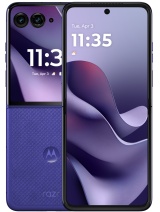
Razr Ultra 2026
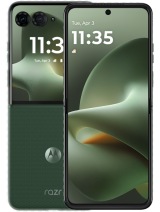
Razr 70+
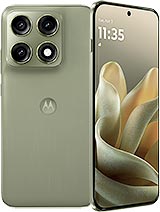
Edge 70 Pro
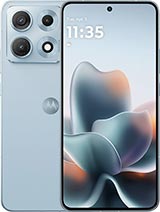
Edge 70 Max
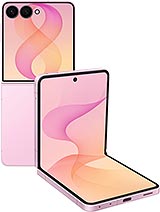
Galaxy Z Flip8