Motorola RAZR Fold review
The RAZR Fold suits professionals and media consumers who want a large screen in a pocketable form and can stomach premium pricing for that convenience. Anyone prioritizing raw value, camera excellence, or simple reliability should look at a flat flagship instead—you will save €1,000 and gain nothing in daily performance.
This review is written with AI assistance from Motorola’s published specifications and public benchmark data for the Motorola RAZR Fold, and the rating is spec-based. GoSolo does not physically test devices; where we estimate real-world behaviour such as battery life or charge time, we say so. How we rate phones.
Overview
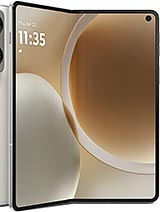
The RAZR Fold splits the difference between a compact phone and a full tablet, with a 6.6-inch cover screen that works for daily tasks and an 8.1-inch inner display for reading, streaming, and work. It is a capable foldable at a high price, but the gap between this and a good flat flagship has narrowed enough that the fold itself is now the deciding factor, not the performance.
Design & build
At 243 grams and 4.7mm unfolded, the RAZR Fold is among the slimmest foldables yet, and it feels thoughtfully balanced for single-handed use when closed. The 6.6-inch cover screen is wide enough to run most apps without forcing landscape mode, which is the real-world win over narrower-screened competitors. The phone folds flat with minimal crease visibility on the inner panel, a maturity that earlier foldables lacked. IP49 durability (resistant to high-pressure jets but not immersion) and Gorilla Glass Ceramic 3 on the cover are solid without being exceptional; the Mohs level 4 inner screen is scratch-resistant rather than tough. Build quality reads premium in hand, and the two-tone colors offer some restraint, but this is ultimately a glass-and-metal sandwich that commands careful handling.
Display
The inner 8.1-inch LTPO P-OLED runs at 2232 x 2484 pixels (410 ppi), which is dense enough for text and detail without breaking a sweat. At 6200 nits peak brightness, it outperforms most flat flagship displays in sunlight legibility, a genuine advantage for outdoor reading or video. The cover screen, a 6.6-inch 165Hz LTPO OLED at 6000 nits, is sharp (1080 x 2520) and smooth; the high refresh rate matters less on a phone this size but does eliminate micro-stutter when scrolling through feeds. Both panels support Dolby Vision and HDR10+, and the lack of a notch or centered punch on the inner screen leaves ample real estate for content. The foldable form means creasing is still visible under certain angles and lighting, a reminder that this is not yet transparent to the eye.
Performance
The Snapdragon 8 Gen 5 paired with 16GB RAM is current flagship-class silicon, and it runs modern games at high graphics without frame drops, handles eight or nine apps in memory without reloading, and compiles or processes work documents without lag. For the price, you are not paying a premium for speed—the chip is the same as in many non-foldable flagships costing half as much. Thermal management is competent but not exemplary; sustained gaming or 4K recording at 120fps can heat the frame noticeably, though not enough to trigger throttling in normal sessions. Everyday performance is flawless, and the foldable form does not impose any software-level penalty.
Software
Android 16 runs cleanly, with Motorola's overlay minimal enough not to feel intrusive. The promise of seven major Android upgrades pushes the phone's useful life to at least 2032 in theory, a strong commitment for a device at this price point. The larger inner screen begets a functional tablet-like interface when unfolded, with split-screen multitasking as natural as it is on smaller foldables. The cover screen software adaptation is seamless—apps launch and respond identically whether you are on the compact outer or sprawling inner display. Motorola's take on foldable-specific features is restrained and practical, avoiding gimmick-laden software tricks that date quickly.
Camera
The triple setup mirrors typical flagship flagships: a 50MP wide (f/1.6, 1.22µm) with OIS, a 50MP periscope telephoto (f/2.4, 3x optical, 71mm equivalent), and a 50MP ultrawide (122 degrees, f/2.0). The wide-angle performs well in daylight, with accurate color and strong detail, while the f/1.6 aperture aids low-light capture. The telephoto is where compromises begin: a modest f/2.4 aperture and smaller sensor (0.8µm) mean cropped zoom shots lose detail and struggle in shadow, a step behind periscope systems in phones costing €600 less. The ultrawide is workable but uninspiring—the f/2.0 aperture and 0.64µm pixel size are respectable, yet the lens itself feels like a checkbox rather than a standout. Video recording at 8K (30fps, Dolby Vision) and 4K120fps is technically impressive but rarely necessary outside professional workflows. Overall, the cameras are capable and sufficient, but not the highlight of the package at this price.
Battery & charging
The 6000mAh battery, paired with efficient silicon, delivers roughly 1.5 days of moderate use (few hours screen-on, rest standby) and a full day of moderate-to-heavy use. On intensive work—spreadsheets, streaming, or gaming—expect evening depletion. The 80W wired charger refills the cell in under an hour, and the 50W wireless option extends to 60–90 minutes, both competitive for 2026. The foldable form factor, with its larger screen consuming more power, means the battery life is slightly behind what you would get from an equivalently sized flat flagship. For a business user or road traveler, the speed of charging helps offset the shorter single-charge longevity.
Value & verdict
At €1,749, the RAZR Fold costs more than double a flagship bar phone delivering nearly identical performance and similar camera competence. The value proposition hinges entirely on whether the dual-screen form factor—compact folded, tablet-sized unfolded—justifies the premium. For creators editing video or photos on a large, bright inner screen, or professionals reading spreadsheets and documents, the answer is yes. For casual users who want a fast phone with a great camera, the folding mechanism is an expensive novelty that adds fragility without meaningful daily benefit. The RAZR Fold is a mature foldable, free of the software quirks and durability fears that plagued earlier attempts, but maturity alone does not erase the price. It is the best foldable Motorola has made; whether you need a foldable at all is the real question.
Verdict
The RAZR Fold suits professionals and media consumers who want a large screen in a pocketable form and can stomach premium pricing for that convenience. Anyone prioritizing raw value, camera excellence, or simple reliability should look at a flat flagship instead—you will save €1,000 and gain nothing in daily performance.
- Bright, large inner display (6200 nits peak) that is genuinely usable outdoors and ideal for reading or media without eyestrain
- Cover screen at 6.6 inches and 165Hz makes one-handed use and everyday tasks feel less compromised than on most foldables
- Snapdragon 8 Gen 5 and 16GB RAM handle games, multitasking, and apps without throttle or reload delays
- 80W wired charging and 50W wireless top up the 6000mAh battery in under an hour, useful for a device this size
- At €1,749, you are paying roughly 2.5 times what a flagship bar phone costs; the performance gap does not justify that premium for most users
- Camera system, while capable of 8K and periscope zoom, does not decisively beat rivals at its own price tier—the narrow aperture on the 50MP telephoto and modest sensor sizes mean detail and low-light handling lag behind true flagships in that category
- Foldable hinge and inner screen durability remain a long-term unknown; IP49 is good but not a guarantee against dust ingress over years of daily folding
Motorola RAZR Fold Key Specifications
The essentials at a glance. See the full spec sheet.
| Released | 2026, January 07 |
|---|---|
| Display | 8.1 inches, 212.5 cm2 (~91.9% screen-to-body ratio), Foldable LTPO P-OLED, 1B colors, 120Hz, Dolby Vision, HDR10+, 6200 nits (peak) |
| Resolution | 2232 x 2484 pixels (~410 ppi density) |
| Chipset | Qualcomm SM8845 Snapdragon 8 Gen 5 (3 nm) |
| RAM & storage | 256GB 12GB RAM, 512GB 16GB RAM, 1TB 16GB RAM |
| Main camera | 50 MP, f/1.6, 23mm (wide), 1/1.28", 1.22µm, multi-directional PDAF, OIS 50 MP, f/2.4, 71mm (periscope telephoto), 1/1.95", 0.8µm, dual-pixel PDAF, OIS, 3x optical zoom 50 MP, f/2.0, 12mm, 122˚ (ultrawide), 1/2.76", 0.64µm, PDAF |
| Selfie camera | 32 MP, f/2.4, 22mm (wide), 0.64µm Cover camera: 20 MP, f/2.4, 22mm (wide), 0.61µm |
| Battery | 6000 mAh |
| Charging | TurboPower up to 80 W, Wireless: Charger power 50 W |
| Software | Android 16, up to 7 major Android upgrades |
| Dimensions | Unfolded: 160.1 x 144.5 x 4.7 mmFolded: 160.1 x 73.6 x 10.1 mm |
| Weight | 243 g (8.57 oz) |
| Durability | IP48/IP49 water resistant (high pressure water jets; immersible up to 1.5m for 30 min) Stylus support |
| Network | GSM / HSPA / LTE / 5G |
| NFC | Yes |
| USB | USB Type-C 3.2, Display Port 1.2 |
Motorola RAZR Fold FAQ
Common questions, answered from the spec sheet.
Does the RAZR Fold support 5G?
Yes. The RAZR Fold supports 5G networks.
What chipset does the RAZR Fold use?
The RAZR Fold runs on the Qualcomm SM8845 Snapdragon 8 Gen 5 (3 nm).
What display does the RAZR Fold have?
A 8.1 inches, 212.5 cm2 (~91.9% screen-to-body ratio) Foldable LTPO P-OLED, 1B colors, 120Hz, Dolby Vision, HDR10+, 6200 nits (peak), 2232 x 2484 pixels (~410 ppi density).
How big is the RAZR Fold battery?
The RAZR Fold has a 6000 mAh battery. Charging is rated at TurboPower up to 80 W, Wireless: Charger power 50 W.
Does the RAZR Fold have NFC?
Yes, the RAZR Fold has NFC.
Is the RAZR Fold water resistant?
The RAZR Fold carries a IP48/IP49 water resistant (high pressure water jets; immersible up to 1.5m for 30 min) Stylus support rating.
Does the RAZR Fold support a microSD card?
No, the RAZR Fold does not support expandable storage.
Alternatives to consider
If the RAZR Fold isn’t quite right, these are the closest calls.
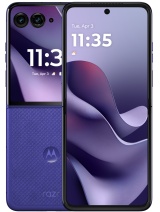
Razr Ultra 2026
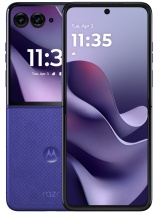
Razr 70 Ultra
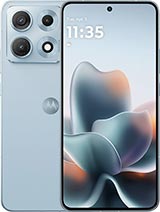
Edge 70 Max
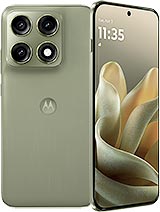
Edge 70 Pro
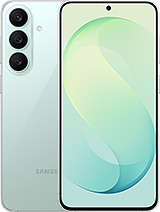
Galaxy S26 FE