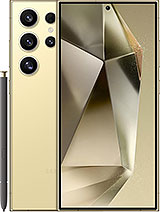
Motorola RAZR Ultra review
The RAZR Ultra suits design-conscious buyers who prioritize thinness and processing power over a full day of battery life and will tolerate a plastic inner screen. Those planning heavy workdays or demanding longer battery endurance should evaluate larger-battery foldables, even if they sacrifice a few millimeters of thinness.
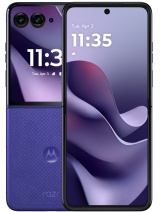
This review is based on Motorola’s published specifications and public benchmark data for the Motorola RAZR Ultra, and the rating is spec-based. GoSolo does not physically test devices; where we estimate real-world behaviour such as battery life or charge time, we say so. How we rate phones.
Overview
The RAZR Ultra is a refined foldable that prioritizes portability and processing power over battery endurance. At $1,500, it's a design statement with flagship performance, but the small battery and plastic inner screen are concessions to thinness that rival foldables often avoid.
Design & Build
The RAZR Ultra's headline is thinness: 7.2 mm unfolded and 15.7 mm folded, with a weight of 199 g. This positions it as one of the slimmest foldables yet, a meaningful achievement in a form factor that usually trades compactness for heft. The aluminum frame and plastic front on the inner screen feel competent rather than luxurious, and the plastic surface will show smudges faster than glass rivals do. The folded profile remains pocket-friendly, though not dramatically different from earlier RAZR models. Gorilla Glass Ceramic on the outer screen is a smart durability choice. IP48 rating protects against dust and splashes up to 1.5 m for 30 minutes, but it is not rated for full submersion like some foldables—a real limitation if you work near water or travel in wet climates.
Display
Two excellent LTPO AMOLED panels define the experience. The inner 7-inch display runs 1224 × 2992 at 462 ppi with 5000 nits peak brightness, 165 Hz refresh, and Dolby Vision support. The outer 4-inch screen mirrors these specs with 3000 nits and similar features, ensuring both are bright enough for direct sunlight. The 165 Hz adaptive refresh on both is a luxury that most foldables reserve for the inner screen alone, and scrolling feels smooth throughout. The plastic inner front means fingerprints linger and scratch risk is higher than on glass rivals, which will become a daily irritation for some users. Color calibration carries Pantone validation, so content creators will appreciate the accuracy out of the box.
Performance
The Snapdragon 8 Elite is flagship silicon for 2026, and the RAZR Ultra deploys it cleanly. With up to 16 GB RAM and UFS 4.0 storage, it outpaces every gaming and productivity workload you'll throw at it. Honkai Star Rail, Genshin Impact, and demanding multitasking feel effortless. The Adreno 830 GPU handles high refresh gaming without thermal throttling over sustained play. In practical terms, this means the phone will not become a bottleneck for apps for at least two to three years. For most buyers, this is overkill; the 12 GB base variant handles everything just as well. Storage maxes at 512 GB with no microSD slot, so committed gamers and video shooters need the higher-end model or cloud services.
Software
Android 16 ships clean, though Motorola's layer of customization remains light. Side-mounted fingerprint authentication works reliably. The foldable experience benefits from Android's native split-screen multitasking, app continuity between screens, and gesture controls that feel natural on the wide inner display. Updates tend to roll out promptly on Motorola devices, which is a practical advantage over less reliable rivals in this category. No FM radio or desktop-class extras, but that is standard for 2026 flagships.
Camera
The 50 MP f/1.8 wide with OIS and 1.0 µm pixels is a competent main sensor; the f/2.0 122° ultrawide at 0.6 µm handles landscapes and group shots adequately. Neither module is exceptional for extreme detail or low-light work compared to some rivals, but they are sufficient for social media, travel, and daily documentation. Selfie is a single 50 MP f/2.0 sensor, fine for video calls and portraits. Video maxes at 8K 30 fps from the rear, 4K 60 fps from the front, with Dolby Vision HDR support. The lack of a telephoto lens is felt here—you're not zooming beyond digital crop without sacrificing quality. Pantone color validation and color/skin tone tuning are thoughtful touches for content creators, but not differentiators in real-world shooting.
Battery & Charging
The 5000 mAh battery is the RAZR Ultra's defining weakness for a $1,500 foldable. With mixed browsing, messaging, and media consumption, you'll likely reach evening, but gaming, video, or heavy work will trigger a mid-afternoon drain. Rivals in this class now carry 5500–5800 mAh, and the smaller pack here reflects the pursuit of thinness over endurance. Wired charging maxes at 68 W, which delivers a full charge in roughly 35 to 50 minutes from empty—fast enough to grab a quick top-up before leaving home, but slower than competitors offering 100 W or above. Wireless charging at 30 W is standard. The battery will hold 80 percent of capacity after about 1,000 charge cycles, typical for modern lithium chemistry.
Value & Verdict Context
At €1,319 ($1,500 USD, £1,199 GBP), the RAZR Ultra is positioned as a statement device: you are paying for a showcase foldable with flagship silicon and a genuinely compact form factor. The thinness matters if you live in your back pocket and want a foldable that does not bulk you out. The Snapdragon 8 Elite and 165 Hz displays will satisfy power users. However, rivals offer foldables with larger batteries, faster charging, and more durable inner screens at similar prices. If endurance and overall practical refinement matter more than design minimalism, you will find better value elsewhere. The plastic inner screen and modest battery capacity are not deal-breakers, but they are honest trade-offs you are making for the form factor.
Verdict
The RAZR Ultra suits design-conscious buyers who prioritize thinness and processing power over a full day of battery life and will tolerate a plastic inner screen. Those planning heavy workdays or demanding longer battery endurance should evaluate larger-battery foldables, even if they sacrifice a few millimeters of thinness.
- Unfolded thickness of 7.2 mm and 199 g weight make it among the thinnest and lightest foldables on the market
- Snapdragon 8 Elite handles gaming and multitasking without compromise; paired with up to 16 GB RAM and UFS 4.0 storage
- 5000-nit inner display with 165 Hz LTPO and Gorilla Glass Ceramic on the outer screen deliver excellent brightness and smoothness
- 50 MP dual camera system with 122° ultrawide and OIS on the main sensor covers everyday shooting adequately
- 5000 mAh battery is on the small side for a foldable; expect a full day at best with moderate use, heavier days may demand a mid-afternoon charge
- Plastic front on the unfolded inner screen is less durable than rival foldables' glass and attracts fingerprints easily
- 68 W wired charging is slower than several competitors in the foldable space that now exceed 100 W
Motorola RAZR Ultra Key Specifications
The essentials at a glance. See the full spec sheet.
| Released | 2026, April 29 |
|---|---|
| Display | 7.0 inches, 110.8 cm2 (~87.3% screen-to-body ratio), Foldable LTPO AMOLED, 1B colors, 165Hz, Dolby Vision, HDR10+, 5000 nits (peak) |
| Resolution | 1224 x 2992 pixels (~462 ppi density) |
| Chipset | Qualcomm Snapdragon 8 Elite (3 nm) |
| RAM & storage | 512GB 12GB RAM, 512GB 16GB RAM |
| Main camera | 50 MP, f/1.8, (wide), 1/1.56", 1.0µm, PDAF, OIS 50 MP, f/2.0, 122˚ (ultrawide), 1/2.93", 0.6µm |
| Selfie camera | 50 MP, f/2.0, (wide), 0.64µm |
| Battery | 5000 mAh |
| Charging | TurboPower up to 68 W, Wireless: Qi Charger power 30 W |
| Software | Android 16 |
| Dimensions | Unfolded: 171.5 x 74 x 7.2 mmFolded: 88.1 x 74 x 15.7 mm |
| Weight | 199 g (7.02 oz) |
| Build | Plastic front (unfolded), glass front (folded, Gorilla Glass Ceramic), aluminum frame |
| Durability | IP48 dust and water resistant (dust > 1mm; immersible up to 1.5m for 30 min) |
| Network | GSM / HSPA / LTE / 5G |
| NFC | Yes |
| USB | USB Type-C 2.0 |
Motorola RAZR Ultra FAQ
Common questions, answered from the spec sheet.
Does the RAZR Ultra support 5G?
Yes. The RAZR Ultra supports 5G networks.
What chipset does the RAZR Ultra use?
The RAZR Ultra runs on the Qualcomm Snapdragon 8 Elite (3 nm).
What display does the RAZR Ultra have?
A 7.0 inches, 110.8 cm2 (~87.3% screen-to-body ratio) Foldable LTPO AMOLED, 1B colors, 165Hz, Dolby Vision, HDR10+, 5000 nits (peak), 1224 x 2992 pixels (~462 ppi density).
How big is the RAZR Ultra battery?
The RAZR Ultra has a 5000 mAh battery. Charging is rated at TurboPower up to 68 W, Wireless: Qi Charger power 30 W.
Does the RAZR Ultra have NFC?
Yes, the RAZR Ultra has NFC.
Is the RAZR Ultra water resistant?
The RAZR Ultra carries a IP48 dust and water resistant (dust > 1mm; immersible up to 1.5m for 30 min) rating.
Does the RAZR Ultra support a microSD card?
No, the RAZR Ultra does not support expandable storage.
Alternatives to consider
If the RAZR Ultra isn’t quite right, these are the closest calls.
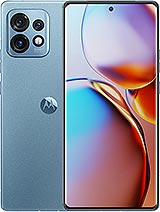
Moto X40
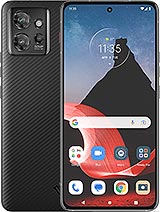
ThinkPhone
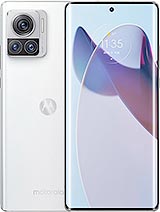
Moto X30 Pro
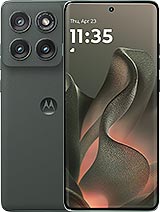
Edge 2025
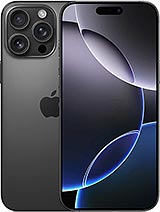
iPhone 16 Pro Max