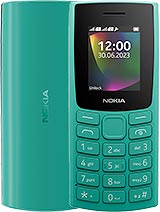
Nokia 106 4G (2023) review
The Nokia 106 is an honest relic in a smartphone world: buy it if you need a backup phone with legendary battery life or want your child to call home without distraction. Skip it if you value maps, messaging apps, or the ability to look something up—which is most of us.
This review is based on Nokia’s published specifications and public benchmark data for the Nokia 106 4G (2023), and the rating is spec-based. GoSolo does not physically test devices; where we estimate real-world behaviour such as battery life or charge time, we say so. How we rate phones.
Overview
The Nokia 106 4G is a basic feature phone for buyers who want calling, texts, and FM radio without smartphone complexity or battery anxiety. It is exactly what it claims to be—no more, no less—and costs little enough that there is no real argument against it for that purpose.
Design & build
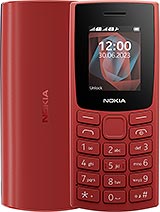
At 79 grams and 14.5 mm thick, the Nokia 106 is genuinely pocketable. The plastic frame and modest footprint feel durable in a way most modern phones do not, with a physical heft that suggests it will survive a year of pocket duty and floor drops without ceremony. The color options—Terracotta, Emerald Green, Charcoal—are tasteful if uninspiring. Splash resistance is a nice touch for a device at this price, even if it is not waterproofing. This is a phone designed to work, not to impress.
Display
The 1.8-inch TFT LCD is tiny by any measure. At 120 x 160 pixels and 111 ppi, it is barely larger than a postage stamp and forces you to squint or scroll through any text that is not a single line. Reading longer messages is frustrating. That said, the 65,000-color palette is adequate for menu navigation and the display consumes almost no power, which is the entire point of this phone.
Connectivity & features
The Nokia 106 handles GSM voice and SMS without fuss, and 4G LTE support keeps it tethered to modern networks rather than relegating it to 2G oblivion. However, there is no Wi-Fi, Bluetooth, or GPS. No internet access means no WhatsApp, no maps, no email, and no way to look anything up. It is a phone for making calls and sending texts, full stop. The FM radio and MP3 player add minimal utility—both features you could already do on a smartphone—but they do not hurt. Dual SIM is useful for travelers or those managing multiple lines.
Battery & charging
The 1000 mAh battery is meager on paper but delivers. Without a display to drain power, without apps running in the background, and without constant connectivity, the Nokia 106 easily lasts four to five days between charges. That alone may be its strongest selling point in a world where smartphones demand a cable every night. Charging speed is not specified, but microUSB 1.1 suggests it will be leisurely—expect several hours for a full top-up. That is fine; this is not a device you rush to plug in.
Who it is for
The Nokia 106 is a tool for specific scenarios: a backup phone for someone whose main device dies, a gift for a child or elderly person who needs to make calls without distraction, or a travel backup for those who want to leave their smartphone at the hotel and roam freely. It is also brutally honest about what it is not—a connected device, a media player, or anything more than a phone. At roughly 80 EUR, it is cheap enough that the limitation is not a sting. The real question is whether the cramped display and total lack of internet justify using it over a basic smartphone, which now costs little more. For most people, the answer is no. But for the minority who genuinely want a phone that calls and texts without baggage, the Nokia 106 delivers exactly that.
Verdict
The Nokia 106 is an honest relic in a smartphone world: buy it if you need a backup phone with legendary battery life or want your child to call home without distraction. Skip it if you value maps, messaging apps, or the ability to look something up—which is most of us.
- Lasts days on a single charge thanks to the 1000 mAh battery and minimal power draw from a 1.8-inch display
- Genuinely pocketable at 79 grams and 14.5 mm thick, lighter and slimmer than most smartphones
- Dual SIM option for those juggling work and personal lines, or traveling between networks
- Splash resistant and built to survive drops better than modern glass phones
- 120 x 160 pixel screen is so cramped that reading anything longer than a text becomes a chore
- No internet means no maps, messaging apps, or any service beyond voice and SMS—a genuine isolation in 2023 and beyond
Nokia 106 4G (2023) Key Specifications
The essentials at a glance. See the full spec sheet.
| Released | 2023, May 18 |
|---|---|
| Display | 1.8 inches, 10.0 cm2 (~17.6% screen-to-body ratio), TFT LCD, 65K colors |
| Resolution | 120 x 160 pixels, 4:3 ratio (~111 ppi density) |
| RAM & storage | Unspecified |
| Main camera | No |
| Battery | 1000 mAh |
| Software | Android |
| Dimensions | 115.1 x 49.4 x 14.5 mm (4.53 x 1.94 x 0.57 in) |
| Weight | 79.4 g (2.79 oz) |
| Durability | Flashlight Splash resistant |
| Network | GSM |
| NFC | No |
| USB | microUSB 1.1 |
Nokia 106 4G (2023) FAQ
Common questions, answered from the spec sheet.
Does the 106 4G (2023) support 5G?
No. The 106 4G (2023) tops out at GSM, without 5G.
What display does the 106 4G (2023) have?
A 1.8 inches, 10.0 cm2 (~17.6% screen-to-body ratio) TFT LCD, 65K colors, 120 x 160 pixels, 4:3 ratio (~111 ppi density).
How big is the 106 4G (2023) battery?
The 106 4G (2023) has a 1000 mAh battery.
Does the 106 4G (2023) have NFC?
No, the 106 4G (2023) does not list NFC support.
Is the 106 4G (2023) water resistant?
The 106 4G (2023) carries a Flashlight Splash resistant rating.
Does the 106 4G (2023) support a microSD card?
Yes, the 106 4G (2023) supports expandable storage (microSDHC).
Does the 106 4G (2023) have a headphone jack?
Yes, the 106 4G (2023) has a 3.5mm headphone jack.
Alternatives to consider
If the 106 4G (2023) isn’t quite right, these are the closest calls.
106 2023
130 (2023)
105 4G 2023
G42
Defy 2