Nokia 108 4G review
This phone is made for people in areas with unreliable power and networks who need to stay reachable without worrying about daily charging. Anyone else should buy a smartphone, even an entry-level one, which will do far more for roughly the same money in developed markets.
This review is based on Nokia’s published specifications and public benchmark data for the Nokia 108 4G, and the rating is spec-based. GoSolo does not physically test devices; where we estimate real-world behaviour such as battery life or charge time, we say so. How we rate phones.
Overview
The Nokia 108 4G is a bare-bones 4G feature phone built for places where the power grid and internet are unreliable; it calls, texts, and lasts days on one charge, nothing more. If you need nothing beyond voice and SMS, the price is likely right, but anyone expecting even light web browsing or app support should look elsewhere.
Design & Build
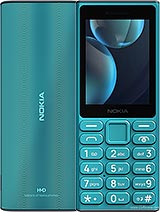
At 93 grams and measuring 126 × 50.5 mm, the 108 4G is a phone that disappears in a pocket or bag. It is a physical object in the way smartphones stopped being years ago: durable, light, and designed to take a bump. The removable battery is a genuine asset in markets where power supply is unreliable; you can pair it with a solar or crank charger or simply carry a spare. Dual Nano-SIM slots let you keep two numbers on one device. The flashlight is a practical touch for a phone sold to users in places where lighting cannot be taken for granted. This is honest industrial design, made for a real use case, not the indulgence of a wealthy market.
Display
The 2.0-inch TFT LCD screen with 240×320 resolution hits 200 ppi, which sounds adequate until you try to read more than a line of text. Messages and numbers are legible in ordinary indoor light, but the pixel grid is visible and the screen washes out badly in direct sunlight. This is not a flaw specific to this phone—it is the trade-off of a screen this small. Anyone who has used a feature phone from the early 2010s will recognise it instantly. For calls and texts, it works. For anything else, it is a compromise.
Performance
The Unisoc T127 is a single-core processor built for low power consumption, not speed. It will handle calls, SMS, and FM radio without lag. It will not run WhatsApp, Google Maps, or any modern app. This is a calls-and-texts device, full stop. Expecting anything else sets you up for disappointment. The 128 MB RAM reinforces this: the OS and basic firmware consume nearly all of it. This is not a bad choice for its intended user—someone who needs to stay reachable without draining power or needing to charge daily. It is simply not a choice for anyone else.
Battery & Charging
The 1450 mAh battery is small by any standard, but the single-core chip and 2G/3G/4G network support mean it can stretch to several days on light use. A few calls and some SMS each day will likely get you three to four days before you hunt for a charger. Heavy calling or using the MP3 player will cut that closer to one day. The removable design means you are not stuck when the battery ages; you can swap a new one in seconds. USB Type-C is standard for modern devices, so charging cables should not be hard to find. The real advantage here is that this phone works in places where a smartphone would need daily charging and where outlets are few.
Software & Features
There is no app ecosystem and no smartphone OS. The 108 4G runs a proprietary feature-phone interface designed for voice, text, and radio. It has an FM radio tuner and MP3 player, which makes it useful for entertainment in areas where mobile data is slow or unreliable. Bluetooth is present for headsets. There is no camera, no web browser, no email, and no way to install third-party software. For someone accustomed to smartphones, this feels like stepping back in time. For someone in a region with spotty data coverage or limited power, it is freedom from the need to charge every night and the pressure to stay online.
Value & Verdict
The Nokia 108 4G costs significantly less than even the cheapest smartphone and does one job well: it gets and receives calls and texts on 4G networks without draining a battery. It works in places where power is scarce and connectivity is unpredictable. It is also completely useless for anyone who needs to navigate with maps, read email, use social media, or capture photos. This is not a compromise device for everyone; it is the right device for a specific user in a specific place. If you are shopping in a market where electrical grid coverage is poor or where a smartphone's battery life is a real problem, the 108 4G is a serious choice. If you have access to reliable power and want anything beyond calls and texts, any smartphone will do more for a modest premium.
Verdict
This phone is made for people in areas with unreliable power and networks who need to stay reachable without worrying about daily charging. Anyone else should buy a smartphone, even an entry-level one, which will do far more for roughly the same money in developed markets.
- Dual SIM support and 4G connectivity, so you can split work and personal lines and stay on modern networks without jumping to a smartphone
- Battery survives several days of light use on one charge, a real advantage in places where power outlets are scarce
- Removable battery means you can carry a spare and swap in seconds when the phone dies
- Physical buttons and a small, light form factor make it durable and pocketable in ways modern smartphones are not
- The 2.0-inch 240×320 screen is so small that text is difficult to read for any length of time, especially outdoors
- No camera at all, so you cannot take photos or video, which rules it out for anyone who needs to document anything
- 128 MB RAM and a single-core Unisoc processor mean no web browsing, no maps, no modern apps whatsoever—only calls, texts, and FM radio
Nokia 108 4G Key Specifications
The essentials at a glance. See the full spec sheet.
| Released | 2024, October 27 |
|---|---|
| Display | 2.0 inches, 12.4 cm2 (~19.5% screen-to-body ratio), TFT LCD, 65K colors |
| Resolution | 240 x 320 pixels, 4:3 ratio (~200 ppi density) |
| Chipset | Unisoc T127Number of cores: 1 |
| RAM & storage | 64 MB RAM: 128 MB |
| Main camera | No |
| Battery | 1450 mAh |
| Software | Android |
| Dimensions | 126.1 x 50.5 x X.X mm |
| Weight | 93 g (3.28 oz) |
| Durability | Flashlight |
| Network | GSM / HSPA / LTE |
| NFC | No |
| USB | USB Type-C |
Nokia 108 4G FAQ
Common questions, answered from the spec sheet.
Does the 108 4G support 5G?
No. The 108 4G tops out at GSM / HSPA / LTE, without 5G.
What chipset does the 108 4G use?
The 108 4G runs on the Unisoc T127Number of cores: 1.
What display does the 108 4G have?
A 2.0 inches, 12.4 cm2 (~19.5% screen-to-body ratio) TFT LCD, 65K colors, 240 x 320 pixels, 4:3 ratio (~200 ppi density).
How big is the 108 4G battery?
The 108 4G has a 1450 mAh battery.
Does the 108 4G have NFC?
No, the 108 4G does not list NFC support.
Is the 108 4G water resistant?
The 108 4G carries a Flashlight rating.
Does the 108 4G support a microSD card?
Yes, the 108 4G supports expandable storage (microSDHC).
Alternatives to consider
If the 108 4G isn’t quite right, these are the closest calls.
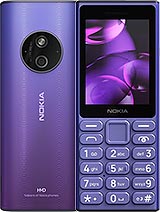
110 4G 2024
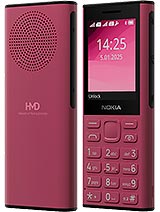
130 Music
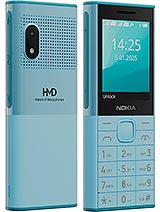
150 Music
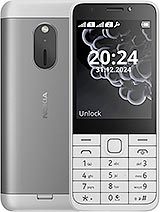
230 2024
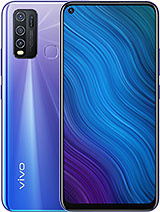
Y50 5G