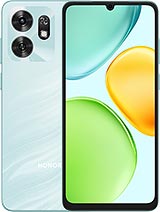
Nokia 110 4G 2024 review
This phone suits someone who actively wants to avoid smartphones and values battery life and durability over features, or who needs a backup or second device for calls and texts in a region with weak infrastructure. Anyone expecting browsing, apps, or a modern interface should not look twice.
This review is based on Nokia’s published specifications and public benchmark data for the Nokia 110 4G 2024, and the rating is spec-based. GoSolo does not physically test devices; where we estimate real-world behaviour such as battery life or charge time, we say so. How we rate phones.
Overview
The Nokia 110 4G is an unashamed feature phone for calls, texts, and basic media in regions where data is slow or unreliable. It stretches to four to five days on a charge and has LTE where it counts, making it a sensible choice for a second phone or for someone who actively avoids smartphones, but its 2-inch screen and single-core processor mean zero flexibility beyond its stated job.
Design & build
The specs say little—dimensions and weight are missing from the sheet, and at 10.45 mm thick it is forgettably slim for a feature phone. Dual nano-SIM and a removable battery matter far more than styling here. The removable battery is a real advantage in places where reliable electricity is patchy; swap in a fresh one instead of hunting for an outlet. The flashlight is standard issue for this class and genuinely useful in regions where reliable grid power is still the exception.
Display
A 2-inch TFT with 240×320 pixels and 65K colors is honest about what it does: handle phone calls and SMS. Reading a longer text message, viewing a contact photo, or scrolling through anything feels cramped and slow, even by feature-phone standards. The 4:3 ratio and low pixel density make text legible but not comfortable. This is not a compromise; it is the entire point. If you expect to read email, look at WhatsApp chats, or view anything beyond contact names, this phone will punish you for it.
Performance
A single-core Unisoc T127 at 1 GHz runs the OS and whatever lightweight apps come preloaded—call interfaces, an SMS app, a basic music player, and FM radio—without lag. Do not expect video playback, games, or background multitasking. By 2024 standards, this CPU is obsolete for any real computing, but for pure telephony and text it is adequate and efficient. The 128 MB RAM reinforces that point: this device does one job and does not deviate.
Software
The spec sheet does not name an OS, which itself is telling. Feature phones in this tier run custom firmware or a stripped-down Linux variant, not Android or iOS. There is no app store, no Bluetooth tethering to turn it into a modem, and no update cycle to chase. What ships is what you get, which is liberating for some users and claustrophobic for others. If you are buying this phone, you know what you want, and it is not flexibility.
Camera
The main camera has video capability but the spec sheet does not list megapixels—the insight mentions 0.1 MP and 480p video, which is essentially a novelty. Useful for confirming you were at a place, not for quality or composition. Do not buy this phone expecting to capture moments; it is a camera in name only.
Battery & charging
The 1000 mAh battery delivers four to five days on moderate use (calls, texts, occasional calls) and potentially six days on light use. That longevity is the main reason to buy this phone over a basic smartphone. Charging speed is not listed, and at 1000 mAh it will be quick anyway—probably under an hour on any USB Type-C charger. In parts of the world where you charge once a week at a market stall or a shared outlet, this battery life is a genuine advantage.
Value & verdict-context
The Nokia 110 4G is priced as an entry device in emerging markets, typically under $50 USD equivalent. For that money, you are not buying a smartphone experience; you are buying a reliable phone that runs for days and works on LTE where it exists. It is a second phone for professionals who want to escape notifications, a gift for a teenager you want to keep offline, or a travel backup for someone in a region with poor charging infrastructure. At its price, it is honestly priced for what it is. The question is not whether it is good at being a phone—it is—but whether you actually need a phone that is only a phone.
Verdict
This phone suits someone who actively wants to avoid smartphones and values battery life and durability over features, or who needs a backup or second device for calls and texts in a region with weak infrastructure. Anyone expecting browsing, apps, or a modern interface should not look twice.
- Four to five days between charges on typical use (calls, SMS, basic features)—genuine utility for a work phone or traveling backup
- LTE on six bands plus FM radio and MP3 player, so it works as a complete media device without relying on an app store
- Removable battery and microSD slot for expansion; practical for long trips or regions with unreliable chargers
- 2-inch TFT screen is cramped even for reading longer SMS or viewing photos—typing and browsing feel punishing
- Single-core 1GHz CPU handles calls and texts only; no video, games, or any real apps
- Barebones storage (128 MB RAM, 64 MB internal) means the microSD slot is almost mandatory, not optional
Nokia 110 4G 2024 Key Specifications
The essentials at a glance. See the full spec sheet.
| Released | 2024, October 28 |
|---|---|
| Display | 2.0 inches, 12.4 cm2, TFT LCD, 65K colors |
| Resolution | 240 x 320 pixels, 4:3 ratio (~200 ppi density) |
| Chipset | Unisoc T127Number of cores: 1 |
| RAM & storage | 64MB 128MB RAM |
| Main camera | Yes |
| Selfie camera | No |
| Battery | 1000 mAh |
| Software | Android |
| Durability | Flashlight |
| Network | GSM / HSPA / LTE |
| NFC | No |
| USB | USB Type-C |
Nokia 110 4G 2024 FAQ
Common questions, answered from the spec sheet.
Does the 110 4G 2024 support 5G?
No. The 110 4G 2024 tops out at GSM / HSPA / LTE, without 5G.
What chipset does the 110 4G 2024 use?
The 110 4G 2024 runs on the Unisoc T127Number of cores: 1.
What display does the 110 4G 2024 have?
A 2.0 inches, 12.4 cm2 TFT LCD, 65K colors, 240 x 320 pixels, 4:3 ratio (~200 ppi density).
How big is the 110 4G 2024 battery?
The 110 4G 2024 has a 1000 mAh battery.
Does the 110 4G 2024 have NFC?
No, the 110 4G 2024 does not list NFC support.
Is the 110 4G 2024 water resistant?
The 110 4G 2024 carries a Flashlight rating.
Does the 110 4G 2024 support a microSD card?
Yes, the 110 4G 2024 supports expandable storage (microSDHC).
Alternatives to consider
If the 110 4G 2024 isn’t quite right, these are the closest calls.
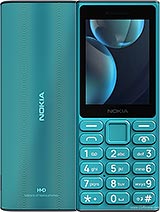
108 4G
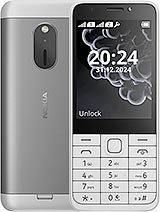
230 2024
225 4G 2024
5310 2024
Y50 5G