Nokia 130 (2023) review
This phone suits someone in a 2G market who values reliability, long battery life, and durability over features. It is not for anyone with regular internet needs or living in a country that has shut down 2G networks.
This review is based on Nokia’s published specifications and public benchmark data for the Nokia 130 (2023), and the rating is spec-based. GoSolo does not physically test devices; where we estimate real-world behaviour such as battery life or charge time, we say so. How we rate phones.
Overview
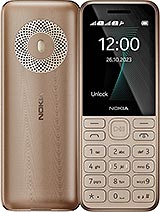
The Nokia 130 is a bare-bones 2G feature phone for calls, texts, and FM radio in places where newer networks haven't reached. At €20, it is not a smartphone and makes no pretense of being one—it is an honest tool that works where internet-dependent phones would struggle.
What it is
The Nokia 130 (2023) is a feature phone, not a smartphone. It makes calls, sends texts, plays FM radio, and runs MP3s. There is no app store, no web browser, no email client, and no expectation that you will check social media or stream video. Released in 2023 but built to 2000s specifications, it targets rural and secondary markets in Africa, South Asia, and Eastern Europe where 2G networks still form the backbone of connectivity. At €20, it costs less than a lunch for two in most Western countries. If you are reading this review on a modern phone and asking 'why would anyone buy this?', you are not the target.
Design & Build
The phone is compact (131 × 51 × 14 mm) and weighs just 98 grams, making it pocket-friendly and light enough to pocket all day. The plastic body is industrial and plain, but that is by design: there is no appeal to scratch or dent. Dual Mini-SIM slots let you switch networks without swapping cards. The 3.5 mm audio jack and microUSB 1.1 port are vestigial by flagship standards but practical for a device that prioritizes simplicity. A built-in flashlight is a useful addition for areas where power reliability is inconsistent. The removable battery is a genuine win; you can carry a spare without needing a power outlet or an external pack.
Display
The 2.4-inch TFT LCD screen has a 240 × 320 pixel resolution and displays 65K colors. The 167 ppi density means text and simple graphics render clearly, but up close you will see pixel grain. The 4:3 ratio is vertical-friendly for a phone whose life revolves around calls and messages rather than media. The screen-to-body ratio of 27 percent tells you the bezel is chunky, but that is acceptable on a device that won't be streaming Netflix. For its purpose—displaying names, numbers, and basic text—it works.
Connectivity & Software
This is where modernity ends. The phone connects only to GSM (2G) networks on 900 and 1800 MHz bands. There is no 3G, 4G, or 5G support. In markets where carriers have retired 2G entirely, the phone becomes a brick. Even where 2G persists, data speeds are archaic; do not expect to download anything beyond ringtones. Bluetooth, Wi-Fi, NFC, and GPS are all absent. The phone runs a proprietary operating system with preset functions: calls, SMS, FM radio, and MP3 playback. There is no customization beyond changing your ringtone.
Storage & Memory
The phone has 4 MB of onboard storage and 4 MB of RAM. The internal memory holds phone settings and a tiny library of ringtones. Any music or photos you want must live on a microSD card, which is not bundled. A 32 GB card costs pennies in most markets and gives you hundreds of songs, but the assumption is that you will buy it separately. For SMS and call logs, the capacity is fine; the phone will not choke on years of saved messages.
Battery & Charging
The 1450 mAh Li-Ion battery is removable, which is the main selling point here. In real-world use—mostly standby with occasional calls and texts—expect two to three days between charges. If you use the FM radio or MP3 player daily, you will recharge every one to two days. The charger charges via microUSB 1.1, which is slow compared to modern standards but adequate for a battery this size. The removable design means you can carry a second battery for €5–10 and swap it in seconds, bypassing the need for a charger entirely. In areas with unreliable power, this is a game-changer.
Value & Verdict
At €20, the Nokia 130 is not competing with smartphones and should not be judged by their yardstick. It is for someone in a place where 2G networks still work, where calling and texting are the primary needs, and where a phone that lasts two days between charges and survives a dropped call without breaking is a win. The lack of 3G or 4G is a hard limit in markets where those networks dominate, but in regions where 2G is still the standard, it is irrelevant. The trade-off is absolute simplicity: no apps, no internet, no surprises. That is the point.
Verdict
This phone suits someone in a 2G market who values reliability, long battery life, and durability over features. It is not for anyone with regular internet needs or living in a country that has shut down 2G networks.
- Removable battery and microSD slot mean you can extend both power and storage without being locked to what Nokia shipped.
- Dual SIM and a built-in flashlight add practical versatility for areas where network switching and basic torch use matter.
- FM radio and MP3 player give you media options without needing data or a data plan.
- GSM-only means zero 3G or 4G; data speeds are crippled or absent in markets where 2G is being phased out.
- 4 MB storage onboard is laughably tight, forcing full reliance on a microSD card for anything beyond calls and texts.
Nokia 130 (2023) Key Specifications
The essentials at a glance. See the full spec sheet.
| Released | 2023, August 10 |
|---|---|
| Display | 2.4 inches, 17.8 cm2 (~26.9% screen-to-body ratio), TFT LCD, 65K colors |
| Resolution | 240 x 320 pixels, 4:3 ratio (~167 ppi density) |
| RAM & storage | 4MB |
| Main camera | No |
| Battery | 1450 mAh |
| Software | Android |
| Dimensions | 130.9 x 50.6 x 14 mm (5.15 x 1.99 x 0.55 in) |
| Weight | 98.2 g (3.46 oz) |
| Durability | Flashlight |
| Network | GSM |
| NFC | No |
| USB | microUSB 1.1 |
Nokia 130 (2023) FAQ
Common questions, answered from the spec sheet.
Does the 130 (2023) support 5G?
No. The 130 (2023) tops out at GSM, without 5G.
What display does the 130 (2023) have?
A 2.4 inches, 17.8 cm2 (~26.9% screen-to-body ratio) TFT LCD, 65K colors, 240 x 320 pixels, 4:3 ratio (~167 ppi density).
How big is the 130 (2023) battery?
The 130 (2023) has a 1450 mAh battery.
Does the 130 (2023) have NFC?
No, the 130 (2023) does not list NFC support.
Is the 130 (2023) water resistant?
The 130 (2023) carries a Flashlight rating.
Does the 130 (2023) support a microSD card?
Yes, the 130 (2023) supports expandable storage (microSDHC).
Does the 130 (2023) have a headphone jack?
Yes, the 130 (2023) has a 3.5mm headphone jack.
Alternatives to consider
If the 130 (2023) isn’t quite right, these are the closest calls.
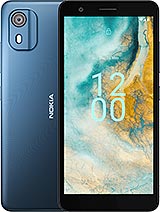
C02
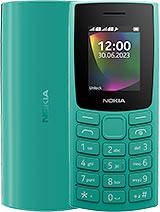
106 2023
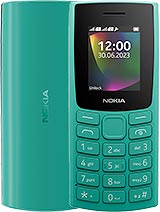
106 4G (2023)
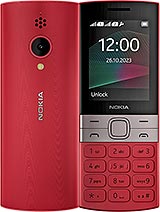
150 2023
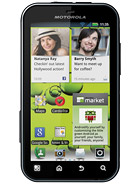
Defy 2