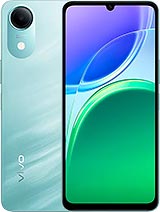
Nokia 150 Music review
Get this phone if you live in a GSM-only region, need reliable calls and texts with music, and do not expect internet or apps—the removable battery and long runtime are genuine assets. If you have any expectation of data, web browsing, or a functional camera, look elsewhere; this phone will frustrate you instantly.
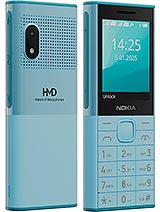
This review is based on Nokia’s published specifications and public benchmark data for the Nokia 150 Music, and the rating is spec-based. GoSolo does not physically test devices; where we estimate real-world behaviour such as battery life or charge time, we say so. How we rate phones.
Overview
The Nokia 150 Music is a 2025 feature phone built for GSM-only markets where data networks are absent or unreliable—it makes calls, sends texts, plays MP3s, and survives dust and splashes without pretending to be a smartphone. If you live in a region where 2G is the norm and have no need for internet or apps, it's honest work at a price that makes sense; elsewhere, it's simply not the device for you.
Design and build
At 83 grams and 14.8mm thick, the 150 Music feels pocket-friendly—light enough to forget you're carrying it. The dual SIM and removable battery are relics from an era when those were expected, but they remain genuinely useful if you swap lines or want a spare power pack. IP54 dust and splash protection is a thoughtful addition at this price and segment; it won't survive a full dunk, but everyday spills and dusty pockets are fine. The 2.4-inch display forces a utilitarian form factor—this is a phone, not a rectangle designed around a screen.
Display
The 2.4-inch TN TFT panel runs 240x320 pixels at 167ppi, which means any text smaller than a headline becomes a strain. This display was never meant for reading emails or browsing; it's built to show who's calling, what time it is, and maybe the first line of an SMS. Colors are murky by modern standards, and viewing angles are narrow. But that is the point. A bright, detailed screen would waste battery and push you toward tasks this phone deliberately does not support.
Performance and connectivity
The Unisoc 6531F is a GSM-only chipset—no 3G, no 4G, no 5G. In much of the global south, especially rural areas and developing regions, GSM still carries voice and SMS reliably, and that is enough. The moment you expect data, maps, or a web browser, this phone is dead in the water. Bluetooth 5.0 is a surprise at this level; you can pair wireless earbuds and listen to your MP3s without the 3.5mm jack if you prefer. USB Type-C is standard now, even here, which is fine, though charging speed is unknown and likely leisurely.
Memory and storage
Eight megabytes of onboard storage is a cruel joke—it's enough for the OS and little else. The microSDHC slot is where you live: drop in a card (up to 2TB in theory, though practical cards run into the hundreds of gigabytes), and you have a genuine music player. If you own hundreds of MP3s or a few dozen videos, this phone will hold them. Everything else—apps, documents, games—simply will not fit, nor is there anything to run them.
Camera
The 0.1MP QVGA sensor (roughly 320x240 output) with LED flash is what you use when you have no choice and must capture something, anything. Do not expect to keep photos; they will be pixelated wreckage. Video works in theory, but the results are unwatchable. In markets where a smartphone with a 50MP camera is standard, this is almost insulting, but in places where internet and apps are luxuries, a working camera for ID documentation or an emergency snapshot has its place.
Battery and charging
The 2500mAh removable battery powers a GSM chip running mostly on standby, which means 2 to 3 days of real-world use before you need to recharge—or pop in a fresh battery if you carry a spare. That is the entire appeal. Heavy MP3 playback or constant texting will trim a day or two, but the math is simple and honest. Charging time and wattage are unspecified, but on a phone this low-power, you're likely looking at a standard 5W trickle that takes a few hours. The removable design means you are never truly stuck if a charge port fails.
Value and context
The Nokia 150 Music is unambiguous: it is a 2025 feature phone sold into markets where GSM is the primary (or only) network infrastructure and smartphones are either unaffordable, unreliable on local grids, or unnecessary. If that is your reality—you need calls, texts, and music on a phone that lasts days—this is a sensible buy. Comparing it to a Poco or Realme is pointless; those phones need data networks and mains power. This one does not, and that is its entire design thesis. The price will reflect that positioning, likely well below $100 USD, which makes it a no-brainer in its target market and an outright non-option everywhere else.
Verdict
Get this phone if you live in a GSM-only region, need reliable calls and texts with music, and do not expect internet or apps—the removable battery and long runtime are genuine assets. If you have any expectation of data, web browsing, or a functional camera, look elsewhere; this phone will frustrate you instantly.
- Multi-day battery life on 2500 mAh and minimal power draw from GSM-only chip—you'll stretch 2 to 3 days between charges with regular calls and texts
- Removable battery and microSDHC expansion mean you can carry spares and load hundreds of songs without being tethered to a charger or cloud
- Dual SIM and Bluetooth 5.0 let you split work and personal lines or pair with wireless headphones without reinventing the wheel
- IP54 dust and splash resistance in a phone this cheap is rare; it won't crumble in a pocket or under light rain
- GSM 2G only means zero mobile data—no maps, no web, no apps beyond what's baked in; you're offline unless you're in a WiFi zone (which this phone doesn't even have)
- 0.1MP camera is a joke; those pixels won't capture anything worth keeping, making it useless as anything but an emergency snapshot tool
- 8MB onboard storage is essentially a rounding error; everything depends on a microSD card, and the phone itself can't run or store anything substantial
Nokia 150 Music Key Specifications
The essentials at a glance. See the full spec sheet.
| Released | 2025, March 02 |
|---|---|
| Display | 2.4 inches, 17.8 cm2 (~25.8% screen-to-body ratio), TN TFT |
| Resolution | 240 x 320 pixels, 4:3 ratio (~167 ppi density) |
| Chipset | Unisoc 6531F |
| RAM & storage | 8MB 8MB RAM |
| Main camera | QVGA |
| Selfie camera | No |
| Battery | 2500 mAh |
| Software | Android |
| Dimensions | 130.5 x 52.9 x 14.8 mm (5.14 x 2.08 x 0.58 in) |
| Weight | 83.1 g (2.93 oz) |
| Durability | IP54 dust protected and water resistant (water splashes) - EU only |
| Network | GSM |
| NFC | No |
| USB | USB Type-C 1.1 |
Nokia 150 Music FAQ
Common questions, answered from the spec sheet.
Does the 150 Music support 5G?
No. The 150 Music tops out at GSM, without 5G.
What chipset does the 150 Music use?
The 150 Music runs on the Unisoc 6531F.
What display does the 150 Music have?
A 2.4 inches, 17.8 cm2 (~25.8% screen-to-body ratio) TN TFT, 240 x 320 pixels, 4:3 ratio (~167 ppi density).
How big is the 150 Music battery?
The 150 Music has a 2500 mAh battery.
Does the 150 Music have NFC?
No, the 150 Music does not list NFC support.
Is the 150 Music water resistant?
The 150 Music carries a IP54 dust protected and water resistant (water splashes) - EU only rating.
Does the 150 Music support a microSD card?
Yes, the 150 Music supports expandable storage (microSDHC).
Does the 150 Music have a headphone jack?
Yes, the 150 Music has a 3.5mm headphone jack.
Alternatives to consider
If the 150 Music isn’t quite right, these are the closest calls.
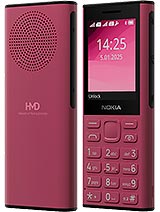
130 Music
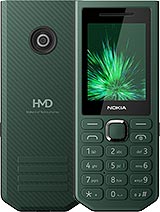
300 Charge
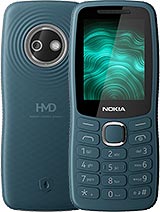
123 Shield
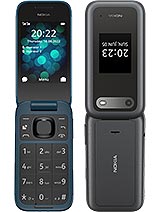
2660 Flip
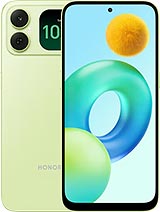
Play20C