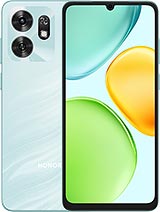
Nokia 215 4G 2024 review
This suits people who want calls, texts, FM radio, and a week-long battery in a region with 4G coverage and unreliable power. Anyone else—including people in areas with good charging and data—should choose a budget Android instead, which costs similar money and lets you do things with your phone.
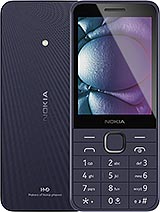
This review is based on Nokia’s published specifications and public benchmark data for the Nokia 215 4G 2024, and the rating is spec-based. GoSolo does not physically test devices; where we estimate real-world behaviour such as battery life or charge time, we say so. How we rate phones.
Overview
The Nokia 215 4G is a straightforward feature phone for calls, texts, and FM radio in regions with 4G coverage—nothing more. If you need a device that lasts days on a charge and has no apps, distractions, or complexity, it delivers exactly that; otherwise, a budget Android is more useful.
Design and build
At 127 x 54 x 11.6 mm, the 215 4G is pocket-sized and light enough for a full week in a shirt pocket without noticing. The plastic casing feels basic but solid, and the removable battery is a genuine asset in regions where charging infrastructure is spotty. Three colour options—peach, black, dark blue—offer mild personalisation for a phone that does one job. There is a flashlight and FM radio, which matter when you are in areas where data plans are expensive or unreliable.
Display
The 2.8-inch TFT LCD with a 240 × 320 resolution and 143 ppi density is genuinely cramped. Reading a contact list, a short text message, or even dialling a number requires holding it close. The 4:3 aspect ratio feels old-school, and brightness is modest. For anyone accustomed to even a basic modern smartphone, this will feel like stepping backwards. That said, the small screen and low resolution use minimal power, which directly feeds into the phone's strong battery endurance.
Performance
The Unisoc T107, a 1 GHz single-core Cortex-A7, is entry-level mobile silicon from 2022. It handles voice calls, SMS, and basic contact management without hesitation. Anything beyond that—opening a web browser, launching a game, or flipping between apps—will stall noticeably. The 64 MB RAM means there is almost no room for multitasking; close one app, start another. This is a phone for talking and texting, not experimenting. If you have ever used a flip phone or an older Symbian device, this feels familiar and intentional. If you have used a smartphone in the past five years, this will feel like a punishment.
Software and apps
Nokia makes no mention of an operating system, which tells you this is a proprietary or lightweight Java-based environment. There is a Cloud Apps portal mentioned in the specs, implying some kind of curated app store, but do not expect a full Android or iOS ecosystem. Contacts, calls, SMS, and the MP3 player are built-in. Anything else requires hunting through the cloud portal, and even then, support will be thin. This is not a smartphone in any modern sense; it is a dumb phone with 4G.
Storage and memory
With 128 MB of internal storage and 64 MB of RAM, the phone fills the moment you add a handful of contacts and enable any media. The microSD slot is not a convenience—it is mandatory. Nokia does not specify the maximum card capacity, though the specs list microSDHC as the standard (usually up to 32 GB). If you plan to carry music or photos, budget for a low-cost microSD card from day one. Without it, the phone is basically just calls and texts.
Battery and charging
The 1450 mAh Li-Ion battery claims about 3 to 5 days of standby on light use (a few calls and texts daily). Heavy texting or frequent MP3 playback cuts that to one or two days. The removable battery is useful; if your charger breaks or power is unreliable, you can carry a spare and swap it in seconds. Charging speed is not specified, but USB Type-C suggests faster than the microUSB phones of the past. For a device that does nothing except calls, text, and radio, the battery is the real strength.
Value and verdict
In 2024, the Nokia 215 4G targets a shrinking but real group: people in regions with unreliable power or expensive data who want a phone that lasts days, does not spy, and has no app bloat. It does exactly that. If you need WhatsApp, email, maps, or a camera, this phone is a dead end. If you want a device to talk, text, listen to FM, and then ignore for five days, it works. The price is not specified in the spec sheet, but feature phones like this typically retail under USD 50 to USD 100 in developing markets. At that tier, it has real competition from budget Android phones that do infinitely more, so it only makes sense for someone who actively wants a dumb phone or lives somewhere where a smartphone is impractical.
Verdict
This suits people who want calls, texts, FM radio, and a week-long battery in a region with 4G coverage and unreliable power. Anyone else—including people in areas with good charging and data—should choose a budget Android instead, which costs similar money and lets you do things with your phone.
- Battery lasts about 3–5 days on light use, letting you go long stretches between charges
- Dual nano-SIM and 4G LTE bands across EU, EMEA, and APAC make it practical in most regions
- Removable battery lets you swap a spare instead of hunting a charger
- FM radio and basic MP3 playback keep entertainment simple and offline
- 2.8-inch, 143-ppi TFT screen is small and dim, making even short text hard to read without squinting
- Just 64 MB of RAM and 128 MB of storage means the phone fills up instantly; microSD expansion is mandatory, not optional
- 1 GHz single-core Cortex-A7 stalls when you open or switch between apps—there is no multitasking here
Nokia 215 4G 2024 Key Specifications
The essentials at a glance. See the full spec sheet.
| Released | 2024, April 30 |
|---|---|
| Display | 2.8 inches, 24.3 cm2 (~35.2% screen-to-body ratio), TFT LCD |
| Resolution | 240 x 320 pixels, 4:3 ratio (~143 ppi density) |
| Chipset | Unisoc T107 (22 nm) |
| RAM & storage | 128MB 64MB RAM |
| Battery | 1450 mAh |
| Software | Android |
| Dimensions | 127.3 x 54.2 x 11.6 mm (5.01 x 2.13 x 0.46 in) |
| Durability | Flashlight |
| Network | GSM / HSPA / LTE |
| NFC | No |
| USB | USB Type-C |
Nokia 215 4G 2024 FAQ
Common questions, answered from the spec sheet.
Does the 215 4G 2024 support 5G?
No. The 215 4G 2024 tops out at GSM / HSPA / LTE, without 5G.
What chipset does the 215 4G 2024 use?
The 215 4G 2024 runs on the Unisoc T107 (22 nm).
What display does the 215 4G 2024 have?
A 2.8 inches, 24.3 cm2 (~35.2% screen-to-body ratio) TFT LCD, 240 x 320 pixels, 4:3 ratio (~143 ppi density).
How big is the 215 4G 2024 battery?
The 215 4G 2024 has a 1450 mAh battery.
Does the 215 4G 2024 have NFC?
No, the 215 4G 2024 does not list NFC support.
Is the 215 4G 2024 water resistant?
The 215 4G 2024 carries a Flashlight rating.
Does the 215 4G 2024 support a microSD card?
Yes, the 215 4G 2024 supports expandable storage (microSDHC).
Alternatives to consider
If the 215 4G 2024 isn’t quite right, these are the closest calls.
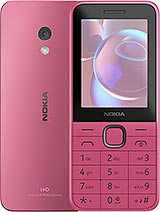
225 4G 2024
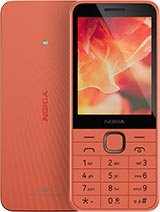
220 4G 2024
110 4G 2024
235 4G 2024
Y50 5G