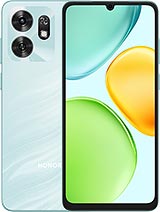
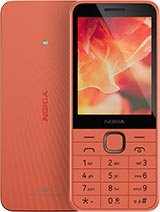
Nokia 220 4G 2024 review
This phone suits people in parts of India, Africa, or Southeast Asia who need reliable calling and SMS on 4G networks and either do not want or cannot justify a smartphone, or who want a rugged backup device that runs for days. Anyone shopping for an actual phone experience—web, chat apps, media—should not even glance at it; a basic Android phone is cheaper in the long run and worth the step up in capability and screen size."
This review is based on Nokia’s published specifications and public benchmark data for the Nokia 220 4G 2024, and the rating is spec-based. GoSolo does not physically test devices; where we estimate real-world behaviour such as battery life or charge time, we say so. How we rate phones.
Overview
The Nokia 220 4G is a true feature phone, not a smartphone—it makes calls, sends texts, plays FM radio, and handles 4G where it exists, all on a laughably tiny 2.8-inch screen and 64 MB of RAM. It's unapologetically aimed at people who just need a phone to be a phone, in places where durability and battery life matter more than apps, and at this price it delivers exactly that without pretending to be something it isn't.
Design & build
At 127.3 × 54.2 × 11.6 mm and (reportedly) well under 100 grams, the 220 4G is sized for hands that remember when phones weren't slabs. The compact footprint and thin profile are genuinely practical for construction sites, rural routes, or anywhere you work with your hands. A removable battery is a rarity in 2024 and a real win if you need a spare or live somewhere spares are hard to find; it also means no proprietary connector nonsense. The build feels utilitarian—there is no mention of gorilla glass or fancy materials, which is the right call at this price and use case. It is not a fashion statement, and it does not pretend to be.
Display
A 2.8-inch TFT LCD screen at 240 × 320 resolution and 143 ppi is a relic by smartphone standards, but calling it a shortcoming here misses the point. This phone is not for browsing photos or reading news; it is for texts and call logs. At this density, letters and numbers are readable if you do not mind leaning in slightly. The 4:3 aspect ratio and small size mean the display will feel cramped if you try to run any actual app, which is fine because there is barely any RAM to run them on anyway. Think of it as a digital notepad with a phone number dialer, not a window to the web.
Performance
A 1.0 GHz single-core Cortex-A7 paired with 64 MB of RAM is entry-level mobile hardware from roughly a decade ago, and Nokia is not hiding that. The Unisoc T107 is a power-sip designed to handle calls, texts, FM radio, and maybe an MP3 player without draining a small battery. Anything beyond that—real web browsing, email, messaging apps, media—will stall or fail to load. If you arrive with a background of modern smartphones, you will feel like you have stepped backward, which is the point. This chip excels at doing one thing: stretching battery life on minimal compute. It is not slow for its purpose; it is just not built for a purpose beyond basic calling.
Software
There is no modern OS listed (no Android, no proprietary layer), which means this is running a bare feature phone OS, likely heavily customized by Nokia. The interface will be menu-driven: phone, contacts, messages, calendar, radio. No app store, no cloud sync in the way you know it. Cloud Apps portal is mentioned, which likely means a basic portal to download ringtones or wallpapers, not real applications. This is a feature phone in the classic sense, and the simplicity is not a limitation—it is the design. If you do not need apps, you do not miss them. If you do, this is the wrong device by miles.
Battery & charging
The 1450 mAh battery is small, but the hardware is small enough that it might squeeze out a day or two of light calling and standby. Real-world screen-on time is probably 4–6 hours of active use, though pure call time (which is the intended workload) could be longer. Charging speed is not listed, so assume it is slow via USB Type-C; this is not a phone you plug in for 30 minutes and head out. The removable battery is the standout here—if you keep a spare charged, you have a genuine backup without carrying a power bank. For a feature phone in 2024, that flexibility is remarkable.
Connectivity
The 4G support spans bands 1, 3, 5, 8, 28, 38, 39, 40, and 41, which covers Indian and Chinese networks comprehensively, with fallback to HSDPA 3G and older GSM for areas where LTE is absent. Bluetooth 5.0 is present for pairing headsets or speakers. There is no Wi-Fi, no GPS, and no NFC, which is expected at this tier. The FM radio is a genuine asset in regions where mobile data is patchy or unreliable. For calling and SMS, the connectivity stack is solid; for anything else, do not expect much.
Value & verdict context
At about 40 EUR, the Nokia 220 4G is not competing with budget smartphones. It is a purpose-built alternative to paying for a smartphone plan when all you need is a phone. In markets where networks are rolling out 4G but infrastructure is still building, where feature phones are still standard, or where you need a rock-solid backup device, the math makes sense. The price is low, the battery is removable, the 4G bands cover key regions, and there are no false promises. You are not paying for features you do not need; you are paying for a tool that does one job well. Anyone expecting app-like capability or a readable screen for anything beyond short text should look at a cheap Android phone instead, even if it costs two or three times as much.
Verdict
This phone suits people in parts of India, Africa, or Southeast Asia who need reliable calling and SMS on 4G networks and either do not want or cannot justify a smartphone, or who want a rugged backup device that runs for days. Anyone shopping for an actual phone experience—web, chat apps, media—should not even glance at it; a basic Android phone is cheaper in the long run and worth the step up in capability and screen size."
- 4G LTE connectivity on multiple bands (1, 3, 5, 8, 28, 38, 39, 40, 41), covering India and China, with 3G fallback where LTE drops out
- Removable 1450 mAh battery—genuinely useful if you need a spare or have swelling concerns, rare in 2024
- Compact and light, built for pocket carry; 11.6 mm thick and under 100 grams suggests it won't wear a hole in your jeans
- FM radio chip onboard, which is still valuable in areas with poor internet coverage or during power outages
- 2.8-inch 240×320 TFT screen is so small and low-density that reading anything beyond a phone number is a squint-and-suffer experience
- 64 MB of RAM and 128 MB of storage mean even basic apps will choke or refuse to install; this is not a 'lite' phone, it is a call-and-text box
- 1450 mAh battery sounds okay until you realize the screen-on time in practice is probably 4–6 hours of active use, not the marketing standby figures
Nokia 220 4G 2024 Key Specifications
The essentials at a glance. See the full spec sheet.
| Released | 2024, June 25 |
|---|---|
| Display | 2.8 inches, 24.3 cm2 (~35.2% screen-to-body ratio), TFT LCD |
| Resolution | 240 x 320 pixels, 4:3 ratio (~143 ppi density) |
| Chipset | Unisoc T107 (22 nm) |
| RAM & storage | 128MB 64MB RAM |
| Battery | 1450 mAh |
| Software | Android |
| Dimensions | 127.3 x 54.2 x 11.6 mm (5.01 x 2.13 x 0.46 in) |
| Durability | Flashlight |
| Network | GSM / HSPA / LTE |
| NFC | No |
| USB | USB Type-C |
Nokia 220 4G 2024 FAQ
Common questions, answered from the spec sheet.
Does the 220 4G 2024 support 5G?
No. The 220 4G 2024 tops out at GSM / HSPA / LTE, without 5G.
What chipset does the 220 4G 2024 use?
The 220 4G 2024 runs on the Unisoc T107 (22 nm).
What display does the 220 4G 2024 have?
A 2.8 inches, 24.3 cm2 (~35.2% screen-to-body ratio) TFT LCD, 240 x 320 pixels, 4:3 ratio (~143 ppi density).
How big is the 220 4G 2024 battery?
The 220 4G 2024 has a 1450 mAh battery.
Does the 220 4G 2024 have NFC?
No, the 220 4G 2024 does not list NFC support.
Is the 220 4G 2024 water resistant?
The 220 4G 2024 carries a Flashlight rating.
Does the 220 4G 2024 support a microSD card?
Yes, the 220 4G 2024 supports expandable storage (microSDHC).
Alternatives to consider
If the 220 4G 2024 isn’t quite right, these are the closest calls.
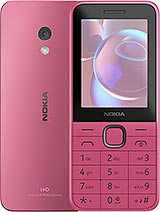
225 4G 2024
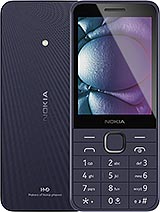
215 4G 2024
110 4G 2024
235 4G 2024
Y50 5G