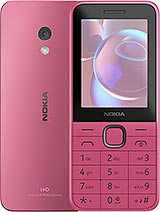
Nokia 225 4G 2024 review
This phone suits users in regions with unreliable electricity who value days-long battery life and dual-SIM flexibility for voice and text over everything else. Anyone expecting web browsing, a camera, or modern apps should ignore it—there are cheap Android phones that do all that far better, even if they die by evening."
This review is based on Nokia’s published specifications and public benchmark data for the Nokia 225 4G 2024, and the rating is spec-based. GoSolo does not physically test devices; where we estimate real-world behaviour such as battery life or charge time, we say so. How we rate phones.
Overview
The Nokia 225 4G is a no-frills calling phone built for people in areas with unreliable power who need voice, text, and basic 4G connectivity—not a smart device. It strips away apps, screens, and complexity in exchange for a week or more of battery life between charges, making it a deliberate step backward that solves a real problem for its intended user.
Design & Build
The Nokia 225 4G is compact and light—121.5 by 52 mm with an 11.6 mm profile—meant to pocket easily and survive rough handling. The form is a straightforward candy bar with raised keys and a small 2.4-inch screen. There are no material details in the spec sheet, but the line has a reputation for durability; the removable battery and Nokia's long track record in rugged markets suggest it is built to last longer than it matters. It comes in two colors, pink and dark blue, and frankly, aesthetic is not why you buy this.
Display
The 2.4-inch TFT screen at 240 by 320 pixels and 167 ppi is dim and blocky by modern standards, but text is readable in daylight and that is the point. The screen-to-body ratio sits at 28 percent, which means you are looking at a lot of frame and button. For calls, SMS, and basic menus, this is functional; for anything else, you simply are not using this phone for that task.
Performance
The Unisoc T107 at 1.0 GHz is a single-core entry chip designed for feature phones, not smartphones. It has no GPU worth mentioning. This processor is fine for dialing, texting, and listening to FM radio or playing an MP3. Anything beyond that—browsing the web, using apps, or multitasking—will be visibly slow or impossible. The 64 MB of RAM underscores that this device is not made for modernity. Do not expect push notifications, background sync, or snappy interface transitions. If you are even slightly tempted by smart features, this is not for you.
Connectivity
The Nokia 225 4G supports LTE bands 1, 3, 5, 7, 8, 20, 28, 38, 40, and 41, covering 700 MHz to 2.6 GHz—broad enough for most operators in EMEA and APAC. It has dual nano-SIM slots, useful for travelers or people juggling two carriers. Bluetooth 5.0 is present but Wi-Fi, GPS, and NFC are absent. You cannot use Google Maps, Apple Pay, or connect to your home router. The point is cellular voice and SMS; everything else is secondary or absent.
Battery & Charging
The 1450 mAh removable Li-Ion battery is the real story here. With a 1 GHz processor, 64 MB RAM, and a low-res TFT screen, you are looking at an honest 3 to 4 days of light use (calling, texting, FM radio) before needing to charge. That is a quantum leap from flagship phones that drain in a day. There is no fast charging—the spec sheet does not list wattage—but there is no need for it either. Swap the battery and keep going, which is the feature that matters for users in areas where plugging in for hours is not an option.
Camera
The 0.3 MP camera with LED flash is a relic. It is not terrible for scanning QR codes or taking an emergency photo, but the output is grainy and featureless. If you need photos, this is not the phone. Nokia probably included it for completeness and to say it shoots video, technically true though you would not want to watch it. This is a weakness only in the sense that it exists; most users of this phone will not miss it.
Value & Verdict Context
The Nokia 225 4G costs less than a single meal in most markets and does one job well: connect you to people when electricity is scarce or unreliable. It is not trying to compete with budget Android phones, which would be pointless—it is chasing a different market. For someone in a region with frequent power cuts, a long commute without charging, or a simple need to stay reachable without the distraction of apps and notifications, this phone makes sense. It is the rare 2024 device that admits what it is not rather than pretend. If you need internet, maps, a decent camera, or any app ecosystem at all, look elsewhere; you are not the buyer Nokia designed this for.
Verdict
This phone suits users in regions with unreliable electricity who value days-long battery life and dual-SIM flexibility for voice and text over everything else. Anyone expecting web browsing, a camera, or modern apps should ignore it—there are cheap Android phones that do all that far better, even if they die by evening."
- Multi-day battery life on a 1450 mAh cell thanks to a 1 GHz single-core processor and tiny 2.4-inch screen—a realistic estimate of 3 to 4 days of moderate use before needing power
- Dual nano-SIM support with 4G LTE on eight bands, covering most of EMEA and APAC, so it works on modern networks and lets you switch between two plans on the fly
- Removable battery means you can swap it on the road without a charger, and genuine spares are still available for this line
- FM radio and MP3 player built in, plus USB Type-C, so it handles older use cases many don't expect in 2024
- The 0.3 MP camera is nearly unusable—worse than phones from a decade ago—though most users of this device will not photograph much anyway
- Only 64 MB RAM and 128 MB storage mean even light web browsing will be sluggish, and app selection is minimal even if you wanted to install anything
- No Wi-Fi, GPS, or NFC rules it out for anyone who needs internet beyond mobile data or modern payment methods
Nokia 225 4G 2024 Key Specifications
The essentials at a glance. See the full spec sheet.
| Released | 2024, April 30 |
|---|---|
| Display | 2.4 inches, 17.8 cm2 (~28.2% screen-to-body ratio), TFT LCD |
| Resolution | 240 x 320 pixels, 4:3 ratio (~167 ppi density) |
| Chipset | Unisoc T107 (22 nm) |
| RAM & storage | 128MB 64MB RAM |
| Main camera | 0.3 MP |
| Battery | 1450 mAh |
| Software | Android |
| Dimensions | 121.5 x 52 x 11.6 mm (4.78 x 2.05 x 0.46 in) |
| Network | GSM / HSPA / LTE |
| NFC | No |
| USB | USB Type-C |
Nokia 225 4G 2024 FAQ
Common questions, answered from the spec sheet.
Does the 225 4G 2024 support 5G?
No. The 225 4G 2024 tops out at GSM / HSPA / LTE, without 5G.
What chipset does the 225 4G 2024 use?
The 225 4G 2024 runs on the Unisoc T107 (22 nm).
What display does the 225 4G 2024 have?
A 2.4 inches, 17.8 cm2 (~28.2% screen-to-body ratio) TFT LCD, 240 x 320 pixels, 4:3 ratio (~167 ppi density).
How big is the 225 4G 2024 battery?
The 225 4G 2024 has a 1450 mAh battery.
Does the 225 4G 2024 have NFC?
No, the 225 4G 2024 does not list NFC support.
Does the 225 4G 2024 support a microSD card?
Yes, the 225 4G 2024 supports expandable storage (microSDHC).
Alternatives to consider
If the 225 4G 2024 isn’t quite right, these are the closest calls.
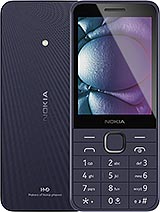
215 4G 2024
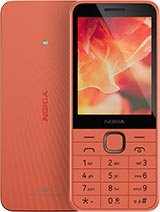
220 4G 2024
235 4G 2024
108 4G
Y50 5G