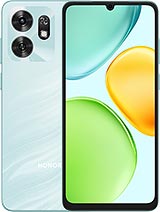
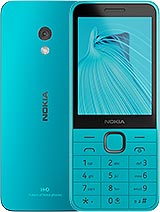
Nokia 235 4G 2024 review
The Nokia 235 4G suits people in regions where electricity is unreliable and smartphones are a luxury—those who need a phone to stay reachable for calls and SMS without daily charging or a data plan. Anyone expecting to browse, message via apps, or do mobile banking will waste money here and be frustrated within hours.
This review is based on Nokia’s published specifications and public benchmark data for the Nokia 235 4G 2024, and the rating is spec-based. GoSolo does not physically test devices; where we estimate real-world behaviour such as battery life or charge time, we say so. How we rate phones.
Overview
The Nokia 235 4G is not a smartphone: it is a calling and texting device with 4G fallback, built to run for days without power in regions where charging is sparse. If you need a phone exclusively for calls, SMS, and FM radio, it delivers; if you want anything else, stop here.
Design & Build
At 127 × 54 × 11.6 mm, the Nokia 235 4G fits squarely in the pocket and weighs less than modern phones (weight not listed, but for scale, feature phones of this era typically sit around 100–110 grams). The form is plastic throughout—no attempt at finish or status. That is the point. A device without a glass screen will not shatter if dropped onto a concrete floor, and that resilience matters more in markets where a phone repair costs a week's wages. Dual Nano-SIM slots mean you can carry a work and personal number, or use both local and roaming SIMs without changing hardware. The removable Li-Ion battery is a genuine differentiator; when the cell dies (and it will, after two or three years), you drop in a fresh one for a few dollars and move on, rather than paying half the phone's original cost for a replacement.
Display
A 2.8-inch TFT LCD screen at 240×320 resolution and 143 ppi is not a display for reading news, browsing, or swiping through photos. It is a notification window: SMS text, caller ID, call timer, battery life. The lack of color on this device is not listed in the spec, but a 240×320 TFT screen in 2024 is almost certainly monochrome or near-monochrome for power efficiency. Viewing angles are narrow, brightness is modest, and anything more demanding than a call log is frustration. That said, it does the job it was built for: making the phone's function—staying reachable—obvious at a glance. The tiny screen also guarantees the battery will stretch for days without a power top-up.
Performance
A 1.0 GHz Cortex-A7 and 64 MB of RAM are not computing resources by any modern definition. This is a single-core, low-power chip from the embedded-systems tier, designed to run a dialer and SMS client and not much else. Do not expect the phone to do two things at once, switch between apps, or load a webpage. Menu navigation will lag. Entering a contact name will feel deliberate. The Unisoc T107 is not hobbled or slow for what it is meant to do—it keeps the power draw minimal and the battery life long—but it is also honest about its limits. If you are accustomed to a modern smartphone, you will find this frustrating. If you have never owned a smartphone and use a phone only to call or text, it will feel fine.
Software & Features
Nokia's feature-phone OS is proprietary and not a known quantity in most markets. The phone lists MP3 player and a 'Cloud Apps portal,' though what those actually deliver is unclear from the spec sheet. FM radio is included, a practical feature in regions where streaming is unreliable or expensive. A USB Type-C port is a modern convenience for charging and file transfer, though the 128 MB of internal storage is vanishingly small—the microSDHC slot is essential for adding any music or personal content. Bluetooth 5.0 lets you pair a headset. There is no Wi-Fi, no GPS, no NFC, and no social apps or banking software. This phone does not attempt to be a computer; it abandons that ambition entirely.
Camera
A 2 MP camera with LED flash can record video and take photos, but the output is rough. A 2 MP sensor captured on a modern screen feels like looking through a coin slot. Day-lit shots of documents or faces are recognizable; anything else is grainy or color-shifted. This is not a tool for photography or documentation that needs to hold up. It is a 'I was here' proof rather than a usable image. The flash will drain battery when used heavily.
Battery & Charging
The 1450 mAh battery is tiny, but the Cortex-A7 and low-resolution screen draw very little power. Expect 2 to 3 days of mixed use (calling, texting, FM radio) before needing a charge. That is the real story here: in a region without reliable grid power, this battery lasts long enough to bridge gaps between charging days. You will also see manufacturers quote standby time in weeks, which matters if your phone spends time on a shelf between trips. The removable battery is a second major advantage; if this cell starts to age after a year, you buy a replacement for a few dollars rather than replacing the entire phone. Charging time is not listed, but USB Type-C is standard and likely brings 5W or 10W—not fast, but adequate for overnight charging.
Value & Verdict
The Nokia 235 4G is priced around $60–80 USD in most markets (exact price not provided in the spec sheet). For that money, you are buying a calling device with a multiday battery and no illusions. It is not meant to compete with smartphones; it lives in a separate category. In wealthy countries with 24/7 power and ubiquitous broadband, there is no market for this phone—a used smartphone from five years ago does more for the same price. But in regions where electricity is scarce, data plans are expensive, and a phone's primary job is to stay reachable without draining the family generator, the 235 4G makes sense. Its dual-SIM setup, modern 4G bands, and removable battery address real constraints that a smartphone ignores. It will not run WhatsApp or mobile banking; you will need a separate device (or a trip to an internet cafe) for those. It is not a downgrade from a smartphone. It is a parallel tool designed for people who have calculated that they do not need one.
Verdict
The Nokia 235 4G suits people in regions where electricity is unreliable and smartphones are a luxury—those who need a phone to stay reachable for calls and SMS without daily charging or a data plan. Anyone expecting to browse, message via apps, or do mobile banking will waste money here and be frustrated within hours.
- Battery runs 2–3 days on a single charge, a real advantage where power is unreliable
- Dual SIM and modern 4G bands (1, 3, 5, 7, 8, 20, 28, 38, 40, 41) mean it works across most regional networks
- Physical durability—no glass screen or complex innards to break
- Removable battery can be swapped in the field, a rarity in mobile phones today
- Absolutely no capacity for apps, mobile banking, WhatsApp, or web browsing—this is a calling machine only
- 2.8-inch 240×320 TFT display and 64 MB RAM make even menu navigation slow
- 2 MP camera is functional for proof-of-life shots but not useful work
Nokia 235 4G 2024 Key Specifications
The essentials at a glance. See the full spec sheet.
| Released | 2024, April 30 |
|---|---|
| Display | 2.8 inches, 24.3 cm2 (~35.2% screen-to-body ratio), TFT LCD |
| Resolution | 240 x 320 pixels, 4:3 ratio (~143 ppi density) |
| Chipset | Unisoc T107 (22 nm) |
| RAM & storage | 128MB 64MB RAM |
| Main camera | 2 MP |
| Battery | 1450 mAh |
| Software | Android |
| Dimensions | 127.3 x 54.2 x 11.6 mm (5.01 x 2.13 x 0.46 in) |
| Network | GSM / HSPA / LTE |
| NFC | No |
| USB | USB Type-C |
Nokia 235 4G 2024 FAQ
Common questions, answered from the spec sheet.
Does the 235 4G 2024 support 5G?
No. The 235 4G 2024 tops out at GSM / HSPA / LTE, without 5G.
What chipset does the 235 4G 2024 use?
The 235 4G 2024 runs on the Unisoc T107 (22 nm).
What display does the 235 4G 2024 have?
A 2.8 inches, 24.3 cm2 (~35.2% screen-to-body ratio) TFT LCD, 240 x 320 pixels, 4:3 ratio (~143 ppi density).
How big is the 235 4G 2024 battery?
The 235 4G 2024 has a 1450 mAh battery.
Does the 235 4G 2024 have NFC?
No, the 235 4G 2024 does not list NFC support.
Does the 235 4G 2024 support a microSD card?
Yes, the 235 4G 2024 supports expandable storage (microSDHC).
Alternatives to consider
If the 235 4G 2024 isn’t quite right, these are the closest calls.
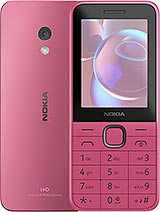
225 4G 2024
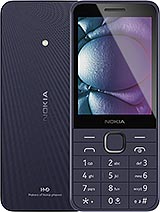
215 4G 2024
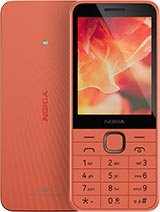
220 4G 2024
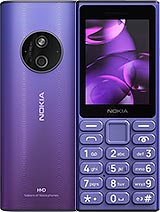
110 4G 2024
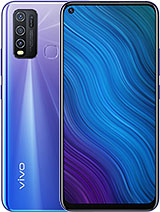
Y50 5G