Nokia 2660 Flip review
This phone suits people who want to reduce screen time without losing call reliability, or need a rugged second device that charges once every few days. If you need to browse, take photos, or stay connected to apps and email, a budget smartphone is the better choice, even if it costs more upfront.
This review is written with AI assistance from Nokia’s published specifications and public benchmark data for the Nokia 2660 Flip, and the rating is spec-based. GoSolo does not physically test devices; where we estimate real-world behaviour such as battery life or charge time, we say so. How we rate phones.
Overview
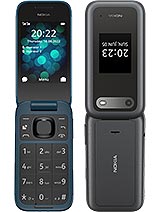
The Nokia 2660 Flip is a deliberately simple calling phone with a flip form factor, a removable battery that lasts days, and an asking price of about €70 that makes it an honest choice for people who want to step back from smartphone dependency. Its 0.3MP camera and pixelated 2.8-inch screen are not hidden flaws—they're the trade-off you accept for a device that prioritizes calls, texts, and long battery life over anything else.
Design & build
At 123 grams and 19 mm thick, the 2660 Flip is pocket-friendly and feels sturdy without pretense. The flip mechanism itself is straightforward—no springs, no hinges prone to wear. IP54 rating means it shrugs off dust and water splashes without ceremony, which matters if this phone lives in a toolbelt or backpack. The external 1.77-inch display lets you screen calls and see the time without opening the phone, a useful habit-forming feature that extends battery life by keeping the main screen dark. Color options (Gray, Blue, Red, Lush Green, Pop Pink) lean playful, though durability is the real story here.
Display
The 2.8-inch TFT LCD at 240 × 320 pixels (143 ppi) is readable for calls and messages but pixelated in any extended use. Text is chunky, icons are blocky, and any attempt to browse—even a basic website—feels like squinting through a window. If you spend more time looking at screens than making calls, this is the wrong phone. For the intended use case (calling, texting, quick checks), the display is adequate; it does its job without asking you to linger on it.
Performance
The Unisoc T107 running at 1.0 GHz is an entry-level chipset designed for calls, texts, and basic tasks. There is no expectation of speed here, and there should not be. Navigation through menus is sluggish but functional. Gaming, video, or any modern app is off the table—this is not a limitation, it is the entire design philosophy. With 48 MB of RAM and 128 MB of storage, the phone runs feature-phone software or light system apps without choking. A microSDHC slot offers expandable storage for music files or photos, though the camera output is too poor to justify hoarding images.
Camera
A 0.3MP sensor with LED flash is deliberately limited. It captures quick snapshots of documents or people at close range, nothing more. Outdoor daylight shots are flat and lacking detail; zoom is nonexistent. If photography or even casual picture-taking matters to you, look elsewhere. For this phone's purpose—occasional proof-of-concept shots or a quick photo of a receipt—the camera does not disappoint because it was never asked to impress.
Battery & charging
The standout feature: a removable 1450 mAh Li-Ion battery that lasts 2 to 3 days on light calls and texts. Keep the flip closed between uses and you stretch it further. A charging cradle handles the juice—not the fastest, but reliable. Removable batteries were industry standard before 2015 and are now almost extinct, yet they matter for longevity and peace of mind in a phone designed to be used for years, not swapped every two. If you dread daily charging, this is the phone's core selling point.
Connectivity & features
LTE and dual SIM support ensure modern network compatibility. Bluetooth 4.2 pairs with headsets and speakers without fuss. A wireless FM radio is a genuine convenience—tune local stations without burning battery on streaming or eating into mobile data. There is no WiFi, GPS, or NFC, choices that align with the phone's philosophy of simplicity over connectivity bloat. An 3.5mm headphone jack survives, and USB 2.0 microUSB handles charging and file transfer at leisurely speeds.
Value & verdict
At about €70, the 2660 Flip is one of the cheapest ways to own a phone that runs for days without charging and functions as a genuine fallback device. It is not a budget smartphone or a feature-phone that mimics smartphones. It is a deliberate step backward—not a compromise, but a choice. This makes it honest: you know exactly what you are getting. For someone who owns a smartphone but wants a lighter second device for travel or a digital detox, it is sensible. For someone trying to save money on a primary phone, a used or entry-level Android is more practical. The trade-offs—pixelated screen, toy camera, no internet—are intentional, not apologies.
Verdict
This phone suits people who want to reduce screen time without losing call reliability, or need a rugged second device that charges once every few days. If you need to browse, take photos, or stay connected to apps and email, a budget smartphone is the better choice, even if it costs more upfront.
- Removable 1450 mAh battery that powers 2 to 3 days of light use, much longer if you keep the flip closed between calls
- Lightweight at 123 grams and IP54 dust and splash resistance, practical for outdoor or rough use without phone anxiety
- Dual SIM support and LTE connectivity for reliable calls and texts on modern networks; FM radio requires no internet or phone credit
- Honest price of about €70 makes it a sensible fallback or second device without wallet pain
- 0.3MP camera is barely functional—suitable only for extreme close-ups or document scans, not everyday snapshots
- 2.8-inch display at 143 ppi is cramped and noticeably pixelated for reading; browsing or messaging on this screen is a chore
Nokia 2660 Flip Key Specifications
The essentials at a glance. See the full spec sheet.
| Released | 2022, July 12 |
|---|---|
| Display | 2.8 inches, 24.3 cm2, TFT LCD |
| Resolution | 240 x 320 pixels, 4:3 ratio (~143 ppi density) |
| Chipset | Unisoc T107 (22 nm) |
| RAM & storage | 128MB 48MB RAM |
| Main camera | 0.3 MP |
| Selfie camera | No |
| Battery | 1450 mAh |
| Charging | Compatible with a charging cradle |
| Software | Android |
| Weight | 123 g (4.34 oz) |
| Durability | IP54 dust protected and water resistant (water splashes) |
| Network | GSM / HSPA / LTE |
| NFC | No |
| USB | microUSB 2.0 |
Nokia 2660 Flip FAQ
Common questions, answered from the spec sheet.
Does the 2660 Flip support 5G?
No. The 2660 Flip tops out at GSM / HSPA / LTE, without 5G.
What chipset does the 2660 Flip use?
The 2660 Flip runs on the Unisoc T107 (22 nm).
What display does the 2660 Flip have?
A 2.8 inches, 24.3 cm2 TFT LCD, 240 x 320 pixels, 4:3 ratio (~143 ppi density).
How big is the 2660 Flip battery?
The 2660 Flip has a 1450 mAh battery. Charging is rated at Compatible with a charging cradle.
Does the 2660 Flip have NFC?
No, the 2660 Flip does not list NFC support.
Is the 2660 Flip water resistant?
The 2660 Flip carries a IP54 dust protected and water resistant (water splashes) rating.
Does the 2660 Flip support a microSD card?
Yes, the 2660 Flip supports expandable storage (microSDHC).
Does the 2660 Flip have a headphone jack?
Yes, the 2660 Flip has a 3.5mm headphone jack.
Alternatives to consider
If the 2660 Flip isn’t quite right, these are the closest calls.
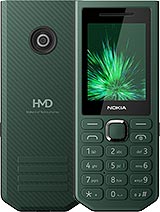
300 Charge
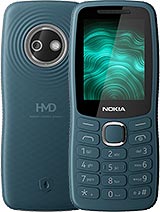
123 Shield
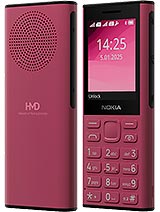
130 Music
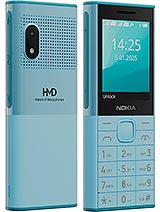
150 Music
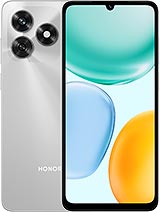
Play 70C