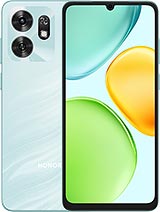
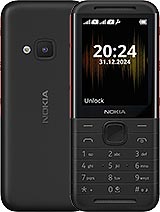
Nokia 5310 2024 review
The Nokia 5310 2024 suits people who need a talking-and-texting device that survives a week on a charge and does not require coddling. It is a genuine second phone for professionals in remote areas, a backup for smartphone refugees, or a music player with calling built in. Anyone expecting a modern experience or the ability to install apps should look elsewhere—this is intentionally simple, and that simplicity is the entire point.
This review is based on Nokia’s published specifications and public benchmark data for the Nokia 5310 2024, and the rating is spec-based. GoSolo does not physically test devices; where we estimate real-world behaviour such as battery life or charge time, we say so. How we rate phones.
Overview
The Nokia 5310 2024 is a no-frills feature phone designed to do one job well: last for days on a charge while handling calls, texts, and FM radio. It is a blunt tool for people who want a backup phone, work in unreliable power environments, or simply refuse the smartphone treadmill—not a phone anyone would choose for features.
Design & build
At 132 × 57 × 13.1 mm, the 5310 is a slip of a phone—thin enough to fit in a shirt pocket or jacket without a trace. The red-and-white or red-and-black colour scheme is unmistakably retro without being ironic. The form factor is its biggest asset: a genuine alternative to the slab-like brick that is every modern smartphone. Dual SIM capability is useful for people juggling work and personal numbers without carrying two full phones. The dedicated music keys on the side are a relic that actually serves a purpose here, letting you skip tracks without waking the screen. Build quality is not specified, but for a EUR 60 device it is not a concern—this is not a phone you keep for five years.
Display
The 2.8-inch IPS LCD screen is a museum piece: 240 × 320 pixels in a 4:3 ratio means 143 ppi, which translates to visible pixelation and small, hard-to-read text. Menu navigation is not pleasant, and reading anything longer than a message requires patience. The upside is that this screen uses almost no power, which is the entire point of owning this phone. In bright sunlight it fares better than many budget smartphones, and the small size means you are not squinting at a vast expanse of low-res content—it just feels appropriate for the task.
Performance
The Unisoc 6531F is a single-core chip clocked at 312 MHz. It handles calls, texts, and basic SMS without drama. Navigate a menu, and you will feel lag. Open a contact, and the phone hesitates. This is not a device for impatient people, but it is not designed for them. A feature phone that tries to do too much defeats the purpose. The 8 MB of RAM is theoretical—there is no meaningful multitasking here. What you get instead is the kind of simplicity that older generations took for granted: you dial, you call, the battery lasts. That trade-off is intentional, and for a backup phone or a device for someone who does not need a pocket computer, it works.
Software
There is no Android or custom OS to speak of—this is a proprietary feature phone OS. No app store, no email client, no browser. What you have is calling, texting, an FM radio, an MP3 player, and a camera. The software is so minimal that there is nothing to update, nothing to slow down over time, and nothing to learn. For people tired of notifications, app updates, and the general overhead of smartphone life, that is liberating. For everyone else, it is confusing—the menus are not intuitive by modern standards, and basic tasks like finding a setting take detective work.
Camera
A VGA (0.3 MP) sensor with LED flash is not a camera; it is a paperweight with aspirations. The output is blocky, grainy, and useful only if you need to prove you were somewhere or capture text. Do not expect anything more, and you will not be disappointed. The fact that it exists at all is a nod to the camera era—a phone without one feels deliberately handicapped, even if nobody expects to use it.
Battery & charging
The 1450 mAh removable battery is the heart of the 5310's appeal. With a 312 MHz processor and no power-hungry screen, it lasts 2 to 3 days of routine calling and texting. That is not spec-sheet bragging; that is a realistic advantage for people in areas with unreliable power, field workers, or anyone who does not want to charge their backup phone every night. The removable battery means you can carry a spare and swap it on the fly—something no modern phone allows. Charging time is not specified, but with USB Type-C and a 1450 mAh capacity, it will be quick. No fast-charging technology exists here; the trade-off is accepted.
Value & verdict context
At EUR 60, the Nokia 5310 2024 is not competing with smartphones. It is competing with your second phone drawer and the question of whether a EUR 200 smartphone battery replacement every two years is worth it. For field workers, developing-world users with unreliable grids, or anyone who wants a talking-and-texting brick that lasts a week, it wins. The microSD slot up to 32 GB and FM radio give it genuine utility as a media player too. But the 16 MB of usable storage is a dealbreaker if you want to install anything—you are entirely dependent on the microSD card for any media. The 240×320 display is also a test of patience. If you are comparing this to a EUR 150 budget Android phone, the smartphone wins on every practical measure except battery life and simplicity. If you are comparing it to no second phone at all, the 5310 makes sense.
Verdict
The Nokia 5310 2024 suits people who need a talking-and-texting device that survives a week on a charge and does not require coddling. It is a genuine second phone for professionals in remote areas, a backup for smartphone refugees, or a music player with calling built in. Anyone expecting a modern experience or the ability to install apps should look elsewhere—this is intentionally simple, and that simplicity is the entire point.
- Removable 1450 mAh battery lasts 2 to 3 days of typical use, a genuine advantage for remote work or areas with spotty charging
- Dedicated music keys and FM radio give it actual appeal as a secondary device for listening without burning through a smartphone battery
- Tiny footprint and weight make it genuinely pocketable; at 13.1 mm thick it fits places a smartphone cannot
- Dual SIM support and microSD slot let you run two lines and store music without the bloat of a full OS
- 16 MB of usable internal storage is crippling—you cannot install apps or store anything on the phone itself, making it feel more like a toy than a backup
- The 240×320 display with 143 ppi is so small and dense that text and menu icons are genuinely hard to read without good eyesight or bright light
- A single-core 312 MHz processor means dialing, navigating menus, or opening contacts involves actual waiting and stuttering
Nokia 5310 2024 Key Specifications
The essentials at a glance. See the full spec sheet.
| Released | 2024, April 11 |
|---|---|
| Display | 2.8 inches, 24.3 cm2 (~32.3% screen-to-body ratio), IPS LCD |
| Resolution | 240 x 320 pixels, 4:3 ratio (~143 ppi density) |
| Chipset | Unisoc 6531F |
| RAM & storage | 16MB 8MB RAM |
| Main camera | VGA |
| Selfie camera | No |
| Battery | 1450 mAh |
| Software | Android |
| Dimensions | 132 x 57 x 13.1 mm (5.20 x 2.24 x 0.52 in) |
| Durability | Dedicated hardware music keys |
| Network | GSM |
| NFC | No |
| USB | USB Type-C |
Nokia 5310 2024 FAQ
Common questions, answered from the spec sheet.
Does the 5310 2024 support 5G?
No. The 5310 2024 tops out at GSM, without 5G.
What chipset does the 5310 2024 use?
The 5310 2024 runs on the Unisoc 6531F.
What display does the 5310 2024 have?
A 2.8 inches, 24.3 cm2 (~32.3% screen-to-body ratio) IPS LCD, 240 x 320 pixels, 4:3 ratio (~143 ppi density).
How big is the 5310 2024 battery?
The 5310 2024 has a 1450 mAh battery.
Does the 5310 2024 have NFC?
No, the 5310 2024 does not list NFC support.
Is the 5310 2024 water resistant?
The 5310 2024 carries a Dedicated hardware music keys rating.
Does the 5310 2024 support a microSD card?
Yes, the 5310 2024 supports expandable storage (microSDHC).
Alternatives to consider
If the 5310 2024 isn’t quite right, these are the closest calls.
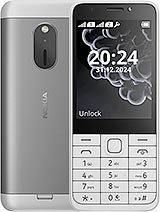
230 2024
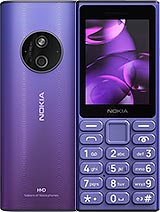
110 4G 2024
6310 2024
108 4G
Y50 5G