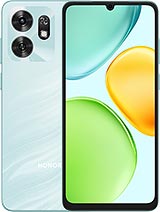
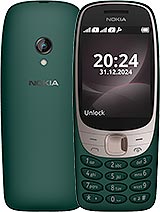
Nokia 6310 2024 review
This phone is for someone who has decided a smartphone is a problem and wants calling and texting without the distraction, plus a carrier still supporting 2G. For everyone else—anyone who needs data, apps, or just normal 2024 connectivity—the 6310 is a novelty that will frustrate you within days.
This review is based on Nokia’s published specifications and public benchmark data for the Nokia 6310 2024, and the rating is spec-based. GoSolo does not physically test devices; where we estimate real-world behaviour such as battery life or charge time, we say so. How we rate phones.
Overview
The Nokia 6310 2024 is a straightforward feature phone that trades everything modern—apps, data, touch screen—for rock-solid 2G calling and days of battery life. If you just need to talk and text, it delivers that reliably and affordably; if you expect a smartphone or even a smart feature phone, this will feel like stepping into 2005.
Design & build
At 135.5 x 56 x 14.1 mm and pocket-friendly proportions, the 6310 2024 slots into the neo-retro candybar form factor that Nokia has been reviving for people who reject the smartphone. The device is compact and light enough to carry without thinking about it, with USB Type-C for charging (a small practical win over its spiritual predecessors). Dual Nano-SIM support means you can juggle two carriers or a personal and work line. The build is plastic, not metal, which is honest for 70 EUR; it feels more toy than heirloom, but for a phone that costs what some people spend on a coffee subscription, durability expectations should be modest.
Display
The 2.8-inch TFT LCD with 240 x 320 resolution and 143 ppi density is a relic in pixels per inch. Text is small and photos will appear blocky if you're coming from any modern device. This is not a screen for browsing, reading articles, or admiring images. It is a screen for looking at caller IDs and reading text messages, tasks it handles fine. The low resolution and TFT panel are deliberate: they consume minimal power, which is the entire point of this phone's architecture. Expecting anything else is like complaining that a basic bicycle doesn't have electric assist.
Performance
The Unisoc 6531F is a single-core 312 MHz chipset paired with 8 MB RAM. This is not a typo: eight megabytes. There is no Android here, no app store, no browsing in any practical sense. The phone handles calls, texts, FM radio, and basic games (if you find compatible ones). Anything requiring modern software—email clients, social media, web pages—will either not run or crawl. For someone addicted to their screen, this is a feature, not a bug. For anyone who actually needs to check information online or respond to work messages, the 6310 is not a phone but a nostalgia object that happens to work.
Camera
A VGA camera (0.2 megapixels) and LED flash deliver photos that are sharp by 2000s standards and unusable by modern ones. The images will be soft, lack detail, and look worse on any screen larger than the 6310 itself. This is not a device for capturing memories or documenting your day. It is a device for snapping a quick reference photo if you need one, then forgetting it. At this spec, the camera is an asterisk, not a feature.
Battery & charging
The 1450 mAh removable battery is the phone's strongest suit. With a single-core chip and minimal display, talk time stretches to several days and standby to a week or more if you barely use it. USB Type-C charging is quicker than older micro-USB, but speeds are irrelevant when you charge once or twice a week. The removable battery is a practical advantage if you want a spare in your bag or need to replace it without a technician. This is one of the few phones sold in 2024 where battery life is not a talking point but a non-issue.
Software & connectivity
The phone runs a proprietary feature-phone OS, not Android or iOS. It has GSM 2G calling and GPRS/EDGE data, which means web access exists but moves at 1990s speeds. No Wi-Fi, no 4G, no modern connectivity beyond Bluetooth 5.0 for headsets and FM radio. This deliberate limitation is part of the pitch: a phone that cannot ping your email, cannot refresh your feed, and will not interrupt your day. If you live in a country where 2G networks are being shut down, this phone will become a brick; check your carrier's roadmap before buying.
Value & verdict-context
At roughly 70 EUR, the 6310 is cheap enough that its limitations read as honest trade-offs rather than compromises. You are not paying flagship prices for vintage specs; you are paying for a tool that works without distraction. The real question is whether 2G connectivity and no-app-store simplicity solve a genuine problem in your life or whether you are buying a $70 nostalgia prop that you will abandon after a week. The phone suits someone who genuinely wants escape from the smartphone and has a carrier still running 2G networks. Anyone else should recognize this as a novelty, not a practical second device.
Verdict
This phone is for someone who has decided a smartphone is a problem and wants calling and texting without the distraction, plus a carrier still supporting 2G. For everyone else—anyone who needs data, apps, or just normal 2024 connectivity—the 6310 is a novelty that will frustrate you within days.
- Multi-day battery life from minimal power draw and removable battery; actually solves the daily charge anxiety for people who use it as intended
- Removable battery lets you carry a spare or replace it without a technician, a rarity in 2024
- Rock-solid 2G calling and texts with no distractions; does one job without half a dozen notifications in progress
- Compact and light enough to slip into any pocket without weight or bulk
- 2G networks are being phased out globally; within a few years this phone may not work at all depending on your carrier's sunset roadmap
- VGA camera is unusable by any modern standard; photos are soft, low-detail, and worse than a smartphone from 15 years ago
- Single-core 312 MHz chip and 8 MB RAM mean zero flexibility; you cannot install apps, browse properly, or do anything beyond calls and texts
Nokia 6310 2024 Key Specifications
The essentials at a glance. See the full spec sheet.
| Released | 2024, April 11 |
|---|---|
| Display | 2.8 inches, 24.3 cm2 (~32.0% screen-to-body ratio), TFT LCD |
| Resolution | 240 x 320 pixels, 4:3 ratio (~143 ppi density) |
| Chipset | Unisoc 6531F |
| RAM & storage | 16MB 8MB RAM |
| Main camera | VGA |
| Selfie camera | No |
| Battery | 1450 mAh |
| Software | Android |
| Dimensions | 135.5 x 56 x 14.1 mm, 44.8 cc (5.33 x 2.20 x 0.56 in) |
| Network | GSM |
| NFC | No |
| USB | USB Type-C |
Nokia 6310 2024 FAQ
Common questions, answered from the spec sheet.
Does the 6310 2024 support 5G?
No. The 6310 2024 tops out at GSM, without 5G.
What chipset does the 6310 2024 use?
The 6310 2024 runs on the Unisoc 6531F.
What display does the 6310 2024 have?
A 2.8 inches, 24.3 cm2 (~32.0% screen-to-body ratio) TFT LCD, 240 x 320 pixels, 4:3 ratio (~143 ppi density).
How big is the 6310 2024 battery?
The 6310 2024 has a 1450 mAh battery.
Does the 6310 2024 have NFC?
No, the 6310 2024 does not list NFC support.
Does the 6310 2024 support a microSD card?
Yes, the 6310 2024 supports expandable storage (microSDHC).
Alternatives to consider
If the 6310 2024 isn’t quite right, these are the closest calls.
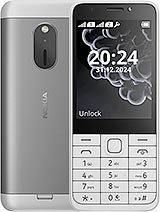
230 2024
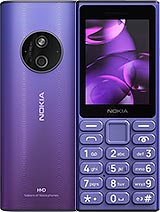
110 4G 2024
5310 2024
108 4G
Y50 5G