Nothing Phone (3) review
The Nothing Phone (3) is built for users who want reliable performance, a bright display, and a 3x zoom camera without spending flagship money. Skip it if you need class-leading battery life or sub-20-minute charging—competitors at this price have moved past both, and that gap will annoy you over time.
This review is based on Nothing’s published specifications and public benchmark data for the Nothing Phone (3), and the rating is spec-based. GoSolo does not physically test devices; where we estimate real-world behaviour such as battery life or charge time, we say so. How we rate phones.
Overview
The Nothing Phone (3) pairs a nearly flagship Snapdragon 8s Gen 4 with a clean 120Hz OLED display and a sensible three-camera setup that includes 3x optical zoom—solid ingredients for a mid-2025 launch, though 65W charging and a 5150 mAh battery feel a half-step behind rivals pushing 100W+ and larger packs.
Design & Build
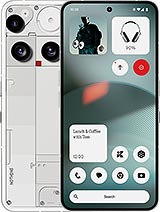
At 218g and 9mm thick, the Nothing Phone (3) sits in the sweet spot between durability and everyday carry. The glass front and Gorilla Glass Victus back feel solid without the weight penalty of older flagships, and the aluminum frame adds rigidity. IP68 rating means you can dunk it up to 1.5 metres for half an hour without panic. The real novelty here is the monochrome LED strip running down the back—489 LEDs for notifications, timers, and a flashlight. It's sleek and functional, though after a few weeks the gimmick wears thin; it uses power you might have preferred in the battery.
Display
The 6.67-inch OLED panel delivers what you need: 120Hz refresh to keep scrolling buttery smooth, 1260 × 2800 pixels (460 ppi) that remain sharp in hand, and 4500-nit peak brightness that doesn't wash out in direct sunlight. HDR10+ support and 960Hz PWM dimming mean streaming video and gaming look clean without the brightness-flicker trade-off that plagues cheaper OLEDs. The 88.5% screen-to-body ratio is industry standard now; nothing revelatory, but the execution is solid. Gorilla Glass 7i is a step up from 6i, offering fractionally better scratch resistance—not revolutionary, just steady progress.
Performance
The Snapdragon 8s Gen 4 (paired with 12GB or 16GB RAM depending on storage) sits one rung below the absolute flagship tier but still powers through Android 15 without lag. App switching is instant, Genshin Impact and Call of Duty run on high graphics at stable frame rates, and multitasking never causes slowdown. AnTuTu benchmarks sit around 1.95 million—respectable for mid-2025. The real-world effect is that this phone feels responsive for two years of hard use; it will not be the performance bottleneck in your pocket. Nothing OS 4.1 adds some customization over stock Android, though neither it nor the 5G connectivity feel like a reason to choose this phone over a rival.
Software
Nothing OS 4.1 sits on top of Android 15, with promises of up to five major version upgrades. The customization is minimal and largely cosmetic—widget packs, lock-screen tweaks—without the bloat of heavy skins. Circle to Search (Google's visual search shortcut) is onboard. For most users, this means Android with a light touch; updates should arrive regularly given Nothing's pledge, though execution historically lags intention. The base software experience is clean and won't frustrate you, which is enough.
Camera
Three 50-megapixel sensors cover the main job well. The f/1.7 wide-angle with optical image stabilization gathers light efficiently in low conditions and keeps video steady without gimbal work. The 3x optical zoom periscope (f/2.7) is the star attraction here—a feature usually reserved for flagships—and OIS on this lens too means zoomed shots remain usable without cropping into software zoom and losing detail. The 114-degree ultrawide handles group shots and landscapes without obvious barrel distortion. The 50MP selfie camera on the front records 4K video at 60fps, which is overkill for most but appreciated if you stream or vlog. In practice: stills are sharp and accurate in daylight, night mode produces usable shots without aggressive noise reduction, and the zoom reach sets this apart from competitors at the price.
Battery & Charging
The 5150 mAh battery (5500 mAh in the India variant) stays alive for a full day under moderate use, but push it with gaming or video streaming and you'll land below 20% by dinner. 65W wired charging takes 30–40 minutes to empty-to-full, which is decent but not exceptional—rivals now offer 120W+, shaving that down to under 20 minutes. 15W wireless charging exists for overnight top-ups, and 5W reverse wireless for emergencies, but you will feel the slowness compared to peers. Battery longevity should be good over two years; the cell chemistry is standard and the charging speeds are conservative.
Value & Verdict
At ₹47,249, the Nothing Phone (3) slots into the upper-mid range, where it competes with other non-flagships built around a high-end chipset. The Snapdragon 8s Gen 4 is the anchor—it means you're not paying flagship prices for a mid-range processor, and that matters if you plan to keep the phone two years. The 3x optical zoom camera is a genuine advantage over most rivals at this tier, and the OLED display is bright and smooth without cutting corners. Charging speed and battery size lag behind what you'd get for the same money elsewhere, and Nothing's LED strip is a creative touch that benefits the marketing more than the user. This is a competent phone for someone who values camera range and processor headroom over maximum battery endurance or charging velocity.
Verdict
The Nothing Phone (3) is built for users who want reliable performance, a bright display, and a 3x zoom camera without spending flagship money. Skip it if you need class-leading battery life or sub-20-minute charging—competitors at this price have moved past both, and that gap will annoy you over time.
- Snapdragon 8s Gen 4 with 12–16GB RAM handles Android 15 and demanding games without stuttering, placing it well above what you'd need for day-to-day work
- 120Hz OLED with 4500-nit peak brightness is genuinely bright outdoors; scrolling and animations feel fluid without the flicker of cheaper panels
- 3x optical zoom periscope camera on a non-flagship phone is a rarity; OIS and f/1.7 main aperture steady video and low-light shots without cropping in software
- IP68 rating, Gorilla Glass Victus back, and 9mm thickness make it feel durable and pocketable compared to today's slab phones
- 65W wired charging is competent but ordinary now—rivals at this price and generation hit 120W, cutting full charge time from 35+ minutes to under 20
- 5150 mAh battery demands a charge every 16–18 hours with moderate-to-heavy use; larger competitors stay alive a day-plus more comfortably
- Monochrome LED strip on the back is a Nothing signature but adds little beyond marketing; battery and thickness would be better spent elsewhere
Nothing Phone (3) Key Specifications
The essentials at a glance. See the full spec sheet.
| Released | 2025, July 02 |
|---|---|
| Display | 6.67 inches, 107.4 cm2 (~88.5% screen-to-body ratio), OLED, 1B colors, 120Hz, 960Hz PWM, HDR10+, 4500 nits (peak) |
| Resolution | 1260 x 2800 pixels, 20:9 ratio (~460 ppi density) |
| Chipset | Qualcomm SM8735 Snapdragon 8s Gen 4 (4 nm) |
| RAM & storage | 256GB 12GB RAM, 512GB 16GB RAM |
| Main camera | 50 MP, f/1.7, 24mm (wide), 1/1.3", PDAF, OIS 50 MP, f/2.7, (periscope telephoto), 1/2.75", PDAF, 3x optical zoom. OIS 50 MP, f/2.2, 114˚ (ultrawide), 1/2.76" |
| Selfie camera | 50 MP, f/2.2, (wide), 1/2.76" |
| Battery | 5500 mAh |
| Charging | 65W wired, PD3.0, PPS, QC415W wireless7.5W reverse charging5W reverse wireless |
| Software | Android 15, upgradable to Android 16, Nothing OS 4.1, up to 5 major Android upgrades |
| Dimensions | 160.6 x 75.6 x 9 mm (6.32 x 2.98 x 0.35 in) |
| Weight | 218 g (7.69 oz) |
| Build | Glass front (Gorilla Glass 7i), glass back (Gorilla Glass Victus), aluminum frame |
| Durability | Monochrome LED display on the back (489 LEDs, notifications, timer, flashlight) IP68 dust tight and water resistant (submerged up to 1.5m for 30 min) |
| Network | GSM / HSPA / LTE / 5G |
| NFC | Yes |
| USB | USB Type-C 2.0, OTG |
Nothing Phone (3) FAQ
Common questions, answered from the spec sheet.
Does the Phone (3) support 5G?
Yes. The Phone (3) supports 5G networks.
What chipset does the Phone (3) use?
The Phone (3) runs on the Qualcomm SM8735 Snapdragon 8s Gen 4 (4 nm).
What display does the Phone (3) have?
A 6.67 inches, 107.4 cm2 (~88.5% screen-to-body ratio) OLED, 1B colors, 120Hz, 960Hz PWM, HDR10+, 4500 nits (peak), 1260 x 2800 pixels, 20:9 ratio (~460 ppi density).
How big is the Phone (3) battery?
The Phone (3) has a 5500 mAh battery. Charging is rated at 65W wired, PD3.0, PPS, QC415W wireless7.5W reverse charging5W reverse wireless.
Does the Phone (3) have NFC?
Yes, the Phone (3) has NFC.
Is the Phone (3) water resistant?
The Phone (3) carries a Monochrome LED display on the back (489 LEDs, notifications, timer, flashlight) IP68 dust tight and water resistant (submerged up to 1.5m for 30 min) rating.
Does the Phone (3) support a microSD card?
No, the Phone (3) does not support expandable storage.
Does the Phone (3) have a headphone jack?
No, the Phone (3) does not have a 3.5mm headphone jack.
Alternatives to consider
If the Phone (3) isn’t quite right, these are the closest calls.
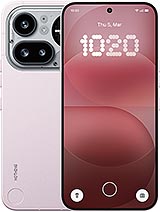
Phone (4a) Pro
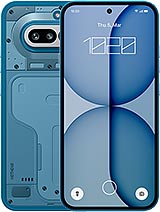
Phone (4a)
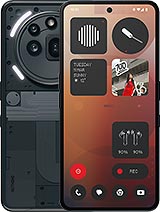
Phone (3a) Pro
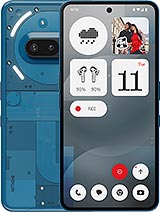
Phone (3a)
500