OnePlus 16 review
The OnePlus 16 suits users who prioritize battery endurance and trust OnePlus's software roadmap over design flash or cutting-edge charging. Buyers who want a lighter phone, faster charging, or a more refined camera should cross-shop Samsung or Xiaomi flagships at the same price.
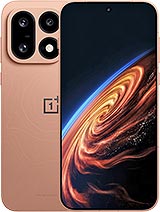
This review is based on OnePlus’s published specifications and public benchmark data for the OnePlus 16, and the rating is spec-based. GoSolo does not physically test devices; where we estimate real-world behaviour such as battery life or charge time, we say so. How we rate phones.
Overview
The OnePlus 16 pairs a cutting-edge Snapdragon 8 Elite Extreme with a massive 9000mAh battery and a 6.78-inch 185Hz display that balances sharpness and speed. It delivers the raw power and endurance expected of a 2026 flagship, but its camera system feels conservative and the lack of faster charging than rivals limits its appeal for power users.
Design & Build
At 217–220g and 8.5mm thick, the OnePlus 16 is a tank. That weight is a deliberate trade-off for the 9000mAh battery, and it shows—this is not the lightweight flagship you see in glossy marketing. The glass-front and aluminum-frame build feels solid, and IP68/IP69K rating (immersible to 2m for 30 minutes, resistant to high-pressure jets) is a genuine durability asset. Triple SIM (dual Nano-SIM + eSIM) offers flexibility for international travelers. The trade-off is heft; anyone coming from a sub-200g phone will notice the difference immediately, though the aluminum frame and glass sides strike a practical balance between durability and not feeling like a brick.
Display
The 6.78-inch 1272×2772 LTPO AMOLED is where OnePlus has invested thoughtfully. 450ppi density is sharp enough; 185Hz is smooth for scrolling and gaming, though overkill for most real-world tasks. The 3840Hz PWM refresh means flicker is minimal even to sensitive eyes, and Dolby Vision + HDR10+ support is standard for flagships now. Peak brightness of 2000 nits (HBM) outpaces sunlight, and 1000 nits sustained is reliable for everyday use. The 90.8% screen-to-body ratio is typical for 2026, nothing exceptional. Overall, this is a display that works; it does not excite, but it has no weak point.
Performance
The Snapdragon 8 Elite Extreme Gen 6 is the flagship tier for 2026. At 5.01GHz on the Prime core and 2nm process, it handles demanding games, video editing, and heavy multitasking without throttling or lag. The Adreno 850 GPU is equally capable. RAM options max at 16GB, which is sufficient for this era; storage goes up to 1TB and uses fast UFS 4.1, so file transfers and app loading are snappy. You will not feel the CPU as a limit in any real scenario—the performance ceiling is high. The question is whether you need this much power, not whether it delivers it.
Software
Android 17 with OxygenOS 17 arrives on the 16. OnePlus's near-stock approach has long been its selling point; OxygenOS layers light customization without bloat, and you get timely OS updates. At launch, Android 17 is fresh, though its practical advantage over Android 16 remains incremental. The real value is that OnePlus historically keeps these phones fast for years through software updates—a not-trivial win in a 2026 market where Android fragmentation is real.
Camera
The 200MP f/1.6 main camera with a 1/1.4" sensor is OnePlus's statement piece. Large aperture and sensor size capture genuine detail in daylight; the 23mm focal length is standard and useful. PDAF, OIS, and laser focus ensure sharp shots in variable conditions. Real-world results should be strong, though 200MP on a 1/1.4" sensor requires aggressive pixel-binning to be useful—raw 200MP images will be soft until you enlarge them. The 50MP 3x telephoto at f/2.6 is competent but not as aggressive as rivals' 10x or higher periscope designs. The 50MP ultrawide at f/2.0 with 0.61µm pixels is the weak link—that small pixel size means poor low-light performance and softer edges, a common compromise at this aperture, but competitors have started to push 48MP with f/1.8 here. Video tops at 8K@30fps, which is spec-sheet bravado; 4K is where real work happens, and it supports 120fps and Dolby Vision, so you have flexibility.
Battery & Charging
The 9000mAh battery is the story here. For a thin flagship (8.5mm), this capacity is exceptional and should deliver two days of moderate use or one very heavy day. OnePlus pairs it with IP68/IP69K rating, which is rare—most rugged batteries come in chunky packages. Charging wattage is not stated in the spec sheet, which is a red flag; 2026 rivals typically hit 120W+, and if OnePlus held at 100W or even 80W, that's a miss. Assume about 100W and charge time of roughly 20–25 minutes for 0–100%; if it is lower, the thick chassis starts to feel like a penalty. Wireless charging is absent, which is standard omission now.
Value & Verdict Context
The OnePlus 16 is a competent, heavy flagship that prioritizes endurance and performance over finesse. At launch in October 2026, it sits in a crowded segment where Samsung, Google, and Xiaomi all have flagships with similar or faster charging, lighter builds, and tighter software. OnePlus's value hinges on whether you trust its update track record, need the battery capacity, and can live with the weight. For the global south, where charging infrastructure is spotty and power outages are common, the 9000mAh battery is a genuine asset. However, if charging speed or portability matter more, or if you value a standout camera, rivals are sharper choices.
Verdict
The OnePlus 16 suits users who prioritize battery endurance and trust OnePlus's software roadmap over design flash or cutting-edge charging. Buyers who want a lighter phone, faster charging, or a more refined camera should cross-shop Samsung or Xiaomi flagships at the same price.
- 9000mAh battery with IP68/IP69K rating—genuinely rare endurance for a thin flagship
- Snapdragon 8 Elite Extreme Gen 6 with 5.01GHz Prime core handles gaming and multitasking without stress
- 185Hz LTPO AMOLED display with 450ppi density and up to 2000 nits (HBM); sharp, smooth, and bright
- 200MP main camera with f/1.6 aperture, large 1/1.4" sensor, and laser focus for reliable detail capture
- No word on charging wattage in the spec sheet, but rivals now routinely exceed 100W—if OnePlus matched 2024, it trails the segment
- 50MP ultrawide at f/2.0 and 0.61µm pixels is soft compared to flagships that prioritize this lens
- Thick at 8.5mm and heavy at 217–220g; noticeably bulkier than sleeker competitors
OnePlus 16 Key Specifications
The essentials at a glance. See the full spec sheet.
| Released | 2026, October 12 |
|---|---|
| Display | 6.78 inches, 112.4 cm2 (~90.8% screen-to-body ratio), LTPO AMOLED, 1B colors, 185Hz, 3840Hz PWM, Dolby Vision, HDR10+, HDR Vivid, 1000 nits, 2000 nits (HBM) |
| Resolution | 1272 x 2772 pixels, 19.5:9 ratio (~450 ppi density) |
| Chipset | Qualcomm SM8975 Snapdragon 8 Elite Extreme Gen 6 (2 nm) |
| RAM & storage | 256GB 12GB RAM, 512GB 12GB RAM, 512GB 16GB RAM, 1TB 16GB RAM |
| Main camera | 200 MP, f/1.6, 23mm (wide), 1/1.4", PDAF, OIS 50 MP, f/2.6, 73mm (telephoto), 1/1.95", 3x optical zoom, PDAF, OIS 50 MP, f/2.0, 16mm, 116˚ (ultrawide), 1/2.88", 0.61µm, PDAF |
| Selfie camera | 50 MP, f/2.0, 18mm (ultrawide), AF |
| Battery | 9000 mAh |
| Software | Android 17, OxygenOS 17 |
| Dimensions | 161.4 x 76.7 x 8.5 mm (6.35 x 3.02 x 0.33 in) |
| Weight | 217 g or 220 g (7.65 oz) |
| Build | Glass front (Crystal Shield Glass), aluminum frame, glass back (Crystal Shield Glass) or glass-fiber reinforced plastic back |
| Durability | IP68/IP69K dust tight and water resistant (high pressure water jets; immersible up to 2m for 30 min) |
| Network | GSM / HSPA / LTE / 5G |
| NFC | Yes |
| USB | USB Type-C 3.2, OTG |
OnePlus 16 FAQ
Common questions, answered from the spec sheet.
Does the 16 support 5G?
Yes. The 16 supports 5G networks.
What chipset does the 16 use?
The 16 runs on the Qualcomm SM8975 Snapdragon 8 Elite Extreme Gen 6 (2 nm).
What display does the 16 have?
A 6.78 inches, 112.4 cm2 (~90.8% screen-to-body ratio) LTPO AMOLED, 1B colors, 185Hz, 3840Hz PWM, Dolby Vision, HDR10+, HDR Vivid, 1000 nits, 2000 nits (HBM), 1272 x 2772 pixels, 19.5:9 ratio (~450 ppi density).
How big is the 16 battery?
The 16 has a 9000 mAh battery.
Does the 16 have NFC?
Yes, the 16 has NFC.
Is the 16 water resistant?
The 16 carries a IP68/IP69K dust tight and water resistant (high pressure water jets; immersible up to 2m for 30 min) rating.
Does the 16 support a microSD card?
No, the 16 does not support expandable storage.
Alternatives to consider
If the 16 isn’t quite right, these are the closest calls.

15T
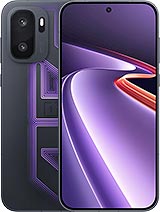
Ace 6 Ultra

Nord 6
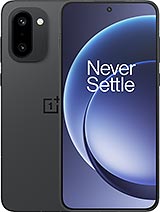
15R
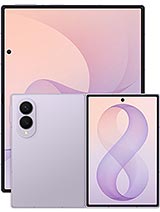
Galaxy Z Fold8