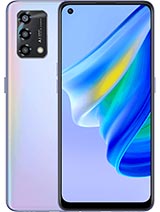
OnePlus Nord N100 review
The Nord N100 is honest about what it is: a battery phone for light use and travel. If you skip demanding apps and multitasking and need something that survives days between charges, it works. For anything else, newer budget phones deliver more capability for the same or less money.

This review is written with AI assistance from OnePlus’s published specifications and public benchmark data for the OnePlus Nord N100, and the rating is spec-based. GoSolo does not physically test devices; where we estimate real-world behaviour such as battery life or charge time, we say so. How we rate phones.
Overview
The Nord N100 is a 2020 budget phone built around battery life and screen size rather than power or camera finesse. It suits people who need an all-day device for messaging and video calls and rarely play demanding games, but the Snapdragon 460 and 4GB RAM feel dated even by budget standards, and you will notice it when multitasking or opening heavy apps.
Design & build
The Nord N100 is a hefty brick by today's standards: 8.5mm thick and 188g, though that weight makes the phone feel solid in hand rather than cheap. The front is Gorilla Glass 3, which scratches easier than modern versions, and the plastic frame flexes noticeably if you squeeze it. No water resistance means rain or a spill is a genuine risk. The design is inoffensive and the payload of practical ports—3.5mm headphone jack, FM radio, microSDXC slot—makes it more functional than many modern phones, which matters for people in regions where these are still depended upon.
Display
The 6.52-inch screen is genuinely large and comfortable for video and reading, and 90Hz refresh is a nice touch that makes scrolling feel smoother than the 60Hz baseline. The catch is the 720p resolution spread across that diagonal: at 269 ppi, you can see individual pixels if you hold the phone at a normal reading distance, especially in light text. For a 2020 budget phone this was already a step backward compared to rivals offering 1080p at similar sizes and prices. Daylight visibility is decent, colours are reasonably neutral, and contrast is fine for an IPS panel, but the low pixel density will bother anyone who values sharpness.
Performance
The Snapdragon 460 and 4GB RAM are entry-level even by 2020 standards, and the gap has only widened since then. Apps open and close without major stutters, messaging and video calls are smooth, and web browsing on Wi-Fi is fine. The real problem emerges the moment you try anything more demanding: switching between five open apps causes noticeable lag, any game beyond simple 2D titles needs graphics scaled down, and background tasks will cause frame drops when the phone decides to sync or refresh. If your day is texting, email, maps, and YouTube, you will not feel the pain. If you multitask or play anything beyond Candy Crush, you will.
Software
OxygenOS 10.5.9 is one of the cleaner Android skins out there, and that lightweight approach means the operating system itself does not add much lag on top of the CPU's limitations. Updates dried up years ago—this shipped in late 2020 and OnePlus moved on—so security patches are probably sparse by now if you can still find them. The software experience is uncluttered and will not frustrate you, but there is no expectation of long-term support, which is standard for phones in this tier.
Camera
The 13MP main sensor with f/2.2 aperture captures acceptable daylight shots and 1080p video at 30fps. Colours are muted and detail is soft even in bright conditions, and the 2MP macro camera is too basic to offer any real improvement to composition. Low-light performance is grainy and muddy because the sensor struggles to pull in enough photons through the slow aperture. The 8MP selfie camera is adequate for video calls and casual snaps. For a budget phone, this is functional but forgettable—do not expect to compete with even mid-range cameras of the same year, let alone current ones.
Battery & charging
The 5000 mAh cell is the phone's genuine strong point. In moderate daily use—an hour or two of social media, messaging, some video calls—you will comfortably reach the evening with 20 to 30 percent left, and in light use you might stretch to 36 hours. Standby time is excellent thanks to the modest CPU draw. The 18W charger is slow by modern standards, taking roughly 90 to 120 minutes to fill from empty, and this becomes painful if you need the phone quickly before leaving the house. Rivals in the budget space had moved to 30W or more by late 2020, so this was already a lag.
Value & verdict context
At around EUR 80 on the secondhand market now, the Nord N100 is a phone for people who genuinely value battery life and screen real estate over almost everything else. It is not a bad device—it does what it promises—but it is hampered by a CPU that was entry-level six years ago and feels it. The 720p screen on a 6.5-inch diagonal is an active downside compared to the 1080p phones you could pick up for similar money elsewhere. If you swap phones infrequently, need FM radio and a headphone jack, and rarely game or multitask, the battery life alone might justify it. Otherwise, spending a little more gets you significantly better performance and a sharper screen.
Verdict
The Nord N100 is honest about what it is: a battery phone for light use and travel. If you skip demanding apps and multitasking and need something that survives days between charges, it works. For anything else, newer budget phones deliver more capability for the same or less money.
- 5000 mAh battery delivers about one and a half days of light use without hunting for a charger
- Large 6.52-inch display with 90Hz refresh is comfortable for reading and video, despite the low 720p resolution
- Compact and light at 188g with an actual headphone jack and FM radio, practical for travelers
- OxygenOS keeps bloat minimal and the interface stays responsive even when the CPU is lagging
- Snapdragon 460 with 4GB RAM stumbles in multitasking and any game beyond casual mobile titles
- 269 ppi pixel density on a 6.5-inch screen means visible pixelation if you squint, and camera quality suffers in low light as a result
- 18W charging takes roughly two hours from empty, slower than rivals at this price who have moved to 30W or more
OnePlus Nord N100 Key Specifications
The essentials at a glance. See the full spec sheet.
| Released | 2020, October 26 |
|---|---|
| Display | 6.52 inches, 102.6 cm2 (~82.9% screen-to-body ratio), IPS LCD, 90Hz |
| Resolution | 720 x 1600 pixels, 20:9 ratio (~269 ppi density) |
| Chipset | Qualcomm SM4250 Snapdragon 460 (11 nm) |
| RAM & storage | 64GB 4GB RAM |
| Main camera | 13 MP, f/2.2, (wide), PDAF 2 MP (macro) Auxiliary lens |
| Selfie camera | 8 MP, f/2.0 |
| Battery | 5000 mAh |
| Charging | 18W wired |
| Software | Android 10, OxygenOS 10.5.9 |
| Dimensions | 164.9 x 75.1 x 8.5 mm (6.49 x 2.96 x 0.33 in) |
| Weight | 188 g (6.63 oz) |
| Build | Glass front (Gorilla Glass 3), plastic frame |
| Network | GSM / CDMA / HSPA / LTE |
| USB | USB Type-C 2.0, OTG |
OnePlus Nord N100 FAQ
Common questions, answered from the spec sheet.
Does the Nord N100 support 5G?
No. The Nord N100 tops out at GSM / CDMA / HSPA / LTE, without 5G.
What chipset does the Nord N100 use?
The Nord N100 runs on the Qualcomm SM4250 Snapdragon 460 (11 nm).
What display does the Nord N100 have?
A 6.52 inches, 102.6 cm2 (~82.9% screen-to-body ratio) IPS LCD, 90Hz, 720 x 1600 pixels, 20:9 ratio (~269 ppi density).
How big is the Nord N100 battery?
The Nord N100 has a 5000 mAh battery. Charging is rated at 18W wired.
Does the Nord N100 support a microSD card?
Yes, the Nord N100 supports expandable storage (microSDXC).
Does the Nord N100 have a headphone jack?
Yes, the Nord N100 has a 3.5mm headphone jack.
Alternatives to consider
If the Nord N100 isn’t quite right, these are the closest calls.

Nord

Nord 2 PAC-MAN Edition

6T McLaren Edition

One 5G Ace
Galaxy XCover 5