OnePlus Turbo 6V review
This phone suits someone who values battery endurance and water resistance over performance headroom or charging speed—shift workers, outdoor enthusiasts, people who travel and want to stretch their charge cycle, or anyone tired of plugging in daily. Skip it if you demand flagship performance, love telephoto zoom, or need to top up quickly between meetings."

This review is written with AI assistance from OnePlus’s published specifications and public benchmark data for the OnePlus Turbo 6V, and the rating is spec-based. GoSolo does not physically test devices; where we estimate real-world behaviour such as battery life or charge time, we say so. How we rate phones.
Overview
The OnePlus Turbo 6V is a thin, water-resistant phone with a 9000 mAh battery that genuinely lasts two days on moderate use and a bright 144Hz AMOLED display—built on a midrange Snapdragon 7s that handles daily tasks smoothly but won't power through sustained gaming. For €230, it is honest value: capable without pretense, and the IP68/IP69K rating plus battery endurance matter more than raw performance in this price bracket.
Design & Build
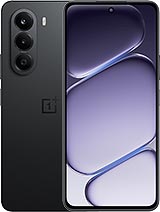
At 215g and 8.5mm thick, the Turbo 6V lands in that sweet spot between slim and structurally sound. It fits a 9000 mAh cell into a form factor most people can pocket without thinking twice, and the slender profile doesn't feel fragile in hand despite the thinness. The IP68/IP69K rating is the real draw here: the phone survives full submersion to 1.5 metres for 30 minutes and tolerates high-pressure water jets, making it genuinely suitable for someone working near water or simply wanting peace of mind during daily splashes and pocket rain. The dual-SIM setup lets you carry two numbers without a second device. Build quality feels competent rather than elaborate, and for a phone at this price, that is appropriate.
Display
The 6.78-inch AMOLED panel is the device's quiet strength. 144Hz refresh keeps scrolling responsive and games feel smoother than the midrange chip alone would suggest. The 450 ppi density is more than adequate at arm's length, and 1800 nits peak brightness means the screen remains legible in direct sunlight even if reflections are still visible on the glossy surface. The 19.5:9 aspect ratio gives you tall, narrow content, which suits scrolling feeds but can feel awkward for videos. Colour accuracy and black depth are what you expect from AMOLED in this era: solid. Nothing here feels behind the curve for the price.
Performance
The Snapdragon 7s Gen 4 is a capable midrange chip that will not disappoint if your expectations match its station. Everyday work—messaging, email, social scrolling, web browsing—runs without stutter. Light gaming (Genshin Impact on medium settings, Call of Duty Mobile on high) is smooth. If you demand sustained high-end 3D gaming, video editing, or heavy multitasking, this chip will eventually show its limits and thermal throttle. The 8GB RAM base model is tight if you run many apps simultaneously; 12GB is safer for longevity. For someone moving from an older phone or upgrading to their first midrange device, performance feels natural. For someone accustomed to flagship chips, it is a conscious step down.
Software
ColorOS 16 on Android 16 is mature and responsive. OnePlus has matured its UI since its early days of bloat, and the software layer here is lean enough not to drag the Snapdragon 7s. System animations are fluid thanks to that 144Hz display. The real question is longevity: OnePlus typically commits to 3–4 years of OS updates, and a phone bought in January 2026 should see support through 2029 or 2030. That is competitive for this tier. Customisation is present but not overwhelming, which suits buyers who want control without the work.
Camera
The 50MP main camera with OIS and f/1.9 aperture is the class workhorse: it will capture sharp, well-exposed shots in good light and hold its own in lower light thanks to the stabilisation and large aperture. Daytime photos are natural and pleasing, though the processing leans slightly toward sharpening rather than retaining texture. The 16MP selfie is decent for video calls and social media, though you will not mistake it for a portrait camera. Video stabilisation (gyro-EIS plus OIS on the main cam) handles casual footage without much jitter. The lack of a dedicated ultrawide is a common cut at this price, and the absence of telephoto means you zoom by cropping. For typical social sharing and family memories, the camera system is fit; for serious photography, the limitations become apparent quickly.
Battery & Charging
The 9000 mAh battery is the headline. In real-world use with moderate activity (video, browsing, calls, navigation), you will clear a full day and stretch comfortably into a second. Heavy gaming or video creation will drain it by evening, but for the average person, two days between charges is the norm. Charging speed is listed as 80W, which puts the phone in the middle of the 2026 pack—fast enough to refill in around 45 minutes but not competitive with rivals pushing 120W or more. If you have access to a charger once a day, the battery is a feature. If you chase the fastest top-ups, this is where you will feel the compromise.
Value & Verdict
At €230, the Turbo 6V is priced to capture buyers who value longevity and durability over raw specs. The combination of IP68/IP69K water resistance, a 9000 mAh battery that truly delivers two-day endurance, and a smooth 144Hz display makes this phone feel less like a discount device and more like a deliberately built midrange phone. Storage maxes at 512GB with no microSD expansion, which is standard for the 2026 era but worth confirming if you store video locally. The Snapdragon 7s is not going to blow your mind, but it is not a liability either. The main rival territory here is other €200–250 phones with similar battery life or stronger performance on a smaller battery; this one prioritises endurance and ruggedness.
Verdict
This phone suits someone who values battery endurance and water resistance over performance headroom or charging speed—shift workers, outdoor enthusiasts, people who travel and want to stretch their charge cycle, or anyone tired of plugging in daily. Skip it if you demand flagship performance, love telephoto zoom, or need to top up quickly between meetings."
- 9000 mAh battery delivers genuine two-day endurance on moderate use, a rarity at this price
- IP68/IP69K rating survives submersion and high-pressure water, backed by thin 8.5mm frame that does not compromise durability
- 144Hz AMOLED display with 1800 nits peak brightness is fluid and legible outdoors, punching well above the price point
- Snapdragon 7s Gen 4 hits thermal limits under sustained high-end gaming or video editing; not a phone for power users
- 80W charging is respectable but trails rivals at similar prices now pushing 100–120W, meaning longer time to full charge
- No ultrawide or telephoto camera; the 50MP single lens covers the basics but lacks versatility
OnePlus Turbo 6V Key Specifications
The essentials at a glance. See the full spec sheet.
| Released | 2026, January 08 |
|---|---|
| Display | 6.78 inches, 112.4 cm2 (~89.3% screen-to-body ratio), AMOLED, 1B colors, 144Hz, 3840Hz PWM, 800 nits (typ), 1800 nits (peak) |
| Resolution | 1272 x 2772 pixels, 19.5:9 ratio (~450 ppi density) |
| Chipset | Qualcomm SM7635-AC Snapdragon 7s Gen 4 (4 nm) |
| RAM & storage | 256GB 8GB RAM, 256GB 12GB RAM, 512GB 12GB RAM |
| Main camera | 50 MP, f/1.9, 27mm (wide), PDAF, OIS Auxiliary lens |
| Selfie camera | 16 MP, f/2.4, 23mm (wide), 1/3", 1.0µm |
| Battery | 9000 mAh |
| Software | Android 16, ColorOS 16 |
| Dimensions | 162.5 x 77.5 x 8.5 mm (6.40 x 3.05 x 0.33 in) |
| Weight | 215 g (7.58 oz) |
| Durability | IP68/IP69K dust tight and water resistant (high pressure water jets; immersible up to 1.5m for 30 min) |
| Network | GSM / HSPA / LTE / 5G |
| NFC | Yes |
| USB | USB Type-C 2.0 |
OnePlus Turbo 6V FAQ
Common questions, answered from the spec sheet.
Does the Turbo 6V support 5G?
Yes. The Turbo 6V supports 5G networks.
What chipset does the Turbo 6V use?
The Turbo 6V runs on the Qualcomm SM7635-AC Snapdragon 7s Gen 4 (4 nm).
What display does the Turbo 6V have?
A 6.78 inches, 112.4 cm2 (~89.3% screen-to-body ratio) AMOLED, 1B colors, 144Hz, 3840Hz PWM, 800 nits (typ), 1800 nits (peak), 1272 x 2772 pixels, 19.5:9 ratio (~450 ppi density).
How big is the Turbo 6V battery?
The Turbo 6V has a 9000 mAh battery.
Does the Turbo 6V have NFC?
Yes, the Turbo 6V has NFC.
Is the Turbo 6V water resistant?
The Turbo 6V carries a IP68/IP69K dust tight and water resistant (high pressure water jets; immersible up to 1.5m for 30 min) rating.
Does the Turbo 6V support a microSD card?
No, the Turbo 6V does not support expandable storage.
Alternatives to consider
If the Turbo 6V isn’t quite right, these are the closest calls.

Turbo 6X Pro

Turbo 6

Nord CE6
Nord CE6 Lite
Galaxy A37