Oppo A1 5G review
The A1 5G suits someone who prioritizes battery endurance and 5G access without demanding strong gaming, photography, or flagship performance. If you need a camera-forward phone, faster processing power, or a more vivid display, rivals from Xiaomi, Samsung, or Motorola offer more for the money.
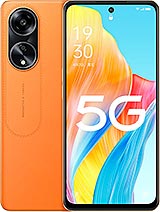
This review is based on Oppo’s published specifications and public benchmark data for the Oppo A1 5G, and the rating is spec-based. GoSolo does not physically test devices; where we estimate real-world behaviour such as battery life or charge time, we say so. How we rate phones.
Overview
The Oppo A1 5G is a straightforward midrange phone built around 5G connectivity and battery endurance rather than performance or imaging chops. It delivers day-to-day usability at a fair price, but does nothing exceptional in any single area.
Design and Build
At 165.6 x 76.1 x 8.2 mm and under 195 grams, the A1 5G sits comfortably in the hand despite its 6.72-inch span. The slim profile is a genuine comfort advantage for a phone this large—many rivals at the price are noticeably thicker. The device carries an IPS LCD panel with a plastic or polymer frame (exact materials not specified), which is standard for the category; it feels functional rather than solid, but that is fair at €270. There are no surprises here, which is the point: it is built to last day-to-day use without drama or prestige.
Display
The 6.72-inch 1080 x 2400 IPS LCD is refreshingly bright at 550 nits typical and 680 nits in high-brightness mode, making it readable in sunlight without strain. The 120Hz refresh rate keeps scrolling smooth and responsive, a meaningful step above the 60Hz baseline that was common even a year prior. Where the softness shows is pixel density: 392 ppi at 1080p on a screen this large means text and photos don't have the crispness of 1440p rivals, and the 20:9 aspect ratio does stretch things vertically. For casual browsing, messaging, and video, you will not be bothered; zoom into details and the trade-off becomes visible. The LCD panel is also more power-hungry than OLED, which compounds the battery math on a phone this size.
Performance
The Snapdragon 695 is a capable but aging midrange chip. By April 2023, it was already mainstream rather than cutting-edge—rivals from Samsung and Xiaomi at this price were shipping the Exynos 1280 or Snapdragon 680, placing the 695 ahead but not dramatically so. With 8GB or 12GB RAM and UFS 2.2 storage, the phone handles email, social media, casual games, and video streaming without complaint. Heavy multitasking, photo editing, or demanding mobile games will show frame drops and stutters compared to a 2023 flagship or even a contemporary upper-midrange device. For someone upgrading from a 2020 budget phone, this feels responsive; for those chasing fluid gaming or intensive work, look elsewhere. The 12GB variant offers more breathing room than the 8GB base, but the difference is marginal in real life.
Software
ColorOS 13.1 on Android 13 is Oppo's take on Android customization: feature-rich but occasionally cluttered with redundant apps and services. The core experience is stable and user-friendly, with gesture navigation and a dark mode that works well. Oppo's track record with updates is mixed; for a device at this price, expect two to three major OS upgrades and security patches for about three years, though commitments are not always honored consistently across markets. Software is not a standout, but nor is it a weakness—it is typical for Oppo's midrange tier.
Camera
The 50MP f/1.8 main sensor is a headline that looks good until you use it. The sensor itself is standard for the price; low-light performance is decent thanks to the wide aperture and LED flash, but the lack of optical stabilization means handheld video and zoom shots suffer from shake. Video is capped at 1080p@30fps, which is basic by 2023 standards even in this category. The phone has no ultrawide, no telephoto, no macro—just the main shooter and an 8MP selfie. Competitors at this price often bundle an ultrawide for landscape shots, making this single-camera setup feel incomplete. Color rendering is warm and pleasing in daylight, but dynamic range is modest and detail drops quickly in shadows. If your priority is an all-rounder camera, this phone disappoints; if you mainly take social media snaps and the occasional family photo, it suffices.
Battery and Charging
The 5000 mAh battery is the standout practical feature. In mixed use—messaging, social media, some video—you will comfortably reach end of day, and light users may stretch to a day and a half. Heavy screen time will drain it in 10-12 hours. SuperVOOC charging is Oppo's proprietary fast-charging technology; the exact wattage is not specified, but historical data suggests 67W, which should return the phone from empty to full in roughly 30-40 minutes. That is respectable, though some competitors at this price have matched or exceeded 100W. The large capacity and decent charging speed combine well for someone who dreads plugging in multiple times daily.
Value and Verdict
At €270, the A1 5G occupies a crowded segment: affordable 5G phones with comparable specs from Samsung, Xiaomi, and Motorola. Its main selling point is longevity between charges, not outright power or imaging range. The processor is dated, the camera is single and uninspired, and the screen resolution is soft, but the large bright display, fast charging, and battery life make it a practical choice for someone who values presence over prowess. The inclusion of dual SIM and microSD expansion is a plus for users in markets where carrier flexibility matters. There are sharper phones at this price, but few with such straightforward all-day battery confidence.
Verdict
The A1 5G suits someone who prioritizes battery endurance and 5G access without demanding strong gaming, photography, or flagship performance. If you need a camera-forward phone, faster processing power, or a more vivid display, rivals from Xiaomi, Samsung, or Motorola offer more for the money.
- 5000 mAh battery lasts a full day or more with moderate use, backed by SuperVOOC fast charging to minimize downtime
- 6.72-inch 120Hz IPS LCD is spacious and smooth for everyday scrolling, even if the 1080p resolution feels soft at this size
- Dual SIM, microSD expansion, and 256GB base storage give you practical flexibility for media and multiple carriers
- Slim 8.2 mm profile and 191-193g weight keep it comfortable in hand despite the large screen
- Snapdragon 695 is two-year-old silicon by 2023; demanding apps and games show hitches against contemporary rivals at this price
- 50MP camera is a spec bump with no standout: 1080p video only, no ultrawide, and real-world shots lack the clarity flagships offer
- 8MP selfie and lack of computational photography feel thin for a 2023 phone, even at this price point
Oppo A1 5G Key Specifications
The essentials at a glance. See the full spec sheet.
| Released | 2023, April 04 |
|---|---|
| Display | 6.72 inches, 109.0 cm2 (~86.5% screen-to-body ratio), IPS LCD, 120Hz, 550 nits (typ), 680 nits (HBM) |
| Resolution | 1080 x 2400 pixels, 20:9 ratio (~392 ppi density) |
| Chipset | Qualcomm SM6375 Snapdragon 695 5G (6 nm) |
| RAM & storage | 256GB 8GB RAM, 256GB 12GB RAM |
| Main camera | 50 MP, f/1.8, (wide), AF Auxiliary lens |
| Selfie camera | 8 MP, f/2.0, (wide) |
| Battery | 5000 mAh |
| Charging | SuperVOOC |
| Software | Android 13, ColorOS 13.1 |
| Dimensions | 165.6 x 76.1 x 8.2 mm (6.52 x 3.00 x 0.32 in) |
| Weight | 191 g or 193 g (6.74 oz) |
| Network | GSM / CDMA / HSPA / CDMA2000 / LTE / 5G |
| NFC | No |
| USB | USB Type-C 2.0, OTG |
Oppo A1 5G FAQ
Common questions, answered from the spec sheet.
Does the A1 5G support 5G?
Yes. The A1 5G supports 5G networks.
What chipset does the A1 5G use?
The A1 5G runs on the Qualcomm SM6375 Snapdragon 695 5G (6 nm).
What display does the A1 5G have?
A 6.72 inches, 109.0 cm2 (~86.5% screen-to-body ratio) IPS LCD, 120Hz, 550 nits (typ), 680 nits (HBM), 1080 x 2400 pixels, 20:9 ratio (~392 ppi density).
How big is the A1 5G battery?
The A1 5G has a 5000 mAh battery. Charging is rated at SuperVOOC.
Does the A1 5G have NFC?
No, the A1 5G does not list NFC support.
Does the A1 5G support a microSD card?
Yes, the A1 5G supports expandable storage (microSDXC).
Alternatives to consider
If the A1 5G isn’t quite right, these are the closest calls.
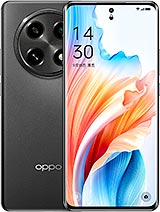
A2 Pro 5G
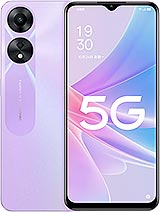
A78 4G
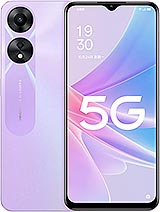
A78 5G

A79 5G
Galaxy M15 5G