Oppo A18 review
The A18 suits people who prioritise battery life, outdoor visibility, and simplicity over raw performance or camera versatility. Skip it if you plan to game, edit, or rely on the camera in low light; look at a mid-range phone with a faster chip and better sensors instead.
This review is based on Oppo’s published specifications and public benchmark data for the Oppo A18, and the rating is spec-based. GoSolo does not physically test devices; where we estimate real-world behaviour such as battery life or charge time, we say so. How we rate phones.
Overview
The A18 is an entry-level phone that stretches a 5000 mAh battery into genuinely useful endurance, backed by a bright 90Hz display and clean software. It survives on fundamentals—messaging, social media, light streaming—but the aging Helio G85 and thin RAM mean any real multitasking or mobile gaming will feel laboured.
Design & build
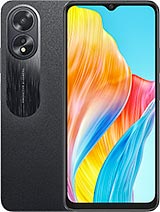
The A18 feels sturdy in hand at 188g and 8.2mm thin, with a no-fuss design that does not catch eyes but also does not break promises. The Glowing Black and Glowing Blue finishes are understated; more impressive is IP54 dust and splash protection, which is a genuine safety net for a device at this price. Nano-SIM dual slots and a microSDXC card reader mean you can carry two numbers or swap storage without losing anything. The build is built to outlast trends, not to impress them.
Display
The 6.56-inch 90Hz IPS LCD is the A18's clearest strength. At 720 nits peak brightness, it stays readable in direct sunlight without the washout you get from cheaper panels, and the 90Hz refresh makes swiping through social feeds noticeably smoother than a 60Hz screen. The trade-off is obvious: 720p resolution at 269 ppi means text is not razor-sharp, and sitting at normal arm's length you will notice the pixels more than on a 1080p phone. That matters if you read a lot or stare at the screen for hours, but for watching short videos, messaging, and social browsing it is perfectly adequate. The 20:9 aspect ratio and 84% screen-to-body ratio are standard fare for 2023.
Performance
The Helio G85 paired with 4GB RAM is entry-level hardware, and it behaves like it. Messaging, email, social media, and web browsing run smoothly without hitches. Light gaming works: older titles, turn-based games, low-intensity 3D games at reduced settings play without stuttering. But trying to run recent demanding games, keeping five apps open while streaming, or editing video will make the phone lag, stall, and drain battery faster. The 64GB base storage also fills quickly if you install many apps; the 128GB option is worth the small bump for longevity. This is a phone for people who do not multitask heavily or play AAA games, and that is a sizable chunk of the market.
Software
ColorOS 15 on Android 13 (upgradable to 15) is Oppo's skin, and it stays out of the way without the bloat of some rivals. The interface is clean, the update path is promised to Android 15, and three years of security patches are standard for the price. There are few surprises and no deal-breakers here; it is competent if unremarkable, which is exactly what a budget phone should aim for.
Camera
The 8MP f/2.0 main camera captures decent daylight photos in good light, with a wide field of view and AF to nail focus. The LED flash helps in dim interiors. Where it falters is obvious: no night mode means low-light shots are grainy and mushy, there is no zoom lens so cropping a distant subject reveals the pixelation immediately, and the absence of ultra-wide or telephoto limits composition options. The 1080p video at 30fps is fine for clips but will look jerky in fast motion. The 5MP selfie is adequate for video calls and casual snaps. For a budget phone, it does its job, but do not expect vibrant night shots or clean 10x zoom.
Battery & charging
The 5000 mAh cell is the standout feature. With moderate use—messaging, social media, light streaming—you will clear 1.5 days on a single charge, and on lighter duty (mostly calls and texts) you can stretch it to two days. That endurance is real and rare at this price, letting you skip the charger on day trips and ease the anxiety of overnight travel without a cable. The spec sheet omits charging wattage, which is a red flag for a 2023 budget phone; expect slow charging in the 10W to 18W range based on the tier, meaning a full top-up takes around 2 to 3 hours from zero.
Value & verdict-context
The A18 is an honest budget phone that nails the basics: endurance, daytime visibility, and clean software. It costs roughly half what a mid-range flagship does, and it reflects that in performance and camera reach. The 90Hz display and IP54 durability are small luxuries at this tier, as is the 3.5mm jack for people who still use wired headphones. The Helio G85 and 4GB RAM are ageing; for 2026 standards this is behind the curve in raw speed, but only if you demand fast gaming or heavy multitasking. For someone buying their first smartphone, upgrading from an ancient phone, or needing a second device for calls and social media, the trade-offs are sensible. If you are coming from a flagship or expect to play new games at playable settings, you will find it underpowered.
Verdict
The A18 suits people who prioritise battery life, outdoor visibility, and simplicity over raw performance or camera versatility. Skip it if you plan to game, edit, or rely on the camera in low light; look at a mid-range phone with a faster chip and better sensors instead.
- 5000 mAh battery comfortably clears 1.5 days with moderate use, letting you skip the charger on shorter trips
- 90Hz IPS LCD with 720 nits peak brightness makes reading outdoors painless and scrolling noticeably smoother than 60Hz rivals at this price
- IP54 dust and splash resistance is rare at this tier, adding real peace of mind for everyday messiness
- Side-mounted fingerprint sensor and 3.5mm jack preserve the simplicity buyers at this price actually value
- Helio G85 with 4GB RAM struggles visibly with multitasking and any recent games beyond low settings
- 8MP main camera with no night mode produces washed, grainy shots in poor light and zero zoom without obvious cropping
- 269 ppi pixel density at 720p leaves text slightly soft at arm's length, more noticeable on a 6.56-inch screen than smaller phones
Oppo A18 Key Specifications
The essentials at a glance. See the full spec sheet.
| Released | 2023, September 27 |
|---|---|
| Display | 6.56 inches, 103.4 cm2 (~84.2% screen-to-body ratio), IPS LCD, 90Hz, 720 nits (peak) |
| Resolution | 720 x 1612 pixels, 20:9 ratio (~269 ppi density) |
| Chipset | Mediatek MT6769 Helio G85 (12 nm) |
| RAM & storage | 64GB 4GB RAM, 128GB 4GB RAM |
| Main camera | 8 MP, f/2.0, (wide), AF Auxiliary lens |
| Selfie camera | 5 MP, f/2.2, (wide) |
| Battery | 5000 mAh |
| Software | Android 13, upgradable to Android 15, ColorOS 15 |
| Dimensions | 163.7 x 75 x 8.2 mm (6.44 x 2.95 x 0.32 in) |
| Weight | 188 g (6.63 oz) |
| Durability | IP54 dust protected and water resistant (water splashes) |
| Network | GSM / HSPA / LTE |
| NFC | No |
| USB | USB Type-C 2.0, OTG |
Oppo A18 FAQ
Common questions, answered from the spec sheet.
Does the A18 support 5G?
No. The A18 tops out at GSM / HSPA / LTE, without 5G.
What chipset does the A18 use?
The A18 runs on the Mediatek MT6769 Helio G85 (12 nm).
What display does the A18 have?
A 6.56 inches, 103.4 cm2 (~84.2% screen-to-body ratio) IPS LCD, 90Hz, 720 nits (peak), 720 x 1612 pixels, 20:9 ratio (~269 ppi density).
How big is the A18 battery?
The A18 has a 5000 mAh battery.
Does the A18 have NFC?
No, the A18 does not list NFC support.
Is the A18 water resistant?
The A18 carries a IP54 dust protected and water resistant (water splashes) rating.
Does the A18 support a microSD card?
Yes, the A18 supports expandable storage (microSDXC).
Does the A18 have a headphone jack?
Yes, the A18 has a 3.5mm headphone jack.
Alternatives to consider
If the A18 isn’t quite right, these are the closest calls.

A79 5G

A2 5G

A59 5G

A78 5G
Galaxy A06