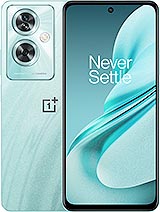
Oppo A38 review
The A38 suits buyers in emerging markets who live in their social apps, video, and messaging and don't want to charge daily. It's less ideal for anyone who reads small text often, plays modern games, or expects snappy performance; they'd be better served by looking at rivals with sharper displays and faster chips at similar prices.
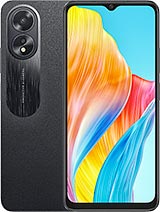
This review is based on Oppo’s published specifications and public benchmark data for the Oppo A38, and the rating is spec-based. GoSolo does not physically test devices; where we estimate real-world behaviour such as battery life or charge time, we say so. How we rate phones.
Overview
The Oppo A38 is a budget phone built around a 5000 mAh battery and a large 6.56-inch screen, with decent everyday speed and an honest 50MP camera. It delivers on what matters most in emerging markets—long battery life and screen real estate—but the low-res display and modest processing power limit it to casual use.
Design & Build
The A38 is light and slim, trading premium materials for practicality. At 190g and 8.2mm thick, it sits comfortably in the hand and slips into pockets without bulk. The body feels plastic throughout, as you'd expect at this price, but doesn't creak or flex when squeezed. The side-mounted fingerprint scanner is responsive. IP54 means it'll survive accidental splashes and light rain, but it's not submersion-proof—drop it in a puddle or take it to the beach and you're taking a real risk. For the Global South markets this phone targets, that's a meaningful limitation.
Display
The 6.56-inch IPS LCD is the A38's main draw. It's genuinely big, with a 20:9 aspect ratio that makes it tall and narrow—ideal for scrolling through social media, reading news, or watching video. The 90Hz refresh rate is now common even in budget ranges, and it does make swiping and app transitions feel noticeably smoother than a 60Hz screen. At 720 nits peak brightness, sunlight readability is adequate. The problem is resolution: 720p at 269 ppi is grainy. Text edges blur if you hold the phone at normal reading distance, and fine details in photos look mushy. This is a 2023 phone, and rivals in the same price bracket now push 1080p on similarly sized screens. For casual browsing it's fine, but it's noticeable.
Performance
The Helio G85 is a mainstream midrange chip from 2020, and by 2023 it was already dated. It handles everyday tasks—messaging, social apps, web browsing—without stuttering, and with 4GB or 6GB RAM depending on variant, light multitasking is smooth. Games matter less here, but it manages Candy Crush and PUBG Mobile on low settings without drama. Demanding titles like Genshin Impact or modern games will stutter, and switching between heavy apps feels sluggish. For a budget buyer in 2023, this chip was no longer competitive; rivals at ₹16,999 were shipping faster processors. If your day is messaging, YouTube, and occasional light gaming, it's fine. For anything more demanding, you're hitting its ceiling.
Software
ColorOS 15 on Android 15 means you get a fairly recent OS with years of support ahead. ColorOS is Oppo's skin over Android—it has its own take on notifications, settings, and visuals, which can feel cluttered compared to stock Android, but it's functional and not bloated with junk. The side-mounted fingerprint sensor works reliably for unlocking. There's nothing here that stands out or frustrates, which is fine for a budget phone.
Camera
The 50MP main sensor with f/1.8 aperture and PDAF is the camera story here. In daylight, the wide aperture and large sensor capture good detail and color, and PDAF helps nail focus quickly. Low-light performance is respectable—not flagship-class, but noticeably better than older 13MP budget phones because of that aperture and sensor size. Video tops out at 1080p 30fps, which is ordinary for this tier but means no 4K and no high-frame-rate recording. The 5MP selfie is basic; it's functional for video calls and casual snaps, but won't flatter you. Overall, the main camera punches above its weight for the price, but it's not a camera-first phone.
Battery & Charging
The 5000 mAh cell is the standout spec. With moderate use—browsing, messaging, music—you'll see 6 to 8 hours of screen time before hitting reserve. Heavy use or gaming drops this to 5 to 6 hours. The point is that most people won't need to charge daily if they're not using the phone constantly. The 33W wired charger hits 50% in 30 minutes and full charge in about an hour, which is fast enough to grab a quick top-up if you're running low. There's no wireless charging, which is fine at this price.
Value & Verdict
At €79, £149.99, or ₹16,999, the A38 is unapologetically a budget phone, and it knows its lane. It wins if your priority is battery life and screen size over sharpness or raw speed. In emerging markets where charge points aren't always nearby and large screens matter for shared media viewing, the A38 makes real sense. The 50MP camera is a genuine perk for the price. What it won't do is impress you with performance or display sharpness, and it's worth comparing it to rivals in the same tier—by 2023 and into 2024, other phones at this price were offering sharper displays and faster chips. If long battery life and a big screen are your main wants, it delivers. If you need responsiveness, a sharp display for reading, or anything beyond basic gaming, look elsewhere.
Verdict
The A38 suits buyers in emerging markets who live in their social apps, video, and messaging and don't want to charge daily. It's less ideal for anyone who reads small text often, plays modern games, or expects snappy performance; they'd be better served by looking at rivals with sharper displays and faster chips at similar prices.
- 5000 mAh battery lasts a full day on moderate use with reliable quick charging to 50% in 30 minutes
- 6.56-inch screen is large and comfortable for reading and video, with 90Hz refresh smoothing scrolling
- 50MP main camera with f/1.8 aperture and PDAF handles daylight detail and low-light performance reasonably well
- Lightweight at 190g and thin at 8.2mm, easy to pocket and carry all day
- 720p display at 269 ppi means text and icons look soft up close; not sharp enough for comfortable reading of small fonts
- Helio G85 is last-gen for 2023 and struggles with demanding games or multitasking; rivals at this price now offer faster chips
- IP54 splash resistance only—no submersion protection, unlike some competitors at this price point
Oppo A38 Key Specifications
The essentials at a glance. See the full spec sheet.
| Released | 2023, September 04 |
|---|---|
| Display | 6.56 inches, 103.4 cm2 (~84.2% screen-to-body ratio), IPS LCD, 90Hz, 720 nits (peak) |
| Resolution | 720 x 1612 pixels, 20:9 ratio (~269 ppi density) |
| Chipset | Mediatek MT6769 Helio G85 (12 nm) |
| RAM & storage | 128GB 4GB RAM, 128GB 6GB RAM |
| Main camera | 50 MP, f/1.8, (wide), PDAF Auxiliary lens |
| Selfie camera | 5 MP, f/2.2, (wide) |
| Battery | 5000 mAh |
| Charging | 33W wired, PD, 50% in 30 min |
| Software | Android 13, upgradable to Android 15, ColorOS 15 |
| Dimensions | 163.7 x 75 x 8.2 mm (6.44 x 2.95 x 0.32 in) |
| Weight | 190 g (6.70 oz) |
| Durability | IP54 dust protected and water resistant (water splashes) |
| Network | GSM / HSPA / LTE |
| NFC | Yes (market/region dependent) |
| USB | USB Type-C 2.0, OTG |
Oppo A38 FAQ
Common questions, answered from the spec sheet.
Does the A38 support 5G?
No. The A38 tops out at GSM / HSPA / LTE, without 5G.
What chipset does the A38 use?
The A38 runs on the Mediatek MT6769 Helio G85 (12 nm).
What display does the A38 have?
A 6.56 inches, 103.4 cm2 (~84.2% screen-to-body ratio) IPS LCD, 90Hz, 720 nits (peak), 720 x 1612 pixels, 20:9 ratio (~269 ppi density).
How big is the A38 battery?
The A38 has a 5000 mAh battery. Charging is rated at 33W wired, PD, 50% in 30 min.
Does the A38 have NFC?
Yes, the A38 has NFC.
Is the A38 water resistant?
The A38 carries a IP54 dust protected and water resistant (water splashes) rating.
Does the A38 support a microSD card?
Yes, the A38 supports expandable storage (microSDXC).
Does the A38 have a headphone jack?
Yes, the A38 has a 3.5mm headphone jack.
Alternatives to consider
If the A38 isn’t quite right, these are the closest calls.
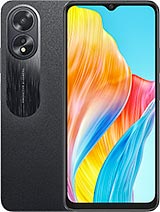
A18
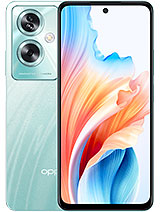
A79 5G
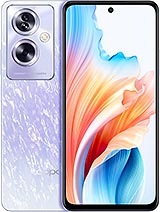
A2 5G

A59 5G
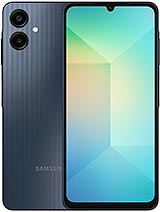
Galaxy A06