Oppo A6s Pro review
The A6s Pro suits buyers who live in rugged conditions or value all-day battery life over outright performance and camera range. Those chasing a well-rounded mid-ranger with faster processing and better imaging should cross-shop competitors with newer chipsets and more camera versatility.
This review is written with AI assistance from Oppo’s published specifications and public benchmark data for the Oppo A6s Pro, and the rating is spec-based. GoSolo does not physically test devices; where we estimate real-world behaviour such as battery life or charge time, we say so. How we rate phones.
Overview
The Oppo A6s Pro is a solidly built mid-ranger with a bright AMOLED display and long battery life, but its Helio G100 Max chipset and 1080p cameras feel like yesterday's spec for a 2026 device at this price. It's a safe, practical choice for durability and battery, not a standout.
Design & build
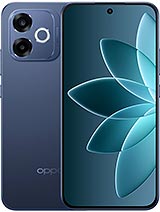
At 190g and 8mm thick, the A6s Pro feels trim and one-handed despite the 6.57-inch screen. The glass front and plastic frame-and-back give it a sensible budget feel—lighter than glass sandwiches and less pretentious about materials. The real strength is the durability: IP68/IP69K plus MIL-STD-810H compliance means it can genuinely handle rough work and water exposure, not just survive a dunk in a pool. For a device at €280, that robustness is uncommon and matters more than a polished finish for buyers in regions where phones endure less-forgiving conditions.
Display
The 6.57-inch AMOLED panel with 120Hz is a respectable foundation for a mid-range phone. The 600 nits typical brightness handles indoor content, and the 1400 nits peak (HBM mode) is genuinely bright for sunlight reading. However, 1080p resolution on a screen this large leaves you with a visible dot pitch of 397 ppi—low enough that text and icons show jaggedness when you look closely. Competitors in this price tier increasingly offer 1440p or higher on similarly sized panels. The 88.5% screen-to-body ratio is normal for 2026 but not a highlight; it is what it is.
Performance
The Helio G100 Max is a capable mid-tier chipset, but it is not current. By early 2026, rivals at €280 have moved to newer silicon that runs faster and more efficiently. App launches and everyday tasks will feel responsive enough, and gaming is feasible, but this chip trails what competitors offer by roughly 15-20% in raw performance and in power efficiency. For light work, it is adequate; for demanding apps and multitasking, you will notice the gap. The 8GB RAM and 256GB storage (with microSD expansion) are standard and fine.
Camera
Dual 50MP cameras sound reasonable until you check the fine print: no ultra-wide, no depth sensor, and no reason to suspect the 50MP is anything but a spec claim. The main lens is f/1.8 with PDAF, which is fine for daylight, but the absence of a second focal length is a real limitation for a 2026 mid-ranger. Video is locked at 1080p—behind what most rivals at this price now deliver (4K is nearly standard). The selfie camera mirrors the main spec (50MP) but that is typical budget padding; real sharpness will depend on processing, not megapixel count.
Battery & charging
The 7000 mAh battery is genuinely large and, combined with the Helio G100 Max's modest power appetite, should yield a real two-day stretch in mixed use. 80W charging is solid for 2026, though not exceptional—some rivals hit 120W now—but it will refill the tank in about 40-50 minutes in practice. If battery anxiety is a real concern for your workday, this phone genuinely solves it. The charging speed is brisk enough that you are unlikely to feel caught out.
Software
Android 16 with ColorOS 16 is current and, by Oppo's standards, reasonably clean. ColorOS 16 leans lighter than it used to, and bloat is manageable. Three or four years of updates are likely based on Oppo's track record, which is fair for a device at this price, though not industry-leading. If you dislike Oppo's customizations, you will need to factory reset and side-load alternatives; there is no stock Android option here.
Value & verdict-context
At €280, the A6s Pro competes with phones that often ship with faster chipsets, higher resolution screens, and better cameras. What it has that others at this price sometimes skimp on is genuine durability, a large battery, and a bright display. For a buyer in a region where phones take a real beating and battery life matters more than benchmarks, it makes sense. For anyone prioritizing camera quality, gaming performance, or screen sharpness, rivals offer better value.
Verdict
The A6s Pro suits buyers who live in rugged conditions or value all-day battery life over outright performance and camera range. Those chasing a well-rounded mid-ranger with faster processing and better imaging should cross-shop competitors with newer chipsets and more camera versatility.
- IP68/IP69K durability and MIL-STD-810H compliance—proper ruggedness for a mid-ranger, not cosmetic
- 7000 mAh battery with fast charging (80W) delivers real two-day stamina in typical use
- AMOLED display with 120Hz refresh and 1400 nits peak brightness is genuinely bright for outdoor use
- 8 mm profile and 190g weight keep it practical one-handed despite the large screen
- Helio G100 Max is mid-tier performance for 2026; rivals at this price now ship with current-gen chips and notably faster gaming/app load speeds
- 50MP cameras lack depth or ultra-wide option, and 1080p video is well behind what competitors offer at €280
- 1080p resolution on a 6.57-inch screen means softness visible at close range, especially for text-heavy apps and reading
Oppo A6s Pro Key Specifications
The essentials at a glance. See the full spec sheet.
| Released | 2026, February 24 |
|---|---|
| Display | 6.57 inches, 105.0 cm2 (~88.5% screen-to-body ratio), AMOLED, 1B colors, 120Hz, 600 nits (typ), 1400 nits (HBM) |
| Resolution | 1080 x 2372 pixels (~397 ppi density) |
| Chipset | Mediatek Helio G100 Max (6 nm) |
| RAM & storage | 256GB 8GB RAM |
| Main camera | 50 MP, f/1.8, (wide), PDAF Auxiliary lens |
| Selfie camera | 50 MP, (wide) |
| Battery | 7000 mAh |
| Software | Android 16, ColorOS 16 |
| Dimensions | 158.2 x 75 x 8 mm (6.23 x 2.95 x 0.31 in) |
| Weight | 190 g (6.70 oz) |
| Build | Glass front, plastic frame, plastic back |
| Durability | IP68/IP69K dust tight and water resistant (high pressure water jets; immersible up to 1.5m for 30 min) MIL-STD-810H compliant* * does not guarantee ruggedness or use in extreme conditions |
| Network | GSM / HSPA / LTE |
| NFC | Yes (market/region dependent) |
| USB | USB Type-C 2.0, OTG |
Oppo A6s Pro FAQ
Common questions, answered from the spec sheet.
Does the A6s Pro support 5G?
No. The A6s Pro tops out at GSM / HSPA / LTE, without 5G.
What chipset does the A6s Pro use?
The A6s Pro runs on the Mediatek Helio G100 Max (6 nm).
What display does the A6s Pro have?
A 6.57 inches, 105.0 cm2 (~88.5% screen-to-body ratio) AMOLED, 1B colors, 120Hz, 600 nits (typ), 1400 nits (HBM), 1080 x 2372 pixels (~397 ppi density).
How big is the A6s Pro battery?
The A6s Pro has a 7000 mAh battery.
Does the A6s Pro have NFC?
Yes, the A6s Pro has NFC.
Is the A6s Pro water resistant?
The A6s Pro carries a IP68/IP69K dust tight and water resistant (high pressure water jets; immersible up to 1.5m for 30 min) MIL-STD-810H compliant* * does not guarantee ruggedness or use in extreme conditions rating.
Does the A6s Pro support a microSD card?
Yes, the A6s Pro supports expandable storage (microSDXC).
Alternatives to consider
If the A6s Pro isn’t quite right, these are the closest calls.

A6s 4G

A6t Pro 4G

A6t Pro 5G

A7 Pro

Galaxy A18 4G