Oppo A6x review
This phone suits budget buyers in regions where all-day battery life and bright sunlight visibility matter more than screen sharpness or gaming. Anyone expecting responsive performance or a crisp display should look to a true midrange phone; the A6x's age and entry-level chip make it feel sluggish by comparison.

This review is written with AI assistance from Oppo’s published specifications and public benchmark data for the Oppo A6x, and the rating is spec-based. GoSolo does not physically test devices; where we estimate real-world behaviour such as battery life or charge time, we say so. How we rate phones.
Overview
The Oppo A6x is a practical budget phone built around battery endurance and sunlight visibility rather than speed or screen clarity. At 6.75 inches with a 120Hz LCD and a 6500 mAh cell, it prioritises everyday usability for light users, though the 720p display and entry-level Dimensity 6300 chip mean soft text and sluggish gaming are clear trade-offs.
Design & build
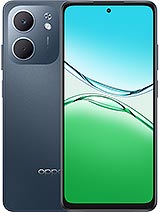
At 212 grams and 8.6 mm thick, the A6x sits in a comfortable middle ground between pocket-friendly and solid. The glass front paired with a plastic frame and back keeps weight reasonable while maintaining a modern look; the purple finishes are among the few visual talking points. IP64 rating means it shrugs off splashes and light rain, which matters in daily life, though the thin profile suggests it won't absorb impacts well. Build feels acceptable for the price, not durable but honest.
Display
The 6.75-inch IPS LCD at 120 Hz is the A6x's strongest card. Scrolling through apps and social feeds feels noticeably smoother than a 60 Hz screen, and the 1125 nits peak brightness makes it genuinely readable in direct sunlight—a practical win for users who spend time outdoors. The 256 ppi density from the 720p resolution, however, reveals its budget roots: text appears visibly soft, and icons lack the crispness of phones running 1080p or higher. For messaging and video, this matters little; for reading small print or editing photos, the softness becomes tiresome. The trade-off is honest: smooth scrolling and brightness win out over sharpness.
Performance
The Dimensity 6300 is a mainstream entry-level chip that handles what you'd expect: messaging apps, social media, video playback, and casual browsing run without hiccup. Everyday multitasking feels responsive. The moment you open a demanding game, stress-test an image editor, or try to juggle ten apps at once, frame drops and stutters arrive. This is not a phone for mobile gaming enthusiasts or anyone who treats their phone as a desktop substitute. The 4 to 8 GB RAM spread means base models with 4 GB will feel tighter in heavy use, though the 6 and 8 GB variants provide a buffer. For its intended audience—people checking email, scrolling news, taking photos—it is sufficient.
Software
Android 15 with ColorOS 15 is current and should receive timely updates given Oppo's track record, but no surprises here. ColorOS layers Oppo's own interface over Android, which adds some bloat and learning curves compared to stock, though it is not onerous. Battery and performance optimisation tools are present, which helps stretch longevity on a modest chipset.
Camera
The 50 MP main sensor with f/1.8 aperture and PDAF sounds capable on paper; in practice, a 1080p video cap and lack of optical zoom limit its reach. Daylight shots likely deliver decent detail and colour, and the wide aperture helps with low light, but the absence of an ultrawide or telephoto means composition is inflexible. The 5 MP selfie camera is purely functional. This is a competent single-lens phone, not a versatile one—fine for casual snapshots, limiting for anyone who wants creative range.
Battery & charging
The 6500 mAh cell is genuinely large, and Oppo's software tuning means it should stretch to a full day and a half under light use—browsing, calls, messaging—and closer to a day under moderate video or gaming. For users who charge daily anyway, this is less impressive; for those who travel or work in areas with sparse power access, all-day reliability is valuable. The spec sheet provides no charging wattage, which is a red flag: if it is 10W or 18W, charge time will be measured in hours rather than under an hour, putting it well behind rivals even in the budget space.
Value & verdict
Priced as a budget phone for 2026, the A6x lands in a crowded space. Its strengths—battery life, bright LCD, 5G connectivity, expandable storage—are real and matter for price-conscious buyers in regions where power infrastructure is patchy or internet is expensive. Its weaknesses are just as clear: a dull 720p screen, a slow processor, no charging detail disclosed, and a single camera with no zoom. For buyers who simply need a phone that works all day without fuss and rings loud in sunshine, this is an honest pick. Anyone who values screen clarity, processing speed, or creative photography should look elsewhere; a midrange phone at 50 per cent more money will outpace it in all three.
Value & Verdict
This is a no-nonsense budget phone for practicality over performance. The A6x suits people who commute on unpredictable schedules, live where charging is rare, or just need a phone for calls and social media without vanity specs. Those who spend hours gaming, editing on-phone, or want sharp text and responsive performance should step up to a true midrange device; the 720p display and Dimensity 6300 will feel sluggish within weeks of using a faster phone.
Verdict
This phone suits budget buyers in regions where all-day battery life and bright sunlight visibility matter more than screen sharpness or gaming. Anyone expecting responsive performance or a crisp display should look to a true midrange phone; the A6x's age and entry-level chip make it feel sluggish by comparison.
- 6500 mAh battery delivers genuine 1.5 to 2-day stamina under light use, a real advantage in regions with unreliable charging
- 1125 nits peak brightness on IPS LCD makes it readable in direct sunlight and outdoors, unlike many budget LCDs
- 5G connectivity, expandable microSDXC storage, and dual SIM offer practical flexibility at this price
- Slim 8.6 mm profile and 212 g weight feel balanced and pocket-friendly without sacrificing battery size
- 720p resolution yields noticeably soft text and dull icon detail, a constant friction point next to any 1080p phone
- Dimensity 6300 chipset is entry-level and bottlenecks gaming, heavy apps, and sustained multitasking
- No charging wattage disclosed; if it is under 33W, you are looking at a hours-long charge cycle, well behind the budget mainstream
Oppo A6x Key Specifications
The essentials at a glance. See the full spec sheet.
| Released | 2026, January 13 |
|---|---|
| Display | 6.75 inches, 111.4 cm2 (~85.2% screen-to-body ratio), IPS LCD, 120Hz, 1125 nits (peak) |
| Resolution | 720 x 1570 pixels, 19.5:9 ratio (~256 ppi density) |
| Chipset | Mediatek Dimensity 6300 (6 nm) |
| RAM & storage | 128GB 4GB RAM, 128GB 6GB RAM, 256GB 4GB RAM, 256GB 6GB RAM, 256GB 8GB RAM |
| Main camera | 50 MP, f/1.8, (wide), PDAF Auxiliary lens |
| Selfie camera | 5 MP, f/2.2, (wide) |
| Battery | 6500 mAh |
| Software | Android 15, ColorOS 15 |
| Dimensions | 166.6 x 78.5 x 8.6 mm (6.56 x 3.09 x 0.34 in) |
| Weight | 212 g (7.48 oz) |
| Build | Glass front, plastic frame, plastic back |
| Durability | IP64 dust tight and water resistant (water splashes) |
| Network | GSM / HSPA / LTE / 5G |
| NFC | Yes (market/region dependent) |
| USB | USB Type-C 2.0, OTG |
Oppo A6x FAQ
Common questions, answered from the spec sheet.
Does the A6x support 5G?
Yes. The A6x supports 5G networks.
What chipset does the A6x use?
The A6x runs on the Mediatek Dimensity 6300 (6 nm).
What display does the A6x have?
A 6.75 inches, 111.4 cm2 (~85.2% screen-to-body ratio) IPS LCD, 120Hz, 1125 nits (peak), 720 x 1570 pixels, 19.5:9 ratio (~256 ppi density).
How big is the A6x battery?
The A6x has a 6500 mAh battery.
Does the A6x have NFC?
Yes, the A6x has NFC.
Is the A6x water resistant?
The A6x carries a IP64 dust tight and water resistant (water splashes) rating.
Does the A6x support a microSD card?
Yes, the A6x supports expandable storage (microSDXC).
Alternatives to consider
If the A6x isn’t quite right, these are the closest calls.

A6x 5G
A5x 5G

A5 5G

A6 Pro 5G

Galaxy M17e