Oppo F23 review
The F23 suits light users and travelers who prioritize battery life and thinness over speed or imaging reach, and who won't mind hauling a charger through wet weather. Anyone wanting better performance, zoom capability, or water resistance should cross-shop a 2023 phone with a faster chip and an IP rating at the same price.

This review is based on Oppo’s published specifications and public benchmark data for the Oppo F23, and the rating is spec-based. GoSolo does not physically test devices; where we estimate real-world behaviour such as battery life or charge time, we say so. How we rate phones.
Overview
The Oppo F23 is a thin, light midrange phone built around battery life and display smoothness rather than speed or imaging chops. It's a solid daily driver for messaging, browsing, and streaming, but gamers and camera-focused buyers will find it underwhelming for the price.
Design & build
At 8.2mm thick and 192g, the F23 is genuinely slim and light—you'll notice the difference next to a modern flagship. The form feels thoughtful, and the side-mounted fingerprint sensor is fast and unobtrusive. The trade-off is obvious: no IP rating means water is a real hazard. Spill coffee, drop it near a sink, or get caught in rain heavier than a drizzle, and you're risking a repair bill. For a phone at 270 EUR, that's a meaningful gap against rivals that at least offer IP53 or IP54 splash resistance. Build quality feels solid, but the lack of protection is hard to ignore in a device you'll carry daily.
Display
The 6.72-inch IPS LCD is one of the F23's real strengths. At 1080p and 392 ppi, it's sharp enough that text reads cleanly, and the 120Hz refresh makes scrolling through social media and web pages feel genuinely smooth—a noticeable step up from 60Hz budget phones. Brightness is 550 nits typical, which handles indoor and overcast outdoor use well, though direct sunlight will force you to shield the screen, and a 1000-nit flagship flagship would feel brighter. The 20:9 aspect ratio is narrow, squeezing more content vertically, which suits video and reading. For everyday use at this price, it's a highlight: readable, responsive, and not an eyesore.
Performance
The Snapdragon 695 5G is a solid mainstream midrange chip—nothing flashy, but it handles daily work without stalling. Messaging, maps, streaming, and casual browsing feel snappy enough. The gap appears in demanding scenarios: heavy games like Genshin Impact will force you to medium settings at 30fps instead of high, and rapid app-switching occasionally stutters if you're running 10+ apps in the background. By 2023 standards, chips like the Snapdragon 870 or MediaTek Dimensity 7200 were becoming common at this price, so the 695 feels a step behind in raw speed. If you're a light user, you won't feel the difference; if you multitask hard or game seriously, you'll wish for more.
Software
ColorOS 14 on Android 13, upgradable to Android 14, runs cleanly without excessive bloat. OPPO's skin is lighter than it used to be, and the experience is straightforward for most users. The side fingerprint sensor integrates well, and the dual SIM setup is handy for work/personal splits or dual-carrier coverage in markets where that matters. No major complaints, but nothing that stands out either—it's functional and forgettable, which is fair for a device at this price.
Camera
The 64MP f/1.8 main sensor is a decent starting point—the wide aperture helps capture light indoors better than a narrower f/2.0 would. In daylight, photos are clean and well-balanced. The problem is what's missing: no optical zoom (only software crop), no ultrawide lens, and no telephoto, so framing distant subjects means stepping closer or accepting blown-out detail from digital zoom. The 2MP macro lens is cosmetic. Video tops out at 1080p@30fps, which feels behind in 2023 when competitors were hitting 4K or at least 1080p@60fps. The 32MP selfie is fine for video calls and social posts. For casual photography—food, friends, travel—it works, but it's not a camera phone in the competitive sense.
Battery & charging
The 5000 mAh battery is the F23's true standout. Light use—messaging, photos, maps, one or two hours of video—easily stretches to a full day, and many users will skip the charger entirely some days. Heavy streaming or gaming burns it by evening, so heavy users will want a midday top-up. The spec sheet doesn't list charge wattage, so actual charging speed is unclear, but typical budget-to-midrange 5G phones at this price were hitting 33W or less, meaning a full fill took 1.5 to 2 hours. For a phone built to last from breakfast to bed on everyday use, it delivers.
Value & verdict-context
At 270 EUR, the F23 sits in a crowded tier. It plays to a specific strength—battery, thinness, and a smooth screen—and largely ignores everything else. Rivals with the Snapdragon 870 or Dimensity 7200 were available at the same price with noticeably faster performance, optical zoom, 4K video, and water resistance. The F23 counters with better battery stamina and a thinner profile, which appeals to light users who hate plugging in their phone midday. If your day is 90% messaging, browsing, and casual photography, it's fit-for-purpose. If you game, zoom a lot, or need durability against water, look elsewhere.
Verdict
The F23 suits light users and travelers who prioritize battery life and thinness over speed or imaging reach, and who won't mind hauling a charger through wet weather. Anyone wanting better performance, zoom capability, or water resistance should cross-shop a 2023 phone with a faster chip and an IP rating at the same price.
- 5000 mAh battery delivers a genuine full day on light to moderate use, a rarity at this price point in 2023
- 120Hz IPS LCD is smooth and readable in daylight (550 nits typical), making apps and scrolling feel polished
- Thin and light at 8.2mm and 192g, with a side-mounted fingerprint sensor that works without fuss
- 5G on the Snapdragon 695 and dual SIM flexibility suit buyers in markets with competitive carriers
- Snapdragon 695 is mainstream midrange by 2023 standards—games stutter on high settings, and fast multitasking feels sluggish versus rivals with 870 or 888 chips
- No water resistance (no IP rating) is a real gap in this price tier; a splash or drop near water is a genuine risk
- Video capture maxes out at 1080p@30fps and the 64MP camera lacks optical zoom, making it feel dated next to competitors offering 4K or 2x zoom
Oppo F23 Key Specifications
The essentials at a glance. See the full spec sheet.
| Released | 2023, May 15 |
|---|---|
| Display | 6.72 inches, 109.0 cm2 (~86.5% screen-to-body ratio), IPS LCD, 120Hz, 550 nits (typ), 680 nits (HBM) |
| Resolution | 1080 x 2400 pixels, 20:9 ratio (~392 ppi density) |
| Chipset | Qualcomm SM6375 Snapdragon 695 5G (6 nm) |
| RAM & storage | 128GB 8GB RAM, 256GB 8GB RAM |
| Main camera | 64 MP, f/1.8, 26mm (wide), PDAF 2 MP, f/3.3, 34mm (microscope) Auxiliary lens |
| Selfie camera | 32 MP, f/2.4, 22mm (wide) |
| Battery | 5000 mAh |
| Software | Android 13, upgradable to Android 14, ColorOS 14 |
| Dimensions | 165.6 x 76.1 x 8.2 mm (6.52 x 3.00 x 0.32 in) |
| Weight | 192 g (6.77 oz) |
| Network | GSM / HSPA / LTE / 5G |
| NFC | No |
| USB | USB Type-C 2.0, OTG |
Oppo F23 FAQ
Common questions, answered from the spec sheet.
Does the F23 support 5G?
Yes. The F23 supports 5G networks.
What chipset does the F23 use?
The F23 runs on the Qualcomm SM6375 Snapdragon 695 5G (6 nm).
What display does the F23 have?
A 6.72 inches, 109.0 cm2 (~86.5% screen-to-body ratio) IPS LCD, 120Hz, 550 nits (typ), 680 nits (HBM), 1080 x 2400 pixels, 20:9 ratio (~392 ppi density).
How big is the F23 battery?
The F23 has a 5000 mAh battery.
Does the F23 have NFC?
No, the F23 does not list NFC support.
Does the F23 support a microSD card?
Yes, the F23 supports expandable storage (microSDXC).
Does the F23 have a headphone jack?
Yes, the F23 has a 3.5mm headphone jack.
Alternatives to consider
If the F23 isn’t quite right, these are the closest calls.

F23 5G
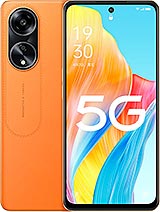
A1 5G
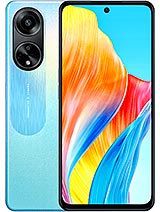
A98 5G
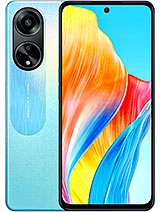
A98
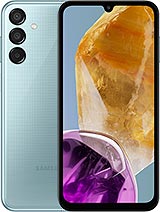
Galaxy M15 5G