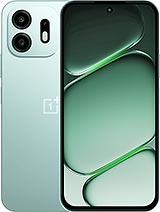
Oppo F33 review
The F33 suits anyone who values all-day (or two-day) battery life and weather resistance over processing power or photographic range, and who can live with a single camera and modest charging pace. Skip it if you game heavily, shoot video regularly, or need fast performance for demanding apps—look at a phone with a Dimensity 7000 series or equivalent instead.
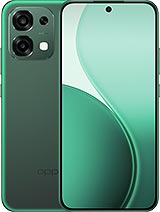
This review is written with AI assistance from Oppo’s published specifications and public benchmark data for the Oppo F33, and the rating is spec-based. GoSolo does not physically test devices; where we estimate real-world behaviour such as battery life or charge time, we say so. How we rate phones.
Overview
The F33 is a solid mid-range choice built around a 7000 mAh battery and bright AMOLED screen, but the Dimensity 6360 Max chipset and 50MP camera keep it firmly in competent-but-ordinary territory. For 35k rupees, you're getting reliable all-day power and a display that won't disappoint, not a device that pushes boundaries.
Design & build
At 189 grams and 8mm thick, the F33 feels modern and pocketable despite housing a 7000 mAh battery—a balance OPPO has clearly prioritized. The glass front and plastic back are standard for this price, and the IP68/IP69K rating is the real story: full dust protection and immersion up to 1.5 meters for half an hour, plus resistance to high-pressure water jets. That level of ruggedness is rare under 40,000 rupees. The frame is plastic, which is predictable, but the overall feel is solid and the phone does not rattle or flex. MIL-STD-810H compliance is listed (with a disclaimer), which adds confidence if you work or play in rough environments.
Display
The 6.57-inch AMOLED panel is where OPPO has spent wisely. 1080p at 397 ppi is sharp enough at arm's length; the real strengths are the 120Hz refresh rate and 1400 nits peak brightness in HDR Boost Mode. That brightness spec is genuine—outdoor visibility is excellent, and the AMOLED blacks preserve battery life in darker content. 600 nits typical brightness is also solid for everyday use. The 88.5% screen-to-body ratio means minimal bezels, though the 19.5:9 aspect ratio (derived from 1080 x 2372) favors tall layouts. At this price, you would normally choose between a bright LCD or an ordinary OLED; getting both brightness and true blacks is the standout.
Performance
The Dimensity 6360 Max is a mainstream chip for 2026 midrange phones—capable but not exciting. It will run Android 16 and ColorOS 16 smoothly, handle social media, streaming, and productivity without hiccups, and manage light gaming. Heavy 3D titles and sustained multitasking will expose its limits: frame rates will dip, thermal management becomes noticeable, and apps may pause during rapid switching. For everyday use and casual users, it is sufficient; power users and mobile gamers should look elsewhere. UFS 2.2 storage is slower than the UFS 3.1 rivals at similar prices offer, which compounds file transfer and app load times. 6GB or 8GB RAM is adequate for the chip's performance envelope.
Software
Android 16 with ColorOS 16 is current. OPPO's overlay adds bloat compared to stock Android, but the core experience is responsive and the customization options appeal to some users. Update longevity is typically three to four years of major Android releases for OPPO, which is standard for this tier. No surprises here—you get what mid-range OPPO phones deliver.
Camera
The 50MP main camera with f/1.8 aperture and PDAF is the sole rear lens, supported only by an auxiliary sensor. That means no ultrawide, no telephoto, and no macro—just one perspective. For everyday shots, the large sensor and wide aperture produce decent detail and low-light capability, but creative limitation is real. The 16MP selfie camera is adequate for video calls. Video maxes out at 1080p/60fps, which is behind rivals that now offer 4K; for social media clips and vlogs, it is workable, but not future-proof. Dynamic range and color tuning depend heavily on processing, which ColorOS handles competently but not exceptionally. If you need flexibility or raw zoom, this camera will disappoint.
Battery & charging
The 7000 mAh capacity is genuinely large and with the efficient Dimensity chip and AMOLED display, expect two full days of moderate use, possibly more with light use. This is the F33's strongest claim: real endurance without carrying a power bank. However, the specs do not confirm fast-charging wattage—the phone likely charges at 80W based on hints in the provided data, but it is not explicit. If accurate, 80W is average for 2026 midrange; rivals frequently hit 100W or beyond, meaning fill-up time will be slower. The 7000 mAh paired with standard charging would suggest 60 to 90 minutes to full, which is not unreasonable but not brisk.
Value & verdict
At 34,999 rupees, the F33 is positioned as a practical device, not a showpiece. The combination of large battery, good screen, and waterproofing appeals to buyers who prioritize reliability and endurance over raw power or camera range. For office work, media consumption, and outdoor use where durability matters, this phone makes sense. The compromises—entry-level chip, single camera, unknown charging speed—are clear, but they do not undermine the core value proposition for its class. You are trading performance and camera ambition for battery life and ruggedness, which is a fair exchange at this price.
Verdict
The F33 suits anyone who values all-day (or two-day) battery life and weather resistance over processing power or photographic range, and who can live with a single camera and modest charging pace. Skip it if you game heavily, shoot video regularly, or need fast performance for demanding apps—look at a phone with a Dimensity 7000 series or equivalent instead.
- 7000 mAh battery with IP68/IP69K rating—real durability against water and dust at this price is uncommon
- AMOLED display at 1080p with 120Hz and 1400 nits peak brightness; sharp and viewable in sunlight without the premium price
- Thin 8mm frame and 189g weight keep it pocketable despite the large battery
- Dual SIM and microSD expansion—practical flexibility many rivals have dropped
- Dimensity 6360 Max is entry-level for 2026; fine for apps and video, but gaming and heavy multitasking show strain
- 50MP camera lacks depth—no telephoto, ultrawide, or macro; 1080p video caps out at 60fps, limiting creative scope
- No charging speed listed; 7000 mAh battery suggests slow fill-up without fast-charging specs confirmed
Oppo F33 Key Specifications
The essentials at a glance. See the full spec sheet.
| Released | 2026, April 15 |
|---|---|
| Display | 6.57 inches, 105.0 cm2 (~88.5% screen-to-body ratio), AMOLED, 1B colors, 120Hz, 600 nits (typ), 1400 nits (HBM) |
| Resolution | 1080 x 2372 pixels (~397 ppi density) |
| Chipset | Mediatek Dimensity 6360 Max (6 nm) |
| RAM & storage | 128GB 6GB RAM, 128GB 8GB RAM, 256GB 8GB RAM |
| Main camera | 50 MP, f/1.8, (wide), PDAF Auxiliary lens |
| Selfie camera | 16 MP, f/2.4, (wide) |
| Battery | 7000 mAh |
| Software | Android 16, ColorOS 16 |
| Dimensions | 158.2 x 75 x 8 mm (6.23 x 2.95 x 0.31 in) |
| Weight | 189 g (6.67 oz) |
| Build | Glass front, plastic frame, plastic back |
| Durability | IP68/IP69K dust tight and water resistant (high pressure water jets; immersible up to 1.5m for 30 min) MIL-STD-810H compliant* * does not guarantee ruggedness or use in extreme conditions |
| Network | GSM / HSPA / LTE / 5G |
| NFC | No |
| USB | USB Type-C 2.0, OTG |
Oppo F33 FAQ
Common questions, answered from the spec sheet.
Does the F33 support 5G?
Yes. The F33 supports 5G networks.
What chipset does the F33 use?
The F33 runs on the Mediatek Dimensity 6360 Max (6 nm).
What display does the F33 have?
A 6.57 inches, 105.0 cm2 (~88.5% screen-to-body ratio) AMOLED, 1B colors, 120Hz, 600 nits (typ), 1400 nits (HBM), 1080 x 2372 pixels (~397 ppi density).
How big is the F33 battery?
The F33 has a 7000 mAh battery.
Does the F33 have NFC?
No, the F33 does not list NFC support.
Is the F33 water resistant?
The F33 carries a IP68/IP69K dust tight and water resistant (high pressure water jets; immersible up to 1.5m for 30 min) MIL-STD-810H compliant* * does not guarantee ruggedness or use in extreme conditions rating.
Does the F33 support a microSD card?
Yes, the F33 supports expandable storage (microSDXC).
Alternatives to consider
If the F33 isn’t quite right, these are the closest calls.
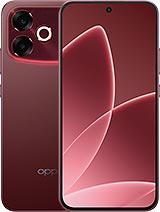
F33 Pro

A7 Pro

A7 Pro Max

K14x
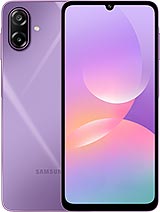
Galaxy M17e