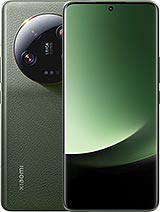
Oppo Find N3 review
The Find N3 suits professionals and creatives who fold a device daily and can justify €1650 for a tablet-sized screen and reliable performance. Anyone prioritising battery life, single-day charging, or value should stick with a conventional large-screen flagship.

This review is based on Oppo’s published specifications and public benchmark data for the Oppo Find N3, and the rating is spec-based. GoSolo does not physically test devices; where we estimate real-world behaviour such as battery life or charge time, we say so. How we rate phones.
Overview
The Find N3 is a fold that prioritises workspace over portability: a 7.82-inch unfolded screen and snappy performance make it a capable tablet substitute for work and media, though the 4805 mAh battery demands daily charging and 67W charging, while fast, still lags rivals at this price point.
Design & build
The Find N3 weighs 239-245g with an 11.7mm folded profile—heavier and thicker than it needs to be by 2026 standards, though folding mechanism tolerances often demand that trade. The Ceramic Guard glass on the cover display is a smart choice; it resists scratches better than standard glass and the IPX4 splash rating handles rain and accidental dunks into shallow water, but it's not submersible. Dual nano-SIM and an aluminum frame give it a solid feel. The choice between glass and eco leather back is nice, though neither transforms the experience. For a device you'll fold dozens of times a day, the hinge feels reliable—no wobble or grinding—and the creasing on the unfolded screen is visible at certain angles but doesn't intrude on daily viewing.
Display
The unfolded 7.82-inch LTPO3 OLED is the centrepiece. At 2800 nits peak brightness and 120Hz refresh, it's a confident performer in direct sunlight and scrolling is visibly smooth. The 426 ppi density is sharp; text doesn't pixelate. What matters most: this screen actually doubles as a small tablet. Split-screen multitasking on a 7.82-inch canvas feels natural, not cramped. The cover display, 6.31 inches at 431 ppi with identical LTPO3 and Dolby Vision support, is bright and responsive. The 89.6 percent screen-to-body ratio on the main panel means minimal bezels, though the crease in the middle is a physical reality you'll notice in bright light—it's not a flaw, just what folds are.
Performance
Snapdragon 8 Gen 2 and Adreno 740 put this firmly in flagship territory. Gaming at high settings (Genshin Impact, Call of Duty Mobile) runs at 60fps without stutter. Demanding apps like video editing and photo processing see no lag. The 12GB or 16GB RAM options handle heavy multitasking—switching between 10 open apps or juggling email, spreadsheets, and browsers causes no hiccup. Apps load in a blink, and there's no thermal throttling during sustained use. For the class and price, this is appropriately powerful; you're not paying for yesterday's chip.
Software
ColorOS 14 runs on Android 13 with an upgrade to Android 14 promised. The overlay is fairly light; Oppo has trimmed the aggressive customisation of earlier ColorOS versions. You get three years of OS updates and four years of security patches—respectable but not class-leading. Some regional variants ship with more bloatware than others; the global variant is cleaner. Side-mounted fingerprint sensor works consistently. One minor annoyance: the lack of a customizable always-on clock face compared to Samsung's One UI—that's a small miss for a device this expensive.
Camera
The main setup is genuinely capable. The 48MP wide with f/1.7 aperture, 1/1.43" sensor, and OIS shoots sharp, detailed stills in daylight and handles low light better than smaller sensors. The 64MP 3x telephoto at 70mm with OIS is the real strength—optical zoom without crop means you're not sacrificing resolution or sharpness, and the 1/2.0" sensor stabilises well in dim conditions. The 48MP ultrawide at 114 degrees avoids the typical ultra-wide softness. Hasselblad color calibration is subtle but leans toward accurate tones rather than aggressive saturation. Video records at 4K 60fps with Dolby Vision and HDR10+ on the main sensor, a feature rare outside flagships. The front 20MP inside and 32MP cover camera handle video calls and selfies without embarrassing you. No telephoto rivals a dedicated 5x or 10x lens, but for a fold, the 3x zoom is practical.
Battery & charging
The 4805 mAh capacity sounds adequate on paper; reality is harsher. With moderate use (browsing, messaging, some video), expect about 10-11 hours before you hunt a charger. Folds and gaming drain it faster—you might see 7-8 hours under heavy load. The dual-screen design and always-on OLED crease tax the battery more than a conventional slab. 67W wired charging is reasonably quick: 35% in 10 minutes, full charge in roughly 40-50 minutes. That's genuinely useful if you grab 20 minutes before leaving, but rivals at this price hit 100W or more, so it's no longer a competitive advantage. No wireless charging is a minor sting at €1650.
Value & verdict
At €1650, the Find N3 is expensive even by fold standards. You're paying for a large unfolded workspace, a solid camera, and reliable performance. For someone who folds daily for productivity—documents, email, creative work on a larger canvas—the value is there. For media consumption and general use, a traditional large-screen flagship costs half as much. The IPX4 rating and Ceramic Guard add peace of mind, but they're table stakes now, not differentiators. The battery life underwhelms for the price; daily charging is non-negotiable. Charging speed is respectable but not exceptional at this tier. If a fold is mandatory and you value the workspace, this is a solid choice. If you're shopping portability or longevity between charges, look at traditional flagships first.
Verdict
The Find N3 suits professionals and creatives who fold a device daily and can justify €1650 for a tablet-sized screen and reliable performance. Anyone prioritising battery life, single-day charging, or value should stick with a conventional large-screen flagship.
- 7.82-inch unfolded LTPO3 OLED display at 2800 nits peak brightness with 120Hz refresh—reads in sunlight and gives genuine tablet-like workspace
- Snapdragon 8 Gen 2 and up to 16GB RAM handle heavy multitasking and games without lag
- 48MP wide with 1/1.43" sensor and OIS plus 64MP 3x telephoto means sharp, stable shots in low light and confident zoom without cropping
- IPX4 splash resistance and Ceramic Guard glass on cover screen provide real durability for daily fold use
- 4805 mAh battery depletes quickly under heavy fold use and gaming; expect daily charging rather than two days
- 67W charging is respectable but behind what rivals offer at €1650—some flagships hit 120W or more
- 11.7mm folded thickness is thicker than newer competitors, making it bulkier to pocket
Oppo Find N3 Key Specifications
The essentials at a glance. See the full spec sheet.
| Released | 2023, October 19 |
|---|---|
| Display | 7.82 inches, 196.7 cm2 (~89.6% screen-to-body ratio), Foldable LTPO3 OLED, 1B colors, Dolby Vision, 120Hz, 2800 nits (peak) |
| Resolution | 2268 x 2440 pixels (~426 ppi density) |
| Chipset | Qualcomm SM8550-AB Snapdragon 8 Gen 2 (4 nm) |
| RAM & storage | 256GB 12GB RAM, 256GB 16GB RAM, 512GB 12GB RAM, 512GB 16GB RAM, 1TB 16GB RAM |
| Main camera | 48 MP, f/1.7, 24mm (wide), 1/1.43", 1.12µm, multi-directional PDAF, OIS 64 MP, f/2.6, 70mm (telephoto), 1/2.0", 0.7µm, PDAF, OIS, 3x optical zoom 48 MP, f/2.2, 14mm, 114˚ (ultrawide), 1/2.0", 0.8µm, PDAF |
| Selfie camera | 20MP, f/2.2, 20mm (ultrawide), 1/4.0", 0.7µm Cover camera: 32MP, f/2.4, 22mm (ultrawide), 1/3.14", 0.7µm |
| Battery | 4805 mAh |
| Charging | 67W wired, PD, 35% in 10 minReverse wired |
| Software | Android 13, upgradable to Android 14, ColorOS 14 |
| Dimensions | Unfolded: 153.4 x 143.1 x 5.8 mmFolded: 153.4 x 73.3 x 11.7 mm |
| Weight | 239 g or 245 g (8.43 oz) |
| Build | Glass front (Ceramic Guard) (folded), plastic front (unfolded), glass back or eco leather back, aluminum frame |
| Durability | IPX4 splash resistant |
| Network | GSM / CDMA / HSPA / CDMA2000 / LTE / 5G |
| NFC | Yes |
| USB | USB Type-C, OTG |
Oppo Find N3 FAQ
Common questions, answered from the spec sheet.
Does the Find N3 support 5G?
Yes. The Find N3 supports 5G networks.
What chipset does the Find N3 use?
The Find N3 runs on the Qualcomm SM8550-AB Snapdragon 8 Gen 2 (4 nm).
What display does the Find N3 have?
A 7.82 inches, 196.7 cm2 (~89.6% screen-to-body ratio) Foldable LTPO3 OLED, 1B colors, Dolby Vision, 120Hz, 2800 nits (peak), 2268 x 2440 pixels (~426 ppi density).
How big is the Find N3 battery?
The Find N3 has a 4805 mAh battery. Charging is rated at 67W wired, PD, 35% in 10 minReverse wired.
Does the Find N3 have NFC?
Yes, the Find N3 has NFC.
Is the Find N3 water resistant?
The Find N3 carries a IPX4 splash resistant rating.
Does the Find N3 support a microSD card?
No, the Find N3 does not support expandable storage.
Does the Find N3 have a headphone jack?
No, the Find N3 does not have a 3.5mm headphone jack.
Alternatives to consider
If the Find N3 isn’t quite right, these are the closest calls.
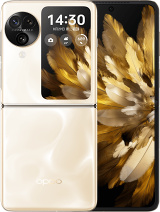
Find N3 Flip
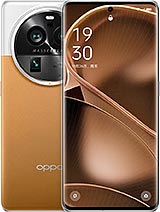
Find X6 Pro
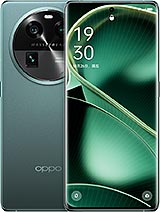
Find X6
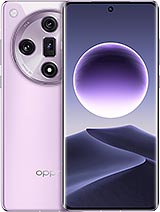
Find X7
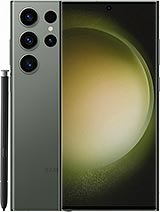
Galaxy S23 Ultra