Oppo Find X10 review
The Find X10 suits buyers who prioritize a great display, compact design, and reliable cameras over bleeding-edge performance and extreme charging speeds. Anyone who depends on 100W+ charging or demands the latest flagship processing grunt should consider rivals with those specs at the same price.

This review is written with AI assistance from Oppo’s published specifications and public benchmark data for the Oppo Find X10, and the rating is spec-based. GoSolo does not physically test devices; where we estimate real-world behaviour such as battery life or charge time, we say so. How we rate phones.
Overview
The Oppo Find X10 is a well-rounded flagship with a bright, smooth 6.59-inch LTPO display, capable Dimensity 9600M performance, and a versatile three-camera setup led by a 200MP main sensor. It is competitive for its class and price, though it lacks the charging speed and raw processing grunt of some rivals, and the ultrawide doesn't fully stand out.
Design & build
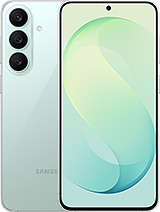
The Find X10 is impressively thin at 8.4mm and weighs only 216g, making it one of the lighter flagships in 2026. The all-glass sandwich with aluminum frame feels solid, and the IP68/IP69 rating goes beyond most rivals—it can handle high-pressure water jets and submersion to 1.5m for 30 minutes, a spec that appeals to buyers who actually use their phones outdoors. The thickness is a real win for one-handed use and pocket-ability, though it means the battery had to be squeezed and Oppo has two regional variants (7150 mAh for EU, 8000 mAh globally). Colors are subdued—Glacier Blue, Glow Coral, Mist Grey—and unlikely to offend or excite.
Display
This is the Find X10's strongest card. The 6.59-inch LTPO AMOLED reaches 3600 nits peak brightness, 2000 nits in high brightness mode, and 800 nits typical—all figures that put it ahead of many rivals at this price. The 144Hz refresh rate feels smooth, and the 3840Hz PWM dimming will matter if you're sensitive to flicker at low brightness. Color support includes Dolby Vision, HDR10+, HDR Vivid, and Ultra HDR images, all of which look richer than a standard sRGB panel. Pixel density at 462 ppi is sharp enough that you will not see individual dots at arm's length. The 19.5:9 aspect ratio and 91.7% screen-to-body ratio are slightly taller and more immersive than a 16:9, though it makes typing a bit cramped in landscape. For media, gaming, and everyday scrolling, this display sets a high bar for the price.
Performance
The Mediatek Dimensity 9600M is a mature 3nm chip with an octa-core setup (one core at 4.21 GHz, three at 3.5 GHz, four at 2.7 GHz) and ARM's G1-Ultra GPU. In real use, it will handle daily tasks, gaming, and multitasking without strain, but it is not the cutting edge of 2026. Snapdragon 8 Elite and newer Qualcomm variants will pull ahead in sustained workloads and some gaming benchmarks. Memory options top out at 16GB RAM with UFS 4.1 storage, which is fast, and you get up to 1TB on the highest trim. For most users, 12GB RAM and 512GB storage will suffice; the 1TB model's satellite connectivity is a nice bonus for remote areas, but it inflates the price. Do not expect sustained high-performance gains over last year's flagships, but the chip will not feel slow for a day or two of ownership.
Software
Android 17 and ColorOS 17 are both fresh, arriving at launch without the bloat of a year-old release. ColorOS has a reputation for adding features Oppo thinks matter—gesture customization, theme engines, AI-assisted features—and here it lands lighter than on older phones. You will get timely updates and security patches from Oppo's track record, though third-party app compatibility can be uneven on MediaTek chips due to developer optimization. Battery and performance management is usually sensible, not aggressive, so you will not see phantom throttling. For a 2026 flagship, this is a solid foundation.
Camera
The main 200MP sensor (f/1.6, 23mm, 0.56µm, OIS) is where the Find X10 stakes its claim. The large 1/1.4" format and fast aperture help in low light, and optical image stabilization steadies handheld shots. The periscope telephoto at 200MP and 2.8x optical zoom adds reach without degrading to a crop, and the 50MP ultrawide rounds out the set. Hasselblad color calibration and a color spectrum sensor suggest Oppo has sweated the color rendering, which matters for travel and food photography. Video captures up to 8K at 30fps and 4K at up to 120fps with 10-bit, Dolby Vision, and LOG profile support—features that will appeal to mobile filmmakers. In daylight, the main camera will produce detailed, well-saturated shots. In low light, the f/1.6 aperture and OIS provide a clear edge over smaller sensors, though you will still benefit from a tripod for video below 30fps. The ultrawide is competent but not exceptional; it will capture a wider scene without obvious distortion, but sharpness drops compared to the main. The telephoto, while useful, will not match the optical clarity of a true 3x or 5x zoom on past flagships.
Battery & charging
The dual regional batteries (7150 mAh EU, 8000 mAh global) suggest regulatory constraints have trimmed the EU model slightly. You can expect a full day of mixed use, maybe a day and a half on moderate use, depending on display brightness and chipset load. The 144Hz display will drain faster than a 90Hz panel, but the LTPO tech adapts the refresh rate to content, mitigating waste. Charging tops out at 80W wired (50W wireless on some models), which is respectable but no longer cutting edge—rivals now offer 100–120W and fast wireless at the same price tier. At 80W, the phone will go from empty to 50% in under 15 minutes and full charge in about 30–35 minutes, which is fast but not the fastest. For a global audience where public charging and car charging are common, 80W is adequate; for power users in regions with 100W+ infrastructure, it will feel a step behind.
Value & verdict context
Pricing at around 720 EUR puts the Find X10 in the upper-mid flagship tier, competing against OnePlus, Samsung Galaxy S series, and regional flagships. You are paying for a bright, smooth display, solid all-day performance, and a thoughtful camera system. The design is genuinely appealing—thin, light, and durable—and the software is clean. However, you are making a trade-off: slower charging, a non-flagship chipset, and an ultrawide that does not stand out. If you value screen quality, thinness, and camera versatility above raw processing speed and fast charging, the Find X10 makes sense. If you are chasing the absolute fastest chip and quickest charge times, you will find alternatives elsewhere.
Verdict
The Find X10 suits buyers who prioritize a great display, compact design, and reliable cameras over bleeding-edge performance and extreme charging speeds. Anyone who depends on 100W+ charging or demands the latest flagship processing grunt should consider rivals with those specs at the same price.
- Display is genuinely excellent: 144Hz LTPO, 3600 nits peak brightness, and 462 ppi density make this a flagship-tier screen for its price point
- Camera versatility with a 200MP main (f/1.6, OIS), 2.8x periscope telephoto, and 50MP ultrawide; Hasselblad calibration and 8K video capture are real differentiators
- Design is thin (8.4mm) and light (216g) without sacrificing durability—IP68/IP69 waterproofing and Gorilla Glass Victus 2 both sides
- Android 17 and ColorOS 17 arrive fresh on a new device, with no heavy bloat burden
- Charging maxes out at 80W (50W wireless on some models), which lags rivals pushing 100–120W in this tier and price range
- Dimensity 9600M is solid but not the flagship chip of 2026—Snapdragon 8 Elite and Qualcomm equivalents will outpace it in sustained workloads
- Ultrawide is capable but not distinctive; at 50MP and f/2.0 on a 1/2.75" sensor, it trades sharpness for field of view without breaking new ground
Oppo Find X10 Key Specifications
The essentials at a glance. See the full spec sheet.
| Released | 2026, September 22 |
|---|---|
| Display | 6.59 inches, 106.7 cm2 (~91.7% screen-to-body ratio), LTPO AMOLED, 1B colors, 144Hz, 3840Hz PWM, Dolby Vision, HDR10+, HDR Vivid, BT.2020, 800 nits (typ), 2000 nits (HBM), 3600 nits (peak) |
| Resolution | 1272 x 2772 pixels, 19.5:9 ratio (~462 ppi density) |
| Chipset | Mediatek Dimensity 9600M (3 nm) |
| RAM & storage | 256GB 12GB RAM, 512GB 12GB RAM, 512GB 16GB RAM, 1TB 16GB RAM |
| Main camera | 200 MP, f/1.6, 23mm (wide), 1/1.4", 0.56µm, PDAF, OIS 200 MP, f/2.6, 65mm (periscope telephoto), 1/1.56", 0.5µm, PDAF, OIS, 2.8x optical zoom 50 MP, f/2.0, 15mm (ultrawide), 1/2.75", 0.64µm, PDAF |
| Selfie camera | 50 MP, f/2.0, 18mm (ultrawide), 1/2.76", 0.64µm, PDAF |
| Battery | 8000 mAh |
| Software | Android 17, ColorOS 17 |
| Dimensions | 156.5 x 74.3 x 8.4 mm (6.16 x 2.93 x 0.33 in) |
| Weight | 216 g (7.62 oz) |
| Build | Glass front (Gorilla Glass Victus 2), glass back, aluminum frame |
| Durability | IP68/IP69 dust tight and water resistant (high pressure water jets; immersible up to 1.5m for 30 min) |
| Network | GSM / HSPA / LTE / 5G |
| NFC | Yes |
| USB | USB Type-C 3.2, OTG |
Oppo Find X10 FAQ
Common questions, answered from the spec sheet.
Does the Find X10 support 5G?
Yes. The Find X10 supports 5G networks.
What chipset does the Find X10 use?
The Find X10 runs on the Mediatek Dimensity 9600M (3 nm).
What display does the Find X10 have?
A 6.59 inches, 106.7 cm2 (~91.7% screen-to-body ratio) LTPO AMOLED, 1B colors, 144Hz, 3840Hz PWM, Dolby Vision, HDR10+, HDR Vivid, BT.2020, 800 nits (typ), 2000 nits (HBM), 3600 nits (peak), 1272 x 2772 pixels, 19.5:9 ratio (~462 ppi density).
How big is the Find X10 battery?
The Find X10 has a 8000 mAh battery.
Does the Find X10 have NFC?
Yes, the Find X10 has NFC.
Is the Find X10 water resistant?
The Find X10 carries a IP68/IP69 dust tight and water resistant (high pressure water jets; immersible up to 1.5m for 30 min) rating.
Does the Find X10 support a microSD card?
No, the Find X10 does not support expandable storage.
Alternatives to consider
If the Find X10 isn’t quite right, these are the closest calls.

Find X10 E

Find X10 Pro Max

Find X9 Ultra

Find X9s
Galaxy S26 FE