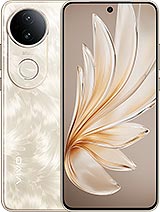
Oppo K11 review
The K11 suits someone who needs a phone to last all day, prefers a big fluid screen, and does not game or do heavy work on their device. Anyone who spends time zoomed into their screen or plays demanding games should look at mid-range phones with 1440p displays and newer chips instead.
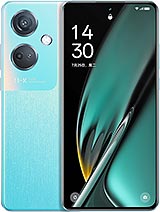
This review is based on Oppo’s published specifications and public benchmark data for the Oppo K11, and the rating is spec-based. GoSolo does not physically test devices; where we estimate real-world behaviour such as battery life or charge time, we say so. How we rate phones.
Overview
The Oppo K11 is a straightforward mid-range phone from 2023 that trades pixel density for a big, fluid AMOLED display and reliable battery endurance. It does everyday tasks well without pretense, but the 1080p screen and Snapdragon 782G put it squarely in the workday tier, not the showcase tier.
Design & build
The K11 is thin and light at 8.2 mm and 184 g, fitting naturally in a pocket. Glass front with plastic frame and back keeps the body looking functional rather than flashy. No IP rating means no official water or dust resistance; drops into water or dust-heavy environments are a gamble. Build quality feels competent for the price but unremarkable, and the plastic back will attract fingerprints and dust easily.
Display
The 6.7-inch AMOLED panel with 120Hz refresh is the standout hardware feature. Scrolling through apps and web pages feels noticeably smoother than 60Hz phones at this price point, and the 1100 nits peak brightness works outdoors even in bright sunlight. The catch is resolution: 1080 x 2400 pixels at 393 ppi is adequate from arm's length but shows visible pixels when you hold the phone close, especially reading small text or examining photos. Rivals at the same price often pack 1440p panels now, making the K11 feel slightly behind on sharpness. Colors are vibrant thanks to AMOLED, and HDR10+ support means streaming video looks punchy on Netflix or YouTube.
Performance
The Snapdragon 782G is a capable mid-range chip from 2023, handling email, social media, video playback, and light gaming without stuttering. Everyday multitasking stays responsive, and app launches are quick. Heavy gaming—think Genshin Impact on high settings or Call of Duty Mobile at max—will force you to lower settings or accept frame drops. For someone who uses their phone for work apps, photography, and casual social use, performance is sufficient. Those who game seriously or run demanding creative apps should look at upper-mid-range alternatives with newer chips.
Software
ColorOS 13.1 on Android 13 is Oppo's skin and, like most Chinese manufacturer skins, adds customization options but also bloatware. The interface is intuitive enough, and ColorOS updates tend to roll out promptly in most markets. There is no guarantee on how long updates will arrive after launch, so long-term software support is worth checking with local retailers.
Camera
The 50MP main camera with f/1.8 aperture, optical image stabilization, and multi-directional autofocus is the star. In daylight, photos are sharp, well-exposed, and have good color balance. Night mode improves low-light shots but does not match flagship performance. The 8MP ultrawide at 112 degrees is decent for landscape shots but suffers from the typical ultrawide weakness: edge softness and distortion. The 2MP macro is essentially a gimmick; those shots are rarely better than cropping a 50MP main photo. The 16MP front camera is fine for selfies and video calls. Video tops out at 4K 30fps, which is limiting compared to rivals offering 60fps or higher; expect decent stabilization from gyro-EIS but a cinematic codec this is not.
Battery & charging
The 5000 mAh battery is the phone's reliable companion. With moderate use (5–6 hours screen time daily), the K11 pushes past a full day into evening of the second day. Heavy users doing video streaming or gaming will drain it by evening, but the battery does not quit early. Charging uses SuperVOOC, but the spec sheet withholds wattage—typically Oppo's SuperVOOC ranges from 65W to 100W, so actual charge time is guesswork. Expect to need 30–50 minutes to full from empty, and you must use Oppo's proprietary charger; standard USB-C fast chargers are not guaranteed to work.
Value & verdict context
The Oppo K11 arrived in mid-2023 as a no-frills daily driver. For someone who wants a large screen, smooth scrolling, day-spanning battery, and a capable main camera without flagship pricing, it fits the bill. The 1080p display and mid-range chip are genuine compromises compared to rivals that cost only marginally more. By 2025 standards, the phone feels competent but aging; the chip is no longer competitive with newer mid-range alternatives, and the low resolution stands out against better-equipped competitors. In markets where the K11 is heavily discounted, it remains a sensible buy for light users. At full original retail price, there are better options at the same cost.
Verdict
The K11 suits someone who needs a phone to last all day, prefers a big fluid screen, and does not game or do heavy work on their device. Anyone who spends time zoomed into their screen or plays demanding games should look at mid-range phones with 1440p displays and newer chips instead.
- 5000 mAh battery easily lasts a full day of moderate use, often into a second day
- 120Hz AMOLED screen is genuinely smooth to scroll; 1100 nits peak brightness handles outdoor daylight
- 50MP main camera with f/1.8 aperture and OIS captures solid daylight shots without fuss
- Dedicated microSD slot leaves no choice between storage and dual SIMs
- 1080p resolution on a 6.7-inch display means visible pixelation up close; text and photos lack the sharpness rivals offer at this price
- SuperVOOC charging wattage is not specified, leaving uncertainty on actual charge speed; proprietary charger is required regardless
- Snapdragon 782G handles daily apps fine but struggles with demanding games and heavy multitasking compared to upper-mid-range peers
Oppo K11 Key Specifications
The essentials at a glance. See the full spec sheet.
| Released | 2023, July 25 |
|---|---|
| Display | 6.7 inches, 108.4 cm2 (~88.2% screen-to-body ratio), AMOLED, 1B colors, 120Hz, HDR10+, 500 nits (typical), 1100 nits (peak) |
| Resolution | 1080 x 2400 pixels, 20:9 ratio (~393 ppi density) |
| Chipset | Qualcomm Snapdragon 782G (6 nm) |
| RAM & storage | 256GB 8GB RAM, 256GB 12GB RAM, 512GB 12GB RAM |
| Main camera | 50 MP, f/1.8, 24mm (wide), 1/1.56", 1.0µm, multi-directional PDAF, OIS 8 MP, f/2.2, 112˚ (ultrawide), 1/4.0", 1.12µm 2 MP (macro) |
| Selfie camera | 16 MP, f/2.4, 24mm (wide), 1.0µm |
| Battery | 5000 mAh |
| Charging | SuperVOOC |
| Software | Android 13, ColorOS 13.1 |
| Dimensions | 162.7 x 75.5 x 8.2 mm (6.41 x 2.97 x 0.32 in) |
| Weight | 184 g (6.49 oz) |
| Build | Glass front, plastic frame, plastic back |
| Network | GSM / CDMA / HSPA / CDMA2000 / LTE / 5G |
| NFC | Yes |
| USB | USB Type-C 2.0, OTG |
Oppo K11 FAQ
Common questions, answered from the spec sheet.
Does the K11 support 5G?
Yes. The K11 supports 5G networks.
What chipset does the K11 use?
The K11 runs on the Qualcomm Snapdragon 782G (6 nm).
What display does the K11 have?
A 6.7 inches, 108.4 cm2 (~88.2% screen-to-body ratio) AMOLED, 1B colors, 120Hz, HDR10+, 500 nits (typical), 1100 nits (peak), 1080 x 2400 pixels, 20:9 ratio (~393 ppi density).
How big is the K11 battery?
The K11 has a 5000 mAh battery. Charging is rated at SuperVOOC.
Does the K11 have NFC?
Yes, the K11 has NFC.
Does the K11 support a microSD card?
Yes, the K11 supports expandable storage (microSDXC (dedicated slot)).
Alternatives to consider
If the K11 isn’t quite right, these are the closest calls.
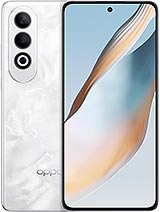
K12 Plus
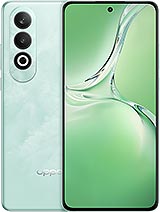
K12
Reno12 F 5G

Reno11 Pro 5G
Galaxy M55 5G