Oppo K11x review
The K11x suits everyday users and students who value battery endurance and charging speed over gaming or camera finesse, and who do not mind plastic build quality. Skip it if you game regularly, shoot video often, or expect the phone to feel solid after a year of daily use.

This review is based on Oppo’s published specifications and public benchmark data for the Oppo K11x, and the rating is spec-based. GoSolo does not physically test devices; where we estimate real-world behaviour such as battery life or charge time, we say so. How we rate phones.
Overview
The K11x is a straightforward 2023 midrange phone that leans on fast charging and a large screen to justify its €250 price, but the plastic build and Snapdragon 695 chip feel behind the curve for even budget buyers. It suits people who value all-day battery and snappy charging over polish, but falters the moment you ask it to do anything demanding.
Design & build
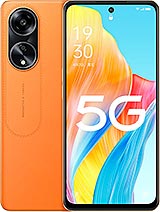
At 195g and 8.3mm thin, the K11x feels light and pocketable. The plastic frame and back keep weight down, but that is the only real win here. By 2023, plastic at this price point reads as cost-cutting rather than a design choice; rivals in the €200–300 range have moved to glass or metal, and the K11x's finish feels brittle under real use. Gorilla Glass on the front does its job, but the rear and frame will scuff quickly. Dual nano-SIM plus a shared microSD slot gives you flexibility if you need regional switching, though the trade-off is you cannot have both cards and expanded storage at once.
Display
The 6.72-inch IPS LCD is genuinely large, and 120Hz scrolling stays smooth whether you are swiping through social feeds or reading news. The 20:9 aspect ratio and 86.7% screen-to-body ratio mean minimal bezel distraction. At 392 ppi (1080x2400 on a 6.72-inch screen), sharpness is respectable but not exceptional; fine text looks slightly soft if you hold it close, but at normal distance it is unobtrusive. The 550 nits typical brightness is adequate indoors, and the 680 nits peak is enough to read in direct sun without squinting. It is not as vivid as an OLED and not as bright as top flagships, but for the price and category it does what you need.
Performance
The Snapdragon 695 is mainstream midrange, and AnTuTu's 412,006 score reflects that. Everyday tasks—messaging, email, light browsing, YouTube—run without lag. Social media apps feel responsive. The moment you push harder, the gaps show. Demanding games like Genshin Impact and Fortnite need reduced settings or will drop frames; lighter titles like Clash Royale and Monument Valley stay smooth. Multitasking is noticeable slower than even budget rivals with the Snapdragon 782 or 778G, and prolonged gaming sessions can trigger thermal throttling. For office work, news consumption, and streaming, it handles fine. For anyone who games or juggles heavy workloads, this chip feels dated already.
Software
ColorOS 13.1 on Android 13 is a stable, polished layer. It is not as minimal as stock Android and includes pre-installed apps Oppo assumes you might want, but nothing egregious. The interface is clean and navigation is intuitive. Side-mounted fingerprint unlocking is fast and reliable. Updates and long-term support are typical for Oppo's budget line—a few years of security patches, OS upgrades less certain. If you value a clean, ad-free interface or early Android updates, this is not your phone, but for most users ColorOS stays out of the way.
Camera
The 108MP main sensor is a headline spec that delivers modest reality. With f/1.8 aperture and PDAF, daylight shots are sharp and detailed, and the wide field of view is useful. However, there is no depth sensor for portrait separation, no telephoto, no macro—just the main sensor and a 16MP selfie camera. The critical limitation is 1080p video only, which feels stale in 2023. Low-light photography is unremarkable without OIS; handheld night shots are soft and noisy, and without optical stabilization even video feels shaky. The 16MP selfie is acceptable for video calls and casual snaps but not exceptional. For everyday daytime photography the camera is competent, but specialized use—night shooting, videography, portrait work—exposes its limits.
Battery & charging
The 5000mAh capacity is substantial, and real-world endurance is honest. Mixed use—messaging, browsing, some video—yields about 13 to 15 hours before you need a charge. Heavy gaming or streaming can halve that to 9 to 11 hours, which is still a full day if you are not an extreme user. The standout is charging: 67W wired reaches 80% in the claimed 33 minutes, and full capacity in roughly 45 to 55 minutes total. That speed is a genuine convenience and punches above the price point. No wireless charging, but at this price that is standard omission. If you charge every night or grab a quick 20-minute top-up in the morning, the system works well.
Value & verdict
At €250, the K11x occupies an awkward middle ground. It undercuts flagship phones by half but does not feel genuinely cheap. The fast charging and large screen are real highlights, and the battery life is reliable. What it lacks—a modern processor, build quality that ages well, and versatile cameras—are things many €250 buyers still expect. By mid-2023, rivals like the Poco X3 Pro and Realme 10 Pro offer better processors or more polished builds at the same price. The K11x is not a bad phone, but it feels assembled to hit a price target rather than to excel at anything. It works well if your needs are simple and you charge often; it falters if you want gaming performance or a camera you can rely on in dim light.
Verdict
The K11x suits everyday users and students who value battery endurance and charging speed over gaming or camera finesse, and who do not mind plastic build quality. Skip it if you game regularly, shoot video often, or expect the phone to feel solid after a year of daily use.
- 67W fast charging reaches 80% in 33 minutes, genuinely useful for quick top-ups between classes or commutes
- 5000mAh battery lasts a full day on mixed use without stress, even with moderate video and browsing
- Large 6.72-inch 120Hz LCD keeps scrolling smooth for a mid-tier device, and 680 nits peak brightness handles daylight readability
- Side-mounted fingerprint sensor and stereo speakers are small conveniences that work without fuss
- Plastic frame and back feel cheaper than glass rivals; 195g is light but the material dents and scuffs easily after a few months of pocket wear
- Snapdragon 695 stumbles on games and heavy multitasking; Genshin Impact and Fortnite need low settings or will stutter, and app-switching is noticeably slower than even €200 competitors with newer chips
- 108MP camera shoots only 1080p video and lacks optical image stabilization, so low-light stills are soft and video stabilization is digital only
Oppo K11x Key Specifications
The essentials at a glance. See the full spec sheet.
| Released | 2023, May 25 |
|---|---|
| Display | 6.72 inches, 109.0 cm2 (~86.7% screen-to-body ratio), IPS LCD, 120Hz, 550 nits (typ), 680 nits (peak) |
| Resolution | 1080 x 2400 pixels, 20:9 ratio (~392 ppi density) |
| Chipset | Qualcomm SM6375 Snapdragon 695 5G (6 nm) |
| RAM & storage | 128GB 8GB RAM, 256GB 8GB RAM, 256GB 12GB RAM |
| Main camera | 108 MP, f/1.8, 24mm (wide), 1/1.67", 0.64µm, PDAF Auxiliary lens |
| Selfie camera | 16 MP, f/2.4, (wide), 1.0µm |
| Battery | 5000 mAh |
| Charging | 67W wired, 80% in 33 min |
| Software | Android 13, ColorOS 13.1 |
| Dimensions | 165.5 x 76 x 8.3 mm (6.52 x 2.99 x 0.33 in) |
| Weight | 195 g (6.88 oz) |
| Build | Glass front, plastic frame, plastic back |
| Network | GSM / HSPA / LTE / 5G |
| NFC | No |
| USB | USB Type-C 2.0, OTG |
Oppo K11x FAQ
Common questions, answered from the spec sheet.
Does the K11x support 5G?
Yes. The K11x supports 5G networks.
What chipset does the K11x use?
The K11x runs on the Qualcomm SM6375 Snapdragon 695 5G (6 nm).
What display does the K11x have?
A 6.72 inches, 109.0 cm2 (~86.7% screen-to-body ratio) IPS LCD, 120Hz, 550 nits (typ), 680 nits (peak), 1080 x 2400 pixels, 20:9 ratio (~392 ppi density).
How big is the K11x battery?
The K11x has a 5000 mAh battery. Charging is rated at 67W wired, 80% in 33 min.
Does the K11x have NFC?
No, the K11x does not list NFC support.
Does the K11x support a microSD card?
Yes, the K11x supports expandable storage (microSDXC (uses shared SIM slot)).
Does the K11x have a headphone jack?
Yes, the K11x has a 3.5mm headphone jack.
Alternatives to consider
If the K11x isn’t quite right, these are the closest calls.

F23 5G
A1 5G

A98 5G

A98

Galaxy M15 5G