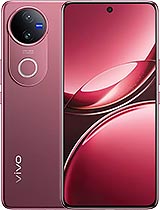
Oppo K12 review
The K12 suits people who prioritise battery endurance, fast charging, and all-day peace of mind over gaming performance or camera versatility. Anyone who games regularly or shoots zoom photos frequently should consider stepping up to a faster chipset and richer camera system, available for modest extra outlay elsewhere in the market.
This review is based on Oppo’s published specifications and public benchmark data for the Oppo K12, and the rating is spec-based. GoSolo does not physically test devices; where we estimate real-world behaviour such as battery life or charge time, we say so. How we rate phones.
Overview
The K12 trades raw speed for everyday stamina: a Snapdragon 7 Gen 3 that handles daily tasks smoothly, paired with a 5500 mAh battery and 100W charging that together make it a sensible all-rounder for buyers who value staying powered longer over gaming prowess. At €250, it's decent value if you ignore the camera's modest reach.
Design & build
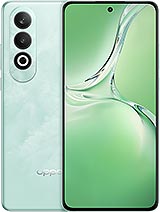
The K12 is slim and light—8.4 mm, 186 g—which feels comfortable in hand and fits jacket pockets without protest. The AMOLED screen wraps to the edges on a 20:9 display with an 88% screen-to-body ratio, so there is minimal bezel even if the frame feels plastic rather than metal in class-typical fashion. IP54 dust and splash protection is basic: it will shrug off a spray and light dust, but it is not pool-proof or fit for heavy rain dunking. The Celadon Marble finish looks quieter than usual Oppo colour choices, though the finish gathers fingerprints quickly.
Display
The 6.7-inch AMOLED at 1080×2412 pixels delivers 394 ppi, which is crisp enough for text and video up close. Colours are vivid and blacks are genuinely black, as AMOLED promises. The 120 Hz refresh keeps scrolling smooth through apps and webpages. Peak brightness hits 1100 nits, though the typical 500 nits is dimmer than rivals in this price range—you will notice the difference outdoors on a sunny day. The 900 nits high-brightness mode helps, but it is not quite as effortless as phones with 600+ nit baseline brightness. For everyday indoor use and video, this display works well; for outdoor daylight visibility it is adequate rather than best-in-class for 2024.
Performance
The Snapdragon 7 Gen 3 is capable upper-midrange: it handles messaging, browsing, video playback, and social media without hiccup. Gaming is possible but not its strong suit—Genshin Impact and Call of Duty Mobile run on medium settings at playable frame rates, not high-end polish. The 12 GB RAM variant keeps many apps in memory, which matters if you switch constantly between heavy apps; 8 GB suffices for most people but will reload apps more often if you run 10+ concurrently. For the intended audience—people who read, message, and watch more than they game—this chip is fit for purpose and not a bottleneck.
Camera
The 50 MP main sensor with f/1.8 aperture, optical image stabilisation, and phase-detect autofocus captures clean daylight stills and steadier 4K video than phones without OIS. Low-light performance is competent but not exceptional; you will see noise creep in dimly lit rooms. The 8 MP ultrawide at 112 degrees takes group shots and landscapes, but its f/2.2 aperture limits low-light range, and digital zoom softens quickly beyond 2x magnification. The 16 MP selfie camera is serviceable for video calls. This is a straightforward dual setup that does not attempt miracles; it is neither a strength nor a glaring weakness for the price.
Battery & charging
The 5500 mAh battery, combined with the efficient Snapdragon 7 Gen 3, typically lasts a full day of mixed use with light reserve. Heavy video streaming or gaming will drain it to 20% by evening; moderate use leaves you with 30–40% at bedtime. 100 W wired charging fills 0 to 100% in about 27 minutes, which is a genuine practical advantage—you can top up during a lunch break or coffee stop without tethering yourself to a charger for an hour. There is no wireless charging, which is standard omission at this price and generation. The charging speed and battery size together make this phone forgiving if you forget to plug in overnight.
Software
ColorOS 14 on Android 14 is Oppo's in-house layer atop Google's system. It includes typical conveniences: gesture navigation, app drawer customisation, and integration with Oppo's ecosystem if you own other devices. The interface is clean and responsive, though it does pre-load apps and services you may not want—Oppo adds bloat, and you will spend time disabling or hiding them. Updates are promised for three years of OS and four years of security patches, which is adequate but not lengthy by 2024 standards. No major friction, but also nothing that stands out as more refined than stock Android or rivals' skins.
Value & verdict
At roughly €250, the K12 sits in a crowded mid-range. It does not have the raw performance of a Snapdragon 8 series phone, nor the camera range of costlier rivals, but it does not pretend to. It offers a practical daylong battery, brisk charging, a smooth AMOLED display, and a processor fast enough for real work and casual content consumption. The trade-off is that you are paying for capability rather than outright speed or imaging breadth. If your budget is tight and your priorities are uptime and reliability over gaming or zoom photography, this is a sensible pick. If you game seriously or spend money on mobile photography, look at phones €50–100 more in the market that offer either a faster chip or richer camera hardware.
Verdict
The K12 suits people who prioritise battery endurance, fast charging, and all-day peace of mind over gaming performance or camera versatility. Anyone who games regularly or shoots zoom photos frequently should consider stepping up to a faster chipset and richer camera system, available for modest extra outlay elsewhere in the market.
- 100W wired charging that fills the battery in 27 minutes—practical and rare at this price
- All-day battery life on mixed use, rarely needing a mid-day top-up
- Smooth 120Hz AMOLED display with vivid colours and good response, even if typical brightness is dimmer than rivals
- Slim and light (8.4 mm, 186 g) without feeling fragile, with IP54 splash resistance for daily peace of mind
- Typical 500 nits brightness is below rival mid-range phones; outdoor daylight readability requires high-brightness mode
- Snapdragon 7 Gen 3 is competent but not quick compared to 8 series alternatives at only €50–100 more
- Camera system is capable but lacks telephoto or serious zoom range beyond 2x digital; low-light performance lags flagship standards
Oppo K12 Key Specifications
The essentials at a glance. See the full spec sheet.
| Released | 2024, April 24 |
|---|---|
| Display | 6.7 inches, 108.0 cm2 (~88.3% screen-to-body ratio), AMOLED, 1B colors, 120Hz, HDR10+, 500 nits (typ), 900 nits (HBM), 1100 nits (peak) |
| Resolution | 1080 x 2412 pixels, 20:9 ratio (~394 ppi density) |
| Chipset | Qualcomm SM7550-AB Snapdragon 7 Gen 3 (4 nm) |
| RAM & storage | 256GB 8GB RAM, 256GB 12GB RAM, 512GB 12GB RAM |
| Main camera | 50 MP, f/1.8, 26mm (wide), 1/1.95", 0.8µm, PDAF, OIS 8 MP, f/2.2, 16mm, 112˚ (ultrawide), 1/4.0", 1.12µm |
| Selfie camera | 16 MP, f/2.4, 26mm (wide), 1/3.0", 1.0µm |
| Battery | 5500 mAh |
| Charging | 100W wired, 100% in 27 min |
| Software | Android 14, ColorOS 14 |
| Dimensions | 162.5 x 75.3 x 8.4 mm (6.40 x 2.96 x 0.33 in) |
| Weight | 186 g (6.56 oz) |
| Durability | IP54 dust protected and water resistant (water splashes) |
| Network | GSM / CDMA / HSPA / LTE / 5G |
| NFC | Yes |
| USB | USB Type-C 2.0 |
Oppo K12 FAQ
Common questions, answered from the spec sheet.
Does the K12 support 5G?
Yes. The K12 supports 5G networks.
What chipset does the K12 use?
The K12 runs on the Qualcomm SM7550-AB Snapdragon 7 Gen 3 (4 nm).
What display does the K12 have?
A 6.7 inches, 108.0 cm2 (~88.3% screen-to-body ratio) AMOLED, 1B colors, 120Hz, HDR10+, 500 nits (typ), 900 nits (HBM), 1100 nits (peak), 1080 x 2412 pixels, 20:9 ratio (~394 ppi density).
How big is the K12 battery?
The K12 has a 5500 mAh battery. Charging is rated at 100W wired, 100% in 27 min.
Does the K12 have NFC?
Yes, the K12 has NFC.
Is the K12 water resistant?
The K12 carries a IP54 dust protected and water resistant (water splashes) rating.
Does the K12 support a microSD card?
Yes, the K12 supports expandable storage (microSDXC (uses shared SIM slot)).
Does the K12 have a headphone jack?
No, the K12 does not have a 3.5mm headphone jack.
Alternatives to consider
If the K12 isn’t quite right, these are the closest calls.
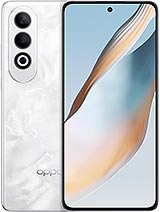
K12 Plus
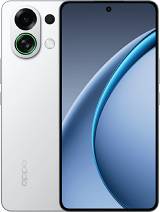
K13 Turbo 5G
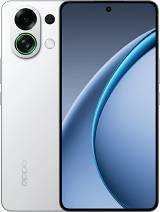
K13 Turbo
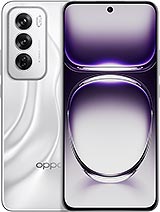
Reno12 F 5G
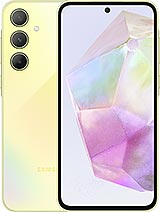
Galaxy A35 5G