Oppo K12 Plus review
The K12 Plus is built for people who spend long stretches away from a charger and want a screen they can actually see outdoors, without spending flagship money. If you prioritize gaming, a sharper display, or premium cameras, better options exist at the same price; if you care most about daily reliability and screen quality, this is a smart buy.
This review is based on Oppo’s published specifications and public benchmark data for the Oppo K12 Plus, and the rating is spec-based. GoSolo does not physically test devices; where we estimate real-world behaviour such as battery life or charge time, we say so. How we rate phones.
Overview
The Oppo K12 Plus pairs a bright 6.7-inch AMOLED screen with a 6400mAh battery and 80W charging, all wrapped in a slim 8.4mm frame priced at €250. It punches well above its cost on battery life and screen quality, though the Snapdragon 7 Gen 3 and 1080p resolution remind you this is still solidly mid-range, not a bargain flagship.
Design & Build
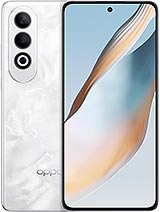
At 162.5 x 75.3 x 8.4 mm and 192 grams, the K12 Plus is genuinely pocket-friendly—you forget it is there. The slim frame is a real engineering choice, not just a marketing trick, and at this price and screen size the trade-off is rare. IP54 protection means it handles dust and light rain without drama, though it is not submersion-proof; that is fair for a device under €300. The body feels assembled to last, though without a named material in the spec sheet, assume mid-range glass and plastic. For a phone you might drop or throw in a bag daily, this is a sensible balance.
Display
The 6.7-inch AMOLED is the K12 Plus's strongest card. Reaching 1100 nits peak brightness and sustaining 500 nits typical means you can actually see it in sunlight—a luxury phones twice the price sometimes miss. The 120Hz refresh is smooth across the OS and apps, and scrolling through social feeds and web pages feels fluid without stutter. Where it falters is pixel density: 1080 x 2412 on 6.7 inches lands at 394 ppi, which is soft for text and fine detail. Most rivals in this category have moved to 1440p or above, and the difference is visible when you hold them side by side. For video and photos, this matters less; for heavy reading and productivity, the lower res does show its age.
Performance
The Snapdragon 7 Gen 3 is a mid-range chip that does its job without complaint. Email, messaging, browsing, and streaming are snappy, and the 8GB or 12GB RAM options handle task-switching without hiccup. Gaming is where the reality check arrives: demanding titles like Genshin Impact or Honkai: Star Rail will run at lower settings and still drop frames in complex scenes. 2D games and modest 3D games play fine, and for everyday users who are not glued to intense mobile gaming, this is plenty. The GPU is Adreno 720, which is solid for 2024 but not bleeding-edge; in two years, demanding apps will start to strain it. UFS 3.1 storage is fast enough for apps and OS responsiveness.
Software
It ships with Android 14 and ColorOS 14.0, Oppo's customized interface. ColorOS has come a long way and is less bloated than in past years, though it still comes preloaded with apps not everyone wants. The OS is responsive and intuitive, with reasonable gesture control and customization. Oppo has committed to four years of major OS updates for this device, which means reasonable long-term support, though that is now baseline for mid-range phones rather than a standout promise.
Camera
The 50MP main sensor with f/1.8 aperture and OIS is solid for a phone at this price—it captures sharp, well-exposed shots in good light and holds its own in low light thanks to optical stabilization. The 8MP ultrawide, however, is a letdown: a 112-degree field of view is narrow for an ultrawide, and the 1/4.0" sensor is small and struggles with detail. There is no telephoto, so zoom is purely digital. The 16MP selfie camera is fine for video calls and casual selfies. Video maxes out at 4K 30fps, which is acceptable but feels behind phones edging down to €300 that offer 4K 60fps. Daytime photos are dependable; twilight and night mode exist but are not reasons to pick this camera over a more ambitious rival.
Battery & Charging
The 6400mAh battery is genuinely large and, paired with the efficient Snapdragon 7 Gen 3 and 1080p screen, delivers real endurance. Plan on 14 to 16 hours of screen-on time with moderate use—messaging, social media, music, light browsing—which easily stretches to 1.5 days if you are not heavy-handed. Heavy gaming or video streaming will cut that down to 6 to 8 hours of screen time in a single session, but for a typical day it lands solidly. The 80W SuperVOOC charger is fast enough for a meaningful top-up in 10 minutes and will reach full in around 30 minutes, which is excellent for a phone in this class. You can actually charge it while commuting and leave the house with a full tank, unlike slower mid-range rivals.
Value & Verdict
At €250, the Oppo K12 Plus competes in a crowded slice where screen quality and battery life are the prizes and price is the constraint. It wins the screen game outright—most rivals near this cost do not match 1100-nit AMOLED and 120Hz smoothness. Battery and charging are also genuine strengths. The Snapdragon 7 Gen 3, however, is a reminder that this is not a mini flagship; it is a capable mid-ranger, and if you play heavy games or demand top-end performance, you will feel the ceiling within a year or two. The 1080p resolution is the one real compromise that nags: for reading and fine graphics, a 1440p panel would elevate it considerably, but would also hike the price. The cameras are competent but forgettable—not a reason to choose this phone, but not a deal-breaker for casual shooters. If you value screen brightness, battery longevity, and fast charging over bleeding-edge performance and camera prowess, this phone will not disappoint. Those hunting gaming performance or professional camera features should look elsewhere.
Verdict
The K12 Plus is built for people who spend long stretches away from a charger and want a screen they can actually see outdoors, without spending flagship money. If you prioritize gaming, a sharper display, or premium cameras, better options exist at the same price; if you care most about daily reliability and screen quality, this is a smart buy.
- Bright, fluid 1100-nit AMOLED display at 6.7 inches with 120Hz refresh—outshines most rivals near this price
- 6400mAh battery lasts 1.5 days on moderate use; 80W SuperVOOC refills it in roughly 30 minutes
- Slim 8.4mm design and 192g weight without sacrificing screen size or battery
- IP54 rating plus dual SIM and 5G connectivity for the asking price
- 1080p on a 6.7-inch screen feels soft compared to 1440p rivals at similar or lower cost
- Snapdragon 7 Gen 3 handles daily apps smoothly but stumbles in demanding games; not future-proof for heavy gaming
- 50MP main camera is capable but unspectacular in variable light; 8MP ultrawide is narrow and uninspiring
Oppo K12 Plus Key Specifications
The essentials at a glance. See the full spec sheet.
| Released | 2024, October 12 |
|---|---|
| Display | 6.7 inches, 108.0 cm2 (~88.3% screen-to-body ratio), AMOLED, 1B colors, 120Hz, 500 nits (typ), 900 nits (HBM), 1100 nits (peak) |
| Resolution | 1080 x 2412 pixels, 20:9 ratio (~394 ppi density) |
| Chipset | Qualcomm SM7550-AB Snapdragon 7 Gen 3 (4 nm) |
| RAM & storage | 256GB 8GB RAM, 256GB 12GB RAM, 512GB 12GB RAM |
| Main camera | 50 MP, f/1.8, 26mm (wide), 1/1.95", 0.8µm, PDAF, OIS 8 MP, f/2.2, 16mm, 112˚ (ultrawide), 1/4.0", 1.12µm |
| Selfie camera | 16 MP, f/2.4, 26mm (wide), 1/3.0", 1.0µm |
| Battery | 6400 mAh |
| Charging | SuperVOOC up to 80 W |
| Software | Android 14, ColorOS 14.0 |
| Dimensions | 162.5 x 75.3 x 8.4 mm (6.40 x 2.96 x 0.33 in) |
| Weight | 192 g (6.77 oz) |
| Durability | IP54 dust protected and water resistant (water splashes) |
| Network | GSM / CDMA / HSPA / LTE / 5G |
| NFC | Yes |
| USB | USB Type-C 2.0, OTG |
Oppo K12 Plus FAQ
Common questions, answered from the spec sheet.
Does the K12 Plus support 5G?
Yes. The K12 Plus supports 5G networks.
What chipset does the K12 Plus use?
The K12 Plus runs on the Qualcomm SM7550-AB Snapdragon 7 Gen 3 (4 nm).
What display does the K12 Plus have?
A 6.7 inches, 108.0 cm2 (~88.3% screen-to-body ratio) AMOLED, 1B colors, 120Hz, 500 nits (typ), 900 nits (HBM), 1100 nits (peak), 1080 x 2412 pixels, 20:9 ratio (~394 ppi density).
How big is the K12 Plus battery?
The K12 Plus has a 6400 mAh battery. Charging is rated at SuperVOOC up to 80 W.
Does the K12 Plus have NFC?
Yes, the K12 Plus has NFC.
Is the K12 Plus water resistant?
The K12 Plus carries a IP54 dust protected and water resistant (water splashes) rating.
Does the K12 Plus support a microSD card?
Yes, the K12 Plus supports expandable storage (microSDXC (uses shared SIM slot)).
Alternatives to consider
If the K12 Plus isn’t quite right, these are the closest calls.
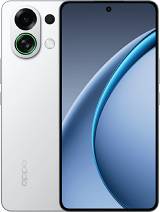
K13 Turbo 5G
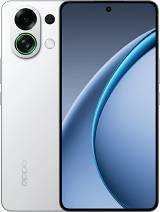
K13 Turbo

Reno12 F 5G

K13 5G
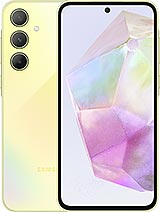
Galaxy A35 5G