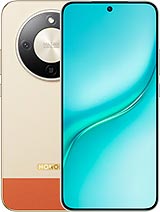
Oppo K13 review
This phone suits China-based buyers who prioritize endurance, fast charging, and everyday speed over camera flexibility and will appreciate a phone that doesn't demand nightly charging rituals. Anyone outside mainland China, anyone who zooms or shoots groups regularly, or anyone who games seriously should look at rivals with a telephoto, sharper display, or faster silicon.
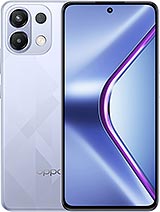
This review is based on Oppo’s published specifications and public benchmark data for the Oppo K13, and the rating is spec-based. GoSolo does not physically test devices; where we estimate real-world behaviour such as battery life or charge time, we say so. How we rate phones.
Overview
The Oppo K13 is a well-balanced upper-midrange phone built for endurance rather than ambition: its 7000mAh battery, 120Hz AMOLED screen, and speedy 80W charging outweigh the limitations of a single fixed-length camera and Snapdragon 6 Gen 4 that stumbles on heavy games. For a China-market phone at 190 EUR, it's a competent everyday device that makes charging and battery anxiety nearly invisible, though anyone expecting zoom or serious mobile photography will need to look elsewhere.
Design & build
At 208g and 8.5mm thick, the K13 sits comfortably in hand without feeling flimsy or bloated. IP65 dust and splash resistance covers rain and spills without the overkill weight of full submersion rating. The design here is unremarkable in the best sense: it works, feels solid, and won't draw attention. No glass back or premium finish is mentioned, so expect plastic, which suits a phone at this price and takes knocks without the guilt of a shattered mirror. The dual nano-SIM slot keeps options open for dual-line users, still common in Asia.
Display
The 6.67-inch AMOLED screen delivers where it counts: 120Hz scrolling is smooth, 1200 nits peak brightness is bright enough to read outdoors without squinting, and the 1920Hz PWM dimming means less flicker at low brightness levels for night reading. The 1080p resolution (395 ppi) is the honest trade-off here. Yes, it's softer than sharper 1440p panels found on some rivals at this price, but the difference only stings if you're holding text directly to your eye. For everyday use—social media, messaging, video—the panel does the job without complaint. Colors are vibrant, black levels are true black, and the 20:9 aspect ratio with 86.5% screen-to-body ratio means little bezel waste.
Performance
The Snapdragon 6 Gen 4 sits in the upper-midrange tier, capable enough for all-day use but not built for sustained heavy lifting. Apps open briskly, multitasking between social media and messaging is fluid, and web browsing doesn't stutter. Light gaming like Genshin Impact at medium settings runs smoothly. Demanding 3D games at high settings will drop frames and stutter, and prolonged gaming sessions may trigger throttling as the chipset heats up. For most buyers, this is fine—the phone doesn't slow down doing what most people actually do. The 6GB base RAM feels tight on the 128GB model, but 8GB or 12GB variants eliminate that friction. UFS 3.1 storage is industry standard at this level and doesn't significantly impact day-to-day feel.
Software
Android 15 with ColorOS 15 is current and fresh out of the box, with the promise of two major OS upgrades. ColorOS Oppo's skin is relatively light and not clogged with unused preload, though Chinese market versions sometimes ship with apps that overseas buyers never use. The lack of global app support (no Google Workspace, YouTube Premium, etc., in mainland China) means this phone is clearly designed for the domestic market. Circle to Search is a handy addition for quick lookups without leaving your app. Security patches should be regular, though update cadence varies by region.
Camera
A single 50MP f/1.9 main camera with no telephoto, ultrawide, or macro lens is the biggest limitation here. The f/1.9 aperture and 27mm focal length do what they do well: daylight shots are sharp, low-light performance beats slower lenses, and 4K video at 30fps is adequate if not premium. The 16MP selfie camera is capable for video calls and casual portraits. What you cannot do is zoom, fit group shots without backing up, or explore different perspectives. This is a fixed-length phone for people who frame shots naturally and don't demand creative flexibility. The LED flash is basic but functional. For social media and family photos, it suffices; for serious photography, it will frustrate.
Battery & charging
The 7000mAh battery is this phone's hero. On moderate use, expect 1.5 to 2 days between charges; heavy use or sustained video will pull that closer to one day, but even then you're not hunting a charger every evening. The real win is 80W wired charging: 62% in 30 minutes means a quick lunch-break top-up adds half a day of use, and the full 56-minute charge cycle is fast enough that overnight charging feels optional rather than mandatory. The lack of wireless charging doesn't sting at this price, and the 33W PPS negotiation means you can top up from any modern USB-C charger without degrading the battery. Fast charging and large capacity together solve most battery anxiety.
Connectivity & value
The 5G radio is tuned exclusively to China bands (1, 5, 8, 28, 41, 77, 78), so this phone is China-only for 5G connectivity. Wi-Fi 6 and Bluetooth 5.2 with aptX HD cover everyday wireless needs globally. NFC is present but restricted to mainland China, making mobile payments abroad impossible. At 190 EUR, the K13 undercuts flagship rivals and positions itself as a practical workhorse for users who don't need zoom, don't travel internationally, and value all-day battery over camera range. It's a phone for a specific buyer, not a compromise for everyone.
Verdict
This phone suits China-based buyers who prioritize endurance, fast charging, and everyday speed over camera flexibility and will appreciate a phone that doesn't demand nightly charging rituals. Anyone outside mainland China, anyone who zooms or shoots groups regularly, or anyone who games seriously should look at rivals with a telephoto, sharper display, or faster silicon.
- 7000mAh battery delivers 1.5–2 days of real use on moderate loads, eliminating daily charging anxiety
- 80W charging hits full in under an hour, with 62% in 30 minutes allowing meaningful top-ups on a short break
- 120Hz AMOLED display with 1200-nit peak brightness is smooth and readable in daylight, trading sharpness for responsiveness
- Snapdragon 6 Gen 4 handles everyday apps and light gaming without lag, staying cool during normal use
- Single fixed 50MP camera with no zoom, ultrawide, or macro—creative framing is limited to stepping back or moving closer
- 1080p resolution (395 ppi) is noticeably softer than 1440p rivals at this price tier, with visible fuzziness on text at normal viewing distance
- Snapdragon 6 Gen 4 stutters on demanding games at high settings; no high-refresh 120fps gaming mode means gaming ceiling is medium settings only
Oppo K13 Key Specifications
The essentials at a glance. See the full spec sheet.
| Released | 2025, April 21 |
|---|---|
| Display | 6.67 inches, 107.4 cm2 (~86.5% screen-to-body ratio), AMOLED, 120Hz, 1920Hz PWM, 600 nits (typ), 1200 nits (peak) |
| Resolution | 1080 x 2400 pixels, 20:9 ratio (~395 ppi density) |
| Chipset | Qualcomm Snapdragon 6 Gen 4 (4 nm) |
| RAM & storage | 128GB 6GB RAM, 128GB 8GB RAM, 256GB 8GB RAM, 256GB 12GB RAM, 512GB 12GB RAM |
| Main camera | 50 MP, f/1.9, 27mm (wide), 1/2.88", PDAF Auxiliary lens |
| Selfie camera | 16 MP, f/2.5, 23mm (wide), 1/3.0", 1.0µm |
| Battery | 7000 mAh |
| Charging | 80W wired, 33W PPS, PD, QC, 62% in 30 min, 100% in 56 min |
| Software | Android 15, up to 2 major Android upgrades, ColorOS 15 |
| Dimensions | 163.2 x 76.1 x 8.5 mm (6.43 x 3.00 x 0.33 in) |
| Weight | 208 g (7.34 oz) |
| Durability | IP65 dust tight and water resistant (low pressure water jets) |
| Network | GSM / HSPA / LTE / 5G |
| NFC | NFC (China only) |
| USB | USB Type-C 2.0, OTG |
Oppo K13 FAQ
Common questions, answered from the spec sheet.
Does the K13 support 5G?
Yes. The K13 supports 5G networks.
What chipset does the K13 use?
The K13 runs on the Qualcomm Snapdragon 6 Gen 4 (4 nm).
What display does the K13 have?
A 6.67 inches, 107.4 cm2 (~86.5% screen-to-body ratio) AMOLED, 120Hz, 1920Hz PWM, 600 nits (typ), 1200 nits (peak), 1080 x 2400 pixels, 20:9 ratio (~395 ppi density).
How big is the K13 battery?
The K13 has a 7000 mAh battery. Charging is rated at 80W wired, 33W PPS, PD, QC, 62% in 30 min, 100% in 56 min.
Does the K13 have NFC?
Yes, the K13 has NFC.
Is the K13 water resistant?
The K13 carries a IP65 dust tight and water resistant (low pressure water jets) rating.
Does the K13 support a microSD card?
No, the K13 does not support expandable storage.
Does the K13 have a headphone jack?
No, the K13 does not have a 3.5mm headphone jack.
Alternatives to consider
If the K13 isn’t quite right, these are the closest calls.
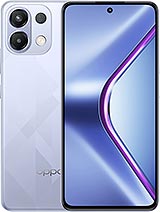
K13 5G
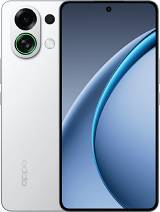
K13 Turbo 5G
F29 Pro 5G
F29 Pro
Galaxy F70 Pro