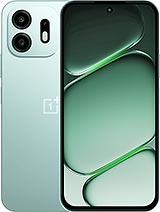
Oppo K14 review
The K14 suits people who live between charges and want a durable, lightweight 5G phone that just works; students, field workers, and travelers will get real value from the battery. Anyone who watches the screen for clarity, plays games, or wants camera versatility should spend a little more and get a phone with a 1080p display and a faster chip.
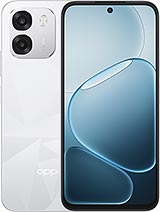
This review is written with AI assistance from Oppo’s published specifications and public benchmark data for the Oppo K14, and the rating is spec-based. GoSolo does not physically test devices; where we estimate real-world behaviour such as battery life or charge time, we say so. How we rate phones.
Overview
The K14 is a big, light budget 5G phone with a sharp LCD screen and a 7000 mAh battery that will run for days, but the 720p resolution and entry-level Dimensity chipset mean it trails rivals that cost the same. For €170, it hits the basics well, but lacks the performance or camera depth to stand out in a crowded midrange.
Design & build
The K14 is built for practicality. At 216g and 8.6mm thick, it feels light and slim compared to other big-screen phones; you can actually use it one-handed for short stretches. The glass front, plastic frame, and plastic back are honest about the price: nothing feels premium, but nothing feels cheap either. The side-mounted fingerprint sensor is reliable and faster than the unlocking speed of the software. IP68/IP69 sealing means you can rinse it under a tap or leave it in a rain puddle without fear, a safety net many budget phones skip. The build is straightforward and durable if you treat it like plastic.
Display
The 6.75-inch LCD is the K14's best feature. At 120Hz, scrolling feels smooth enough that you won't miss OLED, and at 1125 nits peak brightness, it's actually readable in sunlight. Colors are neutral and accurate for an IPS panel; no exaggerated saturation. The real catch is the 720p resolution: at 256 ppi, text and icons are visibly pixelated next to a 1080p phone. For a 2026 phone, this is disappointing, because rivals at €170 now deliver 1080p as standard. It is not broken, but it is behind for the year and price.
Performance
The Dimensity 6300 is a mid-2025 budget chip, now repurposed for 2026 entry-level phones. It handles messaging, video, and light gaming without complaint, but demanding apps will stutter and multitasking is sluggish. Benchmarks matter less than real life: opening multiple apps in sequence shows lag that faster midrange phones hide. The 6GB or 8GB RAM configs make little difference when the CPU is the bottleneck. This is a phone for people who text, browse, and stream; not for mobile gaming or video editing. ColorOS 15 adds bloat but also optimization, so it runs smoother than the raw chip speed suggests. By end-of-year standards, it will feel noticeably slower than phones that cost 20 euros more.
Software
ColorOS 15 on Android 15 is familiar Oppo territory: fast, feature-rich, and loaded with bloatware. Apps you did not ask for come preinstalled and hog storage and RAM. The customization options are deep if you like tinkering, but most users will spend their first hour uninstalling. Updates are promised for 4 years of OS releases and 5 years of security patches, which is decent for a budget phone and aligns with industry minimum standards now.
Camera
The 50MP main camera has a wide aperture (f/1.8) and autofocus, which are good building blocks, but that is where the ambition ends. There is no ultrawide, no depth sensor, no 2x zoom—just one lens, one 50MP sensor, and 1080p video capture. Daylight photos are sharp and well-exposed thanks to the aperture, but low light reveals the sensor's limitations: noise creeps in and detail fades. The 8MP selfie camera is entirely ordinary. For a 2026 budget phone, the lack of an ultrawide is now a real disadvantage; most competitors include one. If you just need a camera that works, this will do; if you want versatility, you will feel the gap.
Battery & charging
The 7000 mAh battery is the K14's endurance workhorse. In real use, you will hit two to three days on a single charge, depending on screen time and CPU load; many users will push three days easily. That is exceptional at this price. The 45W charger gets the battery from empty to about 50 percent in 30 minutes and full in around 75 minutes, which is slower than rivals that have moved to 65W or 100W. The speed is acceptable, not fast, and the large capacity makes up for it by stretching time between charges.
Value & verdict
At roughly €170, the K14 is priced for people who prioritize battery life and durability over performance and versatility. The 7000 mAh battery and light weight are genuine strengths; the IP68 sealing and bright LCD round out a competent, if unambitious, package. The 720p display and entry-level processor are the real compromises, and they hurt because rivals at the same price now deliver 1080p resolution and a step-up mid-range chip. If your priority is three days of battery and durability, the K14 makes sense. If you want a phone that feels current and responsive for your money, you should cross-shop phones at this price that include an ultrawide camera and a faster processor. The K14 is honest about what it is: a workhorse, not a contender.
Verdict
The K14 suits people who live between charges and want a durable, lightweight 5G phone that just works; students, field workers, and travelers will get real value from the battery. Anyone who watches the screen for clarity, plays games, or wants camera versatility should spend a little more and get a phone with a 1080p display and a faster chip.
- 7000 mAh battery and 45W charging should push 2–3 days of typical use; at this price, endurance is rare
- 216g weight and 8.6mm frame feel light for the 6.75-inch display, making it comfortable to hold and pocket despite the size
- IPS LCD with 120Hz refresh and 1125 nits (HBM) is bright and smooth; color accuracy is fine for the price class
- IP68/IP69 water and dust sealing covers accidental dunks and daily grit, a genuine safety net at entry-level pricing
- 720p resolution (256 ppi) is pixelated on a 6.75-inch display; rivals at this price now hit 1080p as standard
- Dimensity 6300 is entry-level for 2026; it handles daily tasks but stutters under load and will feel dated next year
- 50MP camera and 1080p video are baseline specs; no ultrawide, no telephoto, no 4K recording—you get one lens and it's ordinary
Oppo K14 Key Specifications
The essentials at a glance. See the full spec sheet.
| Released | 2026, March 20 |
|---|---|
| Display | 6.75 inches, 111.4 cm2 (~85.2% screen-to-body ratio), IPS LCD, 120Hz, 1125 nits (HBM) |
| Resolution | 720 x 1570 pixels, 19.5:9 ratio (~256 ppi density) |
| Chipset | Mediatek Dimensity 6300 (6 nm) |
| RAM & storage | 128GB 6GB RAM, 256GB 6GB RAM, 256GB 8GB RAM |
| Main camera | 50 MP, f/1.8, (wide), PDAF Auxiliary lens |
| Selfie camera | 8 MP, f/2.0, (wide) |
| Battery | 7000 mAh |
| Software | Android 15, ColorOS 15 |
| Dimensions | 166.6 x 78.5 x 8.6 mm (6.56 x 3.09 x 0.34 in) |
| Weight | 216 g (7.62 oz) |
| Build | Glass front, plastic frame, plastic back |
| Durability | IP68/IP69 dust tight and water resistant (high pressure water jets; immersible up to 1.5m for 30 min) |
| Network | GSM / HSPA / LTE / 5G |
| NFC | No |
| USB | USB Type-C 2.0, OTG |
Oppo K14 FAQ
Common questions, answered from the spec sheet.
Does the K14 support 5G?
Yes. The K14 supports 5G networks.
What chipset does the K14 use?
The K14 runs on the Mediatek Dimensity 6300 (6 nm).
What display does the K14 have?
A 6.75 inches, 111.4 cm2 (~85.2% screen-to-body ratio) IPS LCD, 120Hz, 1125 nits (HBM), 720 x 1570 pixels, 19.5:9 ratio (~256 ppi density).
How big is the K14 battery?
The K14 has a 7000 mAh battery.
Does the K14 have NFC?
No, the K14 does not list NFC support.
Is the K14 water resistant?
The K14 carries a IP68/IP69 dust tight and water resistant (high pressure water jets; immersible up to 1.5m for 30 min) rating.
Does the K14 support a microSD card?
Yes, the K14 supports expandable storage (microSDXC).
Alternatives to consider
If the K14 isn’t quite right, these are the closest calls.
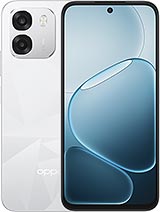
K14 5G
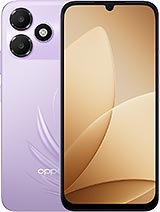
K14 Lite
A7 Pro
A7 Pro Max
Galaxy M17e