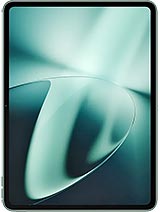
Oppo Pad 3 review
The Pad 3 suits light readers and video streamers who want a portable 11-inch device and do not mind outdated software. Anyone expecting cameras worth using, a bright outdoor display, or modern OS support should look at current-year tablets—they have caught up and moved past.
This review is based on Oppo’s published specifications and public benchmark data for the Oppo Pad 3, and the rating is spec-based. GoSolo does not physically test devices; where we estimate real-world behaviour such as battery life or charge time, we say so. How we rate phones.
Overview
The Oppo Pad 3 is a midrange 11-inch tablet anchored by a 120Hz 480-nit LCD and the capable Snapdragon 870—solid for everyday content consumption and light work, but hampered by ageing software and ordinary cameras that feel out of place for the price.
Design & build
At 507 grams and 7.1mm thick, the Pad 3 is a lightweight full-size tablet—easy to hold for extended reading or video without fatigue. The proportions suit lap use and single-hand portrait mode better than heavier rivals. Build materials and feel are not detailed in the spec sheet, but the dimensions and weight suggest a practical, no-frills chassis. Nothing flashy, but nothing cumbersome either.
Display
The 11-inch IPS LCD with 120Hz refresh and 480 nits brightness works well for the intended use: streaming, e-books, and casual browsing. The 1600×2560 resolution at 16:10 is sensible for a tablet—274 ppi is not sharp up close, but at typical viewing distance it is fine. The 120Hz makes scrolling smooth, though the brightness of 480 nits is workable indoors and during shade but noticeably dim in direct sunlight compared to tablets with 600+ nits. For a media-first device, this screen does the job without excelling.
Performance
The Snapdragon 870 with 6 or 8GB RAM is near-flagship power for 2022—capable enough for apps, office work, and casual gaming without lag. The octa-core CPU and Adreno 650 GPU will not struggle with YouTube, Netflix, or lightweight productivity. Heavy gaming and video editing remain feasible but not effortless. By 2026 standards, the 870 is dated, and rivals at this price now ship newer chipsets, so this tablet feels less future-proof. For undemanding everyday tasks, performance is plenty; for anyone pushing the hardware hard, age begins to show.
Software
ColorOS 12 on Android 11 is now four years old at launch and will feel stale to anyone upgrading from a recent device. Oppo's customizations are functional but add bloat, and the lack of guaranteed major OS updates for a tablet this age is a real concern—you may be stuck on Android 11 for years. Software maturity and update policy are often overlooked on tablets, but they matter as much as on phones.
Camera
The 13MP rear and 8MP front cameras are baseline specs that feel out of step with the tablet's £310 price. A 13MP sensor with f/2.2 and autofocus is not bad, but it is ordinary for 2022, and 1080p@30fps video is low by modern standards. For casual snapshots and video calls, they suffice, but anyone hoping for sharp daylight photos or smooth video recording will be disappointed. The cameras do not ruin the tablet, but they undercut the overall package.
Battery & charging
The 8360mAh battery yields roughly 8 to 10 hours of mixed use—video, reading, apps—without needing a top-up. For a tablet, that is a solid day's work. SuperVOOC 2.0 charging is present, though the spec sheet does not cite the wattage, so exact 0-100% times are unclear. Expect faster top-ups than older standards, but without the figure, claims are guesswork. For a device meant to sit on a desk or couch most of the time, battery endurance matters more than charging speed, and the Pad 3 scores well here.
Value & verdict-context
At £310, the Oppo Pad 3 occupies a tricky middle ground. The 11-inch screen, light weight, and Snapdragon 870 make it a competent all-day companion for content. But the 2022 software, mediocre cameras, and 480-nit LCD feel compromised when rivals now offer brighter AMOLED screens, newer chips, and faster updates at similar money. This tablet does not fail at anything; it simply lacks a compelling reason to pick it over newer alternatives that have arrived in the four years since launch. If you find one discounted heavily or prioritize a slim, light form factor above all else, the Pad 3 works. Otherwise, the calendar has moved on.
Verdict
The Pad 3 suits light readers and video streamers who want a portable 11-inch device and do not mind outdated software. Anyone expecting cameras worth using, a bright outdoor display, or modern OS support should look at current-year tablets—they have caught up and moved past.
- 11-inch 16:10 display with 120Hz refresh and reasonable brightness for indoor and occasional outdoor use
- Snapdragon 870 with 6-8GB RAM handles multitasking and casual games without stuttering
- Slim 7.1mm build at 507g makes it easy to carry for a full-size tablet
- 8360mAh battery lasts a full day of mixed use without reaching for a charger mid-afternoon
- Ships with Android 11 and ColorOS 12, both dated for a 2022 tablet—software freshness matters for long-term usability
- 13MP rear and 8MP front cameras are functional but uninspired, underwhelming for a device in this price bracket
- 480 nits brightness is adequate indoors but lags behind rivals in high-glare outdoor scenarios
Oppo Pad 3 Key Specifications
The essentials at a glance. See the full spec sheet.
| Released | 2022, February 24 |
|---|---|
| Display | 11.0 inches, 350.9 cm2 (~84.9% screen-to-body ratio), IPS LCD, 120Hz, 480 nits |
| Resolution | 1600 x 2560 pixels, 16:10 ratio (~274 ppi density) |
| Chipset | Qualcomm SM8250-AC Snapdragon 870 5G (7 nm) |
| RAM & storage | 128GB 6GB RAM, 256GB 6GB RAM, 256GB 8GB RAM |
| Main camera | 13 MP, f/2.2, 26mm (wide), AF |
| Selfie camera | 8 MP, f/2.0, 27mm (wide) |
| Battery | 8360 mAh |
| Charging | SuperVOOC 2.0 |
| Software | Android 11, ColorOS 12 |
| Dimensions | 252.2 x 163.8 x 7.1 mm (9.93 x 6.45 x 0.28 in) |
| Weight | 507 g / 510 g (1.12 lb) |
| Network | No cellular connectivity |
| NFC | No |
| USB | USB Type-C 2.0, OTG |
Oppo Pad 3 FAQ
Common questions, answered from the spec sheet.
Does the Pad 3 support 5G?
No. The Pad 3 tops out at No cellular connectivity, without 5G.
What chipset does the Pad 3 use?
The Pad 3 runs on the Qualcomm SM8250-AC Snapdragon 870 5G (7 nm).
What display does the Pad 3 have?
A 11.0 inches, 350.9 cm2 (~84.9% screen-to-body ratio) IPS LCD, 120Hz, 480 nits, 1600 x 2560 pixels, 16:10 ratio (~274 ppi density).
How big is the Pad 3 battery?
The Pad 3 has a 8360 mAh battery. Charging is rated at SuperVOOC 2.0.
Does the Pad 3 have NFC?
No, the Pad 3 does not list NFC support.
Does the Pad 3 support a microSD card?
No, the Pad 3 does not support expandable storage.
Alternatives to consider
If the Pad 3 isn’t quite right, these are the closest calls.
Pad 5
Pad 3 Matte Display
Pad 2

Pad WiFi
iPad 2025