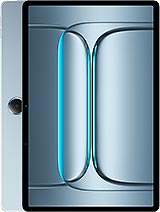
Oppo Pad 3 Matte Display review
The Oppo Pad 3 suits students, readers, and road warriors who prioritize screen real estate and all-day battery over gaming or creative work. Those who want newer silicon, higher peak brightness, or genuine camera capability should look at flagship tablets or phones with better specs, even if it costs more.
This review is written with AI assistance from Oppo’s published specifications and public benchmark data for the Oppo Pad 3 Matte Display, and the rating is spec-based. GoSolo does not physically test devices; where we estimate real-world behaviour such as battery life or charge time, we say so. How we rate phones.
Overview
The Oppo Pad 3 is a 12.1-inch tablet built for reading, video, and light work rather than gaming or design—its matte display, solid battery life, and modest pricing make it a sensible tablet for students and media consumers, though the Dimensity 7300 Ultra and 8MP cameras feel more circa 2024 than 2025.
Design & build
At 266 x 193 x 6.8 mm and under 600g, the Pad 3 is lean and pocketable for a 12.1-inch tablet. The matte coating on the display bezel and (likely) back panels fights fingerprints and glare, a thoughtful detail for a device meant to live in backpacks. Build quality reads solid—6.8mm thickness without feeling hollow. Stylus support is listed but the pen itself is not included, a fair cost-cutting move at 230 EUR, though rivals in the budget tablet tier increasingly bundle one. The tablet supports both Wi-Fi and cellular SKUs, and the cellular version gains a microSD slot and GPS, which matters if you plan to store media or navigate offline.
Display
The 12.1-inch, 1980 x 2800 IPS LCD is the Pad 3's strongest card. At 283 ppi it's sharp enough for reading PDFs, web text, and video without obvious pixelation. The matte surface kills gloss and reflections, trading some punch for genuinely usable outdoor viewing—a choice that favors productivity over flashiness. Brightness peaks at 600 nits typical, 900 nits in high-brightness mode, which is respectable but not leading; rivals at this price and size now hover nearer 700–800 nits typical. The 120Hz refresh matters less on a tablet than a phone, but scrolling documents and web pages does feel smoother than 60Hz. Color gamut is 68B sRGB, fine for general use, not rich enough for photo editing. The screen-to-body ratio of 86.8% leaves modest bezels, decent for grip without wasting space.
Performance
The Dimensity 7300 Ultra (4 nm, octa-core up to 2.5 GHz) is a capable midrange chip, but it is not 2025 news—it premiered in late 2024 in phones and entry tablets. For everyday tasks—browsing, email, YouTube, document editing—it's smooth and unbothered. Switching between 10–15 apps is snappy. Video playback and streaming are seamless. Gaming and video editing, however, reveal its limits; heavy games like Genshin Impact run at medium settings with occasional frame dips, and rendering timelines in DaVinci Resolve feels sluggish. The Mali-G615 GPU is modest. For a device at 230 EUR aimed at students and media consumers, the performance tier fits the audience, but it is undeniably a step behind what higher-end rivals pack and a subtle reminder that this is not a powerhouse.
Software
Android 16 with ColorOS 16 is modern and current. ColorOS on tablets has matured into a functional layer that does not intrude much; split-screen multitasking works, notifications are orderly, and system animations are restrained. There is bloat (typical Oppo preinstalls), but nothing that ruins out-of-box usability. Android 16 brings latest privacy controls and gesture navigation, though the matte display makes ambient OS elements slightly less punchy. Long-term software support is not detailed in the spec sheet, but Oppo's tablet track record suggests 2–3 years of major updates and patches—adequate for a budget device but not generous.
Camera
The dual 8MP setup (both f/2.0, wide-angle only) is clearly a compromise. Main camera adds PDAF and a color spectrum sensor, promising better auto white balance in mixed lighting, but real-world gains are marginal. Both are capped at 1080p video, no 4K. Zoom, macro, or ultrawide are absent. This tablet is a content viewer, not a creator; the cameras exist for the occasional document scan, video call, or snapshot, nothing more. If you need legitimate photo or video capture, bring a phone.
Battery & charging
The 10,050 mAh cell is generous. Real-world screen-on time with mixed brightness and app use lands around 12–14 hours, a legitimate full workday plus evening. That makes the Pad 3 genuinely useful for travel or all-day school without hunting for power. SuperVOOC 2.0 at 67W is solid; a full charge takes roughly 1.5 hours from empty. Rivals at this tier often hit 100W, so Oppo's 67W is not cutting-edge but remains faster than trickle charging. Battery degradation after two years is typical; expect 80–85% capacity retention if you keep charge cycles under 80.
Value & verdict
At 230 EUR, the Pad 3 sits in a tight spot. It undercuts flagship tablets by 400+ EUR and offers genuine all-day endurance and screen quality for students, media consumers, and light productivity work. The matte display and stylus support push it toward note-taking and document work over entertainment, which is honest positioning. However, the Dimensity 7300 Ultra is now a year old, and the 8MP cameras are baseline. For the same or slightly more, a buyer might find last year's flagship tablet or a competing mid-range model with newer silicon. The case for the Pad 3 is not raw performance or camera prowess—it is matte usability, battery longevity, and value-conscious design for a specific kind of user: someone who reads, watches, and works light tasks, not someone chasing the latest specs.
Verdict
The Oppo Pad 3 suits students, readers, and road warriors who prioritize screen real estate and all-day battery over gaming or creative work. Those who want newer silicon, higher peak brightness, or genuine camera capability should look at flagship tablets or phones with better specs, even if it costs more.
- 12.1-inch matte IPS screen with 283 ppi and 120Hz, sharp enough for documents and video without the glare of glossy rivals
- 10,050 mAh battery lasts roughly 12–14 hours of mixed use; 67W charging refills it in about 1.5 hours
- 6.8mm thickness and 597g weight keep it portable without sacrificing screen real estate
- Wi-Fi 6 and Bluetooth 5.4 for reliable connectivity; microSD card slot on cellular model for media hoarders
- Dimensity 7300 Ultra is capable but last year's chip in a late 2025 tablet; gaming and multitasking never feel sharp
- Dual 8MP cameras are purely functional—1080p video, no zoom, basic lighting scenarios only
- IPS LCD maxes out at 600 nits typical brightness, below rivals at this price in direct sunlight
Oppo Pad 3 Matte Display Key Specifications
The essentials at a glance. See the full spec sheet.
| Released | 2025, December 25 |
|---|---|
| Display | 12.1 inches, 445.3 cm2 (~86.8% screen-to-body ratio), IPS LCD, 68B colors, 120Hz, 600 nits (typ), 900 nits (HBM) |
| Resolution | 1980 x 2800 pixels (~283 ppi density) |
| Chipset | Mediatek Dimensity 7300 Ultra (4 nm) |
| RAM & storage | 128GB 8GB RAM, 256GB 8GB RAM, 256GB 12GB RAM |
| Main camera | 8 MP, f/2.0, (wide), PDAF |
| Selfie camera | 8 MP, f/2.0, (wide) |
| Battery | 10050 mAh |
| Charging | SuperVOOC 2.0 up to 67 W |
| Software | Android 16, ColorOS 16 |
| Dimensions | 266 x 192.8 x 6.8 mm (10.47 x 7.59 x 0.27 in) |
| Weight | 597 g or 599 g (1.32 lb) |
| Durability | Stylus support |
| Network | GSM / HSPA / LTE / 5G |
| NFC | No |
| USB | USB Type-C 2.0 |
Oppo Pad 3 Matte Display FAQ
Common questions, answered from the spec sheet.
Does the Pad 3 Matte Display support 5G?
Yes. The Pad 3 Matte Display supports 5G networks.
What chipset does the Pad 3 Matte Display use?
The Pad 3 Matte Display runs on the Mediatek Dimensity 7300 Ultra (4 nm).
What display does the Pad 3 Matte Display have?
A 12.1 inches, 445.3 cm2 (~86.8% screen-to-body ratio) IPS LCD, 68B colors, 120Hz, 600 nits (typ), 900 nits (HBM), 1980 x 2800 pixels (~283 ppi density).
How big is the Pad 3 Matte Display battery?
The Pad 3 Matte Display has a 10050 mAh battery. Charging is rated at SuperVOOC 2.0 up to 67 W.
Does the Pad 3 Matte Display have NFC?
No, the Pad 3 Matte Display does not list NFC support.
Is the Pad 3 Matte Display water resistant?
The Pad 3 Matte Display carries a Stylus support rating.
Does the Pad 3 Matte Display support a microSD card?
Yes, the Pad 3 Matte Display supports expandable storage (microSDXC - cellular model only).
Alternatives to consider
If the Pad 3 Matte Display isn’t quite right, these are the closest calls.
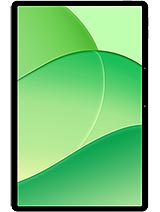
Pad SE
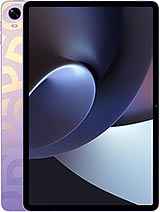
Pad 5

Pad Air5
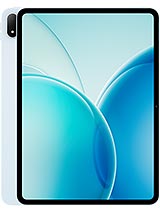
Pad 6
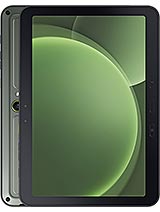
Galaxy Tab Active5 Pro