Oscal C30 Pro review
The C30 Pro suits someone in an LTE-strong region who values battery endurance and dual SIM flexibility over screen sharpness and charging speed. Anyone expecting gaming performance or a bright, detailed display should cross-shop competing budget handsets in the €100–150 range.
This review is based on Oscal’s published specifications and public benchmark data for the Oscal C30 Pro, and the rating is spec-based. GoSolo does not physically test devices; where we estimate real-world behaviour such as battery life or charge time, we say so. How we rate phones.
Overview
The Oscal C30 Pro is an entry-level Android phone that trades screen clarity and charging speed for a large battery and dual SIM versatility at around €120. It is honest work for markets with strong LTE but expects no miracles from its Helio G35 chip or overnight battery life.
Design & build
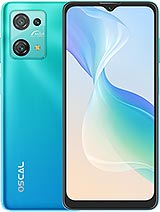
The C30 Pro is straightforward: 194.6 g, 9.4 mm thick, and fitted with a 6.5-inch frame. It feels solid in hand, though without any exotic material claims. At this price, plastic construction is the norm and not a liability. The dual nano-SIM slots and dedicated microSD tray are practical for users who need multiple lines or want to expand storage without sacrificing carrier switching. The colour options (Shadow Black, Starry Night Blue, Streaming Green) are stock but inoffensive.
Display
The 6.5-inch IPS LCD runs at 720 × 1600 pixels—a 20:9 aspect ratio that packs just 270 ppi. This matters more than the inches alone suggest. Text and icons are noticeably softer than the 400+ ppi you get from modern budget competitors, a trade-off that becomes grating if you read long messages or browse all day. The 500 nits peak brightness is adequate indoors but falters under strong sunlight, forcing you to tilt or shield the screen outdoors. For the price, this is an honest compromise between cost and usability, but it is worth knowing if screen clarity drives your decision.
Performance
The Helio G35, paired with 4 GB of RAM, is entry-level silicon. It runs Android 12 (with DokeOS 3) smoothly for everyday tasks: messaging, calling, light browsing, social media. Apps load promptly and scrolling is fluid. Gaming is a different story. PUBG Mobile and Genshin Impact run at low settings with frame dips; demanding titles will stutter or refuse to launch. Video editing or heavy multitasking will cause slowdowns. This is a phone for people who do not demand complex apps, not a device for content creators or mobile gamers.
Camera
The 12 MP main camera with PDAF and LED flash works for daylight snapshots and social media posts. Autofocus is reliable, and daylight photos are sharp enough for screen viewing. Video maxes out at 1080p 30 fps, which is limiting if you want to archive footage or publish to platforms that favour higher bitrates. The 8 MP selfie does the job for video calls and casual selfies. Low-light performance is functional but noisy—expect fine-grain detail loss in dim rooms or evening shots. This is a camera that meets basic expectations, not one that impresses.
Battery & charging
The 5080 mAh capacity is a genuine strength. On moderate use—texts, calls, some browsing—the phone easily runs a full day, sometimes into the evening. Heavy video playback or gaming cuts this shorter, but for most global-south users relying on voice and messaging, this battery performs. The drawback is 10W charging, which takes roughly 2 to 3 hours to full. That is slow compared to 20–30W rivals at the same price, so plan your charging accordingly. Overnight top-ups are fine; coffee-break charging is not.
Software & connectivity
DokeOS 3 sits atop Android 12, a 2023 baseline that feels dated now but was standard at launch. Updates will likely be infrequent from Oscal, a lesser-known brand, so security patches are not guaranteed. On connectivity, the phone supports LTE across multiple bands (1, 3, 7, 8, 19, 20, 28, 40) and dual-band Wi-Fi 5, which covers most global-south networks well. No 5G and no NFC means no tap-to-pay, but multi-constellation GPS (GLONASS, GALILEO, BDS) is a practical win in dense urban areas and regions with poor GPS coverage. Bluetooth 5.0 and FM radio round out the feature set.
Value & verdict
At roughly €120, the C30 Pro occupies honest territory. You are not paying for flashy spec bumps; you are getting a phone that works daily for calls, messages, and casual browsing on LTE without pretending to be more. The large battery and expandable storage are real assets. The screen density and slow charging are real trade-offs. For markets with mature LTE infrastructure and users who avoid heavy apps, this phone delivers. For anyone who game, edit video, or need a crisp display for all-day reading, look elsewhere.
Verdict
The C30 Pro suits someone in an LTE-strong region who values battery endurance and dual SIM flexibility over screen sharpness and charging speed. Anyone expecting gaming performance or a bright, detailed display should cross-shop competing budget handsets in the €100–150 range.
- Dedicated microSD slot with no trade-off (dual SIM + expandable storage)
- 5080 mAh battery easily covers a typical workday of messaging, calls, and browsing on LTE
- Multi-constellation GPS (GLONASS, GALILEO, BDS) locks on faster than GPS-only in urban and poor-signal areas
- Side-mounted fingerprint sensor is fast and reliable at this price point
- 10W charging takes 2–3 hours to full, so you cannot recover much battery in a quick break
- 270 ppi screen leaves text visibly soft compared to modern 1080p phones at the same size; 500 nits peak brightness struggles in direct sun
- Helio G35 handles light tasks smoothly but hiccups in demanding games and video work
Oscal C30 Pro Key Specifications
The essentials at a glance. See the full spec sheet.
| Released | 2023, June |
|---|---|
| Display | 6.5 inches, 102.0 cm2 (~80.6% screen-to-body ratio), IPS LCD, 500 nits |
| Resolution | 720 x 1600 pixels, 20:9 ratio (~270 ppi density) |
| Chipset | Mediatek MT6765 Helio G35 (12 nm) |
| RAM & storage | 64GB 4GB RAM |
| Main camera | 12 MP, (wide), 1/2.55", PDAF other unspecified cameras |
| Selfie camera | 8 MP |
| Battery | 5080 mAh |
| Charging | 10W wired |
| Software | Android 12, DokeOS 3 |
| Dimensions | 164.6 x 76.9 x 9.4 mm (6.48 x 3.03 x 0.37 in) |
| Weight | 194.6 g (6.88 oz) |
| Network | GSM / HSPA / LTE |
| NFC | No |
| USB | USB Type-C 2.0, OTG |
Oscal C30 Pro FAQ
Common questions, answered from the spec sheet.
Does the C30 Pro support 5G?
No. The C30 Pro tops out at GSM / HSPA / LTE, without 5G.
What chipset does the C30 Pro use?
The C30 Pro runs on the Mediatek MT6765 Helio G35 (12 nm).
What display does the C30 Pro have?
A 6.5 inches, 102.0 cm2 (~80.6% screen-to-body ratio) IPS LCD, 500 nits, 720 x 1600 pixels, 20:9 ratio (~270 ppi density).
How big is the C30 Pro battery?
The C30 Pro has a 5080 mAh battery. Charging is rated at 10W wired.
Does the C30 Pro have NFC?
No, the C30 Pro does not list NFC support.
Does the C30 Pro support a microSD card?
Yes, the C30 Pro supports expandable storage (microSDXC (dedicated slot)).
Does the C30 Pro have a headphone jack?
Yes, the C30 Pro has a 3.5mm headphone jack.
Alternatives to consider
If the C30 Pro isn’t quite right, these are the closest calls.
S70 Pro
Tiger 10
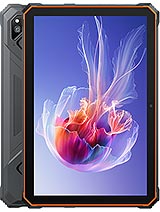
Spider 8
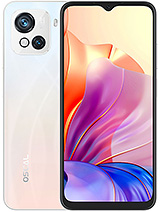
C80
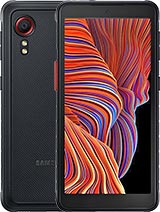
Galaxy XCover 7