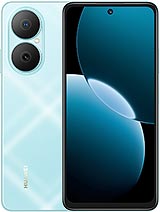
Oscal Elite 1 review
The Elite 1 suits anyone who prioritizes a large, lightweight screen for reading, documents, and video consumption over gaming or multimedia creation. Skip it if performance matters, you need better cameras, or you're betting on 5G becoming essential soon in your area."
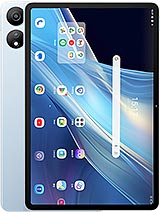
This review is based on Oscal’s published specifications and public benchmark data for the Oscal Elite 1, and the rating is spec-based. GoSolo does not physically test devices; where we estimate real-world behaviour such as battery life or charge time, we say so. How we rate phones.
Overview
The Oscal Elite 1 is a large, lightweight 12.1-inch tablet pitched at readers, document workers, and casual media consumers rather than gamers. It delivers all-day battery life and smooth scrolling on a bright screen, but the Helio G99 chipset and basic cameras feel underpowered for a 2024 tablet at this size and price point.
Design & build
At 587g and 7.4mm thick, the Elite 1 is impressively slim and light for a 12.1-inch tablet. That weight is genuinely easier to hold for extended reading than heavier competitors, and the slim profile makes it slip into a bag without bulk. The build materials aren't specified, but the industrial design is straightforward—nothing fancy, but functional. Dual SIM support suggests this is pitched at markets where a tablet doubles as a secondary communication device, though that's increasingly rare. Stylus support is listed but no pen is detailed or bundled, so assume you'll need to buy one separately if note-taking matters to you.
Display
The 12.1-inch IPS LCD screen is where this tablet earns its purpose. At 1080 x 2560 resolution, the 230ppi density is modest by phone standards but perfectly adequate for a tablet at typical viewing distance—text is crisp enough for reading and documents. The 120Hz refresh makes scrolling through long articles or feeds smooth and natural, a real quality-of-life gain over 60Hz. The 600-nit brightness is solid for outdoor use in sunlight without washout, and IPS angles mean you can share the screen with someone beside you without the image collapsing. The 67% screen-to-body ratio is reasonable for a device with bezels; there's no notch, which is fine for a work-focused tablet. For its intended use—productivity, reading, video—this is a well-executed panel.
Performance
The Helio G99 is an upper-midrange chipset that handles everyday tasks competently: email, browsing, office apps, and light multitasking run without stutter. The 8GB of RAM helps keep apps in memory, and the Mali-G57 GPU can manage casual gaming at lower settings. However, demanding games like Genshin Impact or Honkai Star Rail need to be run on low or medium graphics to stay playable, and processor-heavy tasks like photo editing or 4K video playback will feel sluggish. For a tablet released in mid-2024, this chip feels a generation behind what rivals were offering—flagships in the space were already pushing faster silicon. If your use case is strictly productivity, media consumption, and light gaming, it's fine. But if you push harder, the limitations show quickly.
Software
Android 14 with DokeOS_P 4.0 is the OS pairing. DokeOS is Oscal's Android fork, aimed at regional customization and some privacy tweaks for certain markets. The presence of Android 14 as the base is good; you get a recent OS. The caveat is that updates and support timelines from Oscal are often shorter than Samsung or mainstream brands, so factoring in long-term OS upgrades is worth your consideration. The FM radio support is a nice touch for markets where offline radio matters, and it's a rarity in new tablets.
Camera
The 12MP main sensor and 13MP selfie camera are modest by any standard. Both shoot 1080p video and rely on a small sensor (1/2.55" on the main) that struggles in low light—shadows will look noisy and fine detail disappears. The LED flash is a basic fallback, not a game-changer. There's no ultrawide for landscape sweeps, no telephoto for detail, and no macro mode. In daylight with plenty of light, casual photos are acceptable; in dim rooms or outdoors at dusk, quality drops noticeably. This isn't a camera tablet, and the specs reflect that honestly. If photography or video are important, look elsewhere.
Battery & charging
The 8800mAh battery is substantial and delivers about 10 to 12 hours of screen-on time during moderate use—browsing, video streaming, light work—realistically lasting a full day before you need a charge. Heavy gaming or continuous video playback will shorten that to around 8 hours. The 33W wired charging fills the battery in roughly 60 to 90 minutes from empty via USB-C, which is acceptable but not exceptional; rivals at this price tier often hit 65W or more. There's no wireless charging, which is typical for tablets at this price. For someone using this device for a work day of email and reading, battery endurance is a genuine strength.
Connectivity & value
The lack of 5G is the main connectivity shortcoming on a 2024 tablet. LTE support across multiple bands should be solid in most markets, but if your region is transitioning to 5G as the primary network, this tablet will feel dated sooner. Wi-Fi 5 (802.11ac) is standard for the time, and Bluetooth 5.0 ensures smooth pairing with wireless headphones and accessories. The tablet's positioning (GPS, GLONASS, Galileo, BDS) is robust for navigation. For its positioning as a reading and productivity device at a lower midrange price, the Oscal Elite 1 makes sense if you're in a market where LTE will remain viable for a few years and you prioritize size, weight, and all-day battery over raw performance or camera quality. It's a straightforward tablet that knows its lane—don't expect it to excel beyond that.
Verdict
The Elite 1 suits anyone who prioritizes a large, lightweight screen for reading, documents, and video consumption over gaming or multimedia creation. Skip it if performance matters, you need better cameras, or you're betting on 5G becoming essential soon in your area."
- Large 12.1-inch display with 120Hz refresh and 600 nits brightness, making it excellent for reading, documents, and outdoor use
- 8800mAh battery easily handles a full day of moderate browsing, video, and document work without recharging
- Remarkably thin (7.4mm) and light (587g) for a 12-inch tablet, making it genuinely portable for its screen size
- Stereo quad-speaker setup provides decent audio for video and music without external speakers
- Helio G99 struggles with demanding apps and games; even casual titles like Genshin Impact require low settings, putting it behind rivals with more capable chips
- 12MP camera is basic even by tablet standards—low-light shots are soft, zoom is digital only, and there's no ultrawide or telephoto
- No 5G support on a 2024 tablet means dependence on LTE, which may matter if your market is rolling out 5G infrastructure
Oscal Elite 1 Key Specifications
The essentials at a glance. See the full spec sheet.
| Released | 2024, May |
|---|---|
| Display | 12.1 inches, 338.3 cm2 (~67.3% screen-to-body ratio), IPS LCD, 120Hz, 600 nits |
| Resolution | 1080 x 2560 pixels (~230 ppi density) |
| Chipset | Mediatek Helio G99 (6 nm) |
| RAM & storage | 256GB 8GB RAM |
| Main camera | 12 MP, (wide), 1/2.55" |
| Selfie camera | 13 MP |
| Battery | 8800 mAh |
| Charging | 33W wired |
| Software | Android 14, DokeOS_P 4.0 |
| Dimensions | 278.5 x 180.5 x 7.4 mm (10.96 x 7.11 x 0.29 in) |
| Weight | 587 g (1.29 lb) |
| Durability | Stylus support |
| Network | GSM / HSPA / LTE |
| NFC | No |
| USB | USB Type-C, OTG |
Oscal Elite 1 FAQ
Common questions, answered from the spec sheet.
Does the Elite 1 support 5G?
No. The Elite 1 tops out at GSM / HSPA / LTE, without 5G.
What chipset does the Elite 1 use?
The Elite 1 runs on the Mediatek Helio G99 (6 nm).
What display does the Elite 1 have?
A 12.1 inches, 338.3 cm2 (~67.3% screen-to-body ratio) IPS LCD, 120Hz, 600 nits, 1080 x 2560 pixels (~230 ppi density).
How big is the Elite 1 battery?
The Elite 1 has a 8800 mAh battery. Charging is rated at 33W wired.
Does the Elite 1 have NFC?
No, the Elite 1 does not list NFC support.
Is the Elite 1 water resistant?
The Elite 1 carries a Stylus support rating.
Does the Elite 1 support a microSD card?
Yes, the Elite 1 supports expandable storage (microSDXC (uses shared SIM slot)).
Does the Elite 1 have a headphone jack?
No, the Elite 1 does not have a 3.5mm headphone jack.
Alternatives to consider
If the Elite 1 isn’t quite right, these are the closest calls.
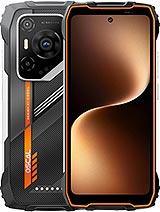
Pilot 2
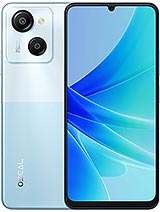
Modern 8
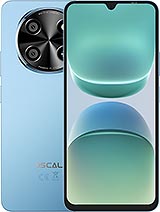
Tiger 8
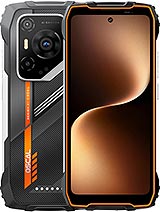
Pilot 1
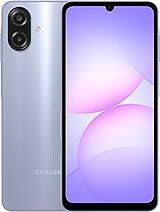
Galaxy A07 4G