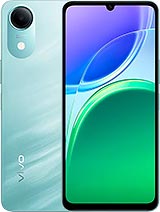
Oscal Flat 2C review
The Oscal Flat 2C suits someone in a high-LTE region who prioritizes battery life, dual SIM, and connectivity over screen quality or camera polish, and whose phone use is genuinely light. Anyone expecting moderate performance, fast charging, or competent imaging should look elsewhere—this is for a specific use case, not a wide audience.
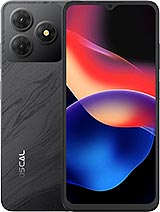
This review is based on Oscal’s published specifications and public benchmark data for the Oscal Flat 2C, and the rating is spec-based. GoSolo does not physically test devices; where we estimate real-world behaviour such as battery life or charge time, we say so. How we rate phones.
Overview
The Oscal Flat 2C is a stripped-down budget phone that leans into basics: a large screen, long battery life, dual SIM, and a headphone jack—all hallmarks of a no-frills device for calls, texts, and light browsing in regions where LTE is reliable. The 2GB RAM and Unisoc T603 mean performance is tight, cameras are soft, and charging is slow, but if you live in a high-mobile-use region and don't demand much beyond connectivity, the value is straightforward.
Design & build
At 193g and 8.8mm thick, the Flat 2C feels solid in hand without being heavy by modern standards. The 6.56-inch frame is tall and lean, keeping the phone manageable for one-handed reach. There is no mention of the build material in the spec sheet, so material quality remains unclear. The phone ships in three colors—Phantom Black, Ripple Blue, Sky Purple—though the finish details are absent. For a 2025 entry-level device, the design is unremarkable but functional: it is not trying to impress, just endure.
Display
The 720p IPS LCD at 269 ppi is noticeably soft: text and icons will show visible pixelation if you hold the phone at typical reading distance. At 6.56 inches with a 20:9 ratio, the screen is tall, which helps cram a useful amount of content on a budget panel. The 450-nit brightness is acceptable in most indoor and outdoor light, though it will strain in full sun. The 84.2% screen-to-body ratio is decent for the era. This is a practical screen for messaging and light browsing, not a pleasure to read books on.
Performance
The Unisoc T603 paired with 2GB RAM is an entry-level combination that handles calls, texts, and casual web browsing without stuttering, but asks very little. Multitasking is restricted—switching between apps or loading heavy web pages will feel slow. Gaming is not a realistic goal here, and video editing or media-heavy tasks will frustrate. Android 14 Go edition is optimized for low-end hardware, which helps keep things responsive within its limits, but those limits are real. For someone juggling only essential apps, it works; for anyone accustomed to moderate smartphone use, it will feel like a step backward.
Software
Android 14 Go edition runs DokeOS 4.0, a light overlay that aims to keep the phone nimble on 2GB of RAM. Go edition means fewer background processes and leaner Google apps, which is appropriate for this hardware. There is no word on update longevity or support timelines, which is typical opacity for budget brands. The 64GB storage is expandable via a dedicated microSDXC slot, a rarity and a win for budget-conscious buyers who want to store media without choking internal space. It is unclear whether storage feels snappy or sluggish; at 2GB RAM and eMMC 5.1 storage, file operations will be slower than modern standards, but acceptable for everyday use.
Camera
The 13MP main sensor with a 1.12 micron pixel pitch and 1/4-inch size is small and will struggle in low light. Daylight shots will be soft, lacking the fine detail you would expect even from mid-range rivals. The 8MP selfie is adequate for video calls. Video tops out at 1080p@30fps, which is functional but unambitious for 2025. The LED flash and HDR modes are included but cannot overcome the inherent limitation of a cramped sensor. Unless you are content with soft, flat snapshots for social media, the camera is a real compromise here.
Battery & charging
The 5000mAh battery is genuinely useful: with the efficient T603 and 2GB RAM, you can expect about 1.5 to 2 days of light use (texts, calls, casual browsing) or a single charge under heavy daily use. That makes the Flat 2C a solid companion for travellers or anyone in areas with spotty charging access. The 10W charger is slow: plan on roughly 90 to 120 minutes for a full charge from empty. That is a noticeable wait compared to the 30 to 60-minute norm at mid-range prices, but fits the phone's overall low-power design philosophy.
Connectivity & value
The phone includes LTE across most global bands (1, 3, 7, 8, 19, 20, 38, 40, 41), dual Nano-SIM, a 3.5mm headphone jack, and FM radio—features that read like a 2015 wishlist but are genuinely useful in regions where mobile is the primary or only internet and audio access. Wi-Fi is limited to 802.11 b/g/n, which means slower speeds on newer routers and networks. The Flat 2C is transparently built for markets where LTE reliability and battery life matter more than speed or camera polish. It is not a value phone for everyone; it is a value phone for a specific buyer in a specific context.
Verdict
The Oscal Flat 2C suits someone in a high-LTE region who prioritizes battery life, dual SIM, and connectivity over screen quality or camera polish, and whose phone use is genuinely light. Anyone expecting moderate performance, fast charging, or competent imaging should look elsewhere—this is for a specific use case, not a wide audience.
- 5000mAh battery delivers 1.5 to 2 days on light use, a genuine practical advantage for travellers and areas with unreliable charging.
- Dual SIM, microSDXC slot, 3.5mm jack, and FM radio—features quietly useful in high-mobile-use regions and often missing from contemporary mid-range phones.
- LTE bands cover most of the world; connectivity is a strength relative to the price and positioning.
- 2GB RAM and Unisoc T603 chipset are too tight for multitasking or moderate smartphone use; performance will frustrate anyone beyond light calls and texts.
- 10W charging takes 90–120 minutes; notably slow and a daily friction point.
- Camera is soft and low-detail even in daylight; video maxes out at 1080p@30fps without stabilization.
Oscal Flat 2C Key Specifications
The essentials at a glance. See the full spec sheet.
| Released | 2025, January |
|---|---|
| Display | 6.56 inches, 103.4 cm2 (~84.2% screen-to-body ratio), IPS LCD, 450 nits |
| Resolution | 720 x 1612 pixels, 20:9 ratio (~269 ppi density) |
| Chipset | Unisoc T603 (22 nm) |
| RAM & storage | 64GB 2GB RAM |
| Main camera | 13 MP, (wide), 1/4.0", 1.12 μm |
| Selfie camera | 8 MP, (wide) |
| Battery | 5000 mAh |
| Charging | 10W wired |
| Software | Android 14 (Go edition), DokeOS 4.0 |
| Dimensions | 163.2 x 75.2 x 8.8 mm (6.43 x 2.96 x 0.35 in) |
| Weight | 193 g (6.81 oz) |
| Network | GSM / HSPA / LTE |
| NFC | No |
| USB | USB Type-C, OTG |
Oscal Flat 2C FAQ
Common questions, answered from the spec sheet.
Does the Flat 2C support 5G?
No. The Flat 2C tops out at GSM / HSPA / LTE, without 5G.
What chipset does the Flat 2C use?
The Flat 2C runs on the Unisoc T603 (22 nm).
What display does the Flat 2C have?
A 6.56 inches, 103.4 cm2 (~84.2% screen-to-body ratio) IPS LCD, 450 nits, 720 x 1612 pixels, 20:9 ratio (~269 ppi density).
How big is the Flat 2C battery?
The Flat 2C has a 5000 mAh battery. Charging is rated at 10W wired.
Does the Flat 2C have NFC?
No, the Flat 2C does not list NFC support.
Does the Flat 2C support a microSD card?
Yes, the Flat 2C supports expandable storage (microSDXC (dedicated slot)).
Does the Flat 2C have a headphone jack?
Yes, the Flat 2C has a 3.5mm headphone jack.
Alternatives to consider
If the Flat 2C isn’t quite right, these are the closest calls.
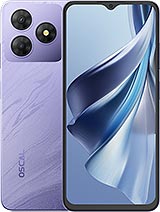
Flat 2

Marine 1

Marine 2
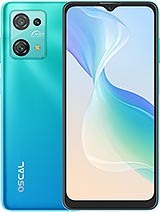
C30 Pro

Play20A